
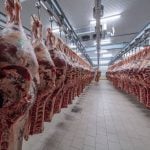
pork carcasses

Pork suffering indirect trade woes

Canada’s canola producers have been in the headlines, but Manitoba’s pork sector says it has been fighting against Chinese tariffs bubbling over from the U.S.

Manitoba’s pork sector wants more attention to its own trade issues with China. The canola sector has dominated the agricultural headlines since sales to China ground to a halt earlier this year. But George Matheson, Manitoba Pork Council president, says pork producers have been fighting the impact of Chinese tariffs for a year. Why it
Recent trade upsets shouldn’t obscure the long-term growth picture. Including the European Union (as a single market of 28 countries), Canada’s top export agri-food products markets are seen above.

Growing food exports a bright spot

The current trade dispute with China will see exports to that country drop in 2019

Amid all the negative trade news something positive: last year Canada exported a record $59.3 billion of agri-food products. That’s up three per cent from 2017, the Canadian Agri-Food Trade Alliance (CAFTA) says in its April newsletter. “The gains are being fuelled by ever-increasing global demand for world-class Canadian products including in key markets such


Prime Minister Justin Trudeau for the first time acknowledged he believes China’s boycott of Canadian canola seed is linked to China’s trade dispute with the United States, including Chinese tech giant Huawei.

Trudeau acknowledges U.S.-China dispute linked to canola

The study into China’s concerns about dockage and blackleg is done but hasn’t been shared with China yet

The Canadian government has acknowledged for the first time publicly what most suspected: canola to China is the symptom, not the illness. China’s decision not to buy Canadian canola seed since March is linked to Canada’s arrest late last year of Meng Wanzhou, vice-president of Chinese technology firm Huawei, at the United States’ request. “We

The political chill between China and Canada has been seen as having an impact on soybean exports.

Canadian soybean exports to China almost nothing in March

This is not just a seasonal shift in demand, says Soy Canada’s Ron Davidson

Chinese buyers continue to turn their backs on Canadian soybeans. The latest data from Statistics Canada confirms industry fears, says Soy Canada executive director Ron Davidson. “The numbers are clearly substantiating what the exporters are telling us, which is essentially the Chinese importers aren’t interested in purchasing Canadian soybeans right now,” Davidson said. He added


As of March 31, total canola exports to all customers were down sharply by 515,000 tonnes, but China’s imports were up by almost 300,000 tonnes.

As of March 31 Chinese canola imports well ahead of last year

Increased Canadian exports so far but Chinese oilseed and feed demand is plunging due to African swine fever

Despite reports of China suspending purchases from some exporters, its imports of Canadian canola as of March 31 are well ahead of same period last crop year crop, as are its imports of soybeans and wheat. Meanwhile, in a report last Friday, the U.S. Department of Agriculture again reduced its Chinese oilseed import forecasts due


As American farmers head into the 2019 growing season, a trade deal between the U.S. and China can’t come soon enough.

Comment: Spring needs to bring thaw in agricultural trade

U.S. farmers and ranchers need their markets back

For those of us who have slid, shovelled, and skated through the wildest up-and-down winter weather in years, here’s a warm thought: planting is well underway in parts of North America, with more to come soon. After that brief pleasantness, however, the outlook gets pretty cold pretty fast. Early February reports from the U.S. Department

The political tensions between China and Canada are increasing day by day, and Canadian canola producers want the federal government to make their move.

Restoring canola exports to China ‘chess, not checkers’

Canadian captives complicate things, nevertheless, some farmers have lost patience and confidence in Ottawa

Some Canadian farmers, no closer to knowing when they’ll regain access to their biggest canola customer, are going from feelings of uncertainty and anxiety to anger and frustration. “We demand action,” Ian Steppler, who farms near Deerwood, Man., wrote on Facebook last week. The federal government and grain industry are committed to restoring Canadian canola


The working group created to restore canola seed exports to China and find other markets is discussing establishing a trade office in Asia.

Canola trade missions start in Japan, Korea in June

Canada is also trying to save the WTO, which enforces rules-based trade

China’s Canadian canola seed boycott demonstrates Canada is too dependent on one country. That’s why Trade Diversification Minister Jim Carr, along with Canada’s canola industry, is kicking off a canola trade mission in Japan and South Korea in June. “We will be working closely with the sector to identify other opportunities for trade missions in

soybeans on white background

China shows little interest in buying Canadian soybeans

Because of American trade policy Canadian soybeans are even more dependent on China

First it was canola and now it’s soybeans. China, Canada’s biggest soybean customer, has all but stopped buying Canadian soybeans, Ron Davidson, executive director of Soy Canada said in an interview May 6. “Traders have been saying China just has no interest in buying (from Canada),” Davidson said. “What I got from the traders is