
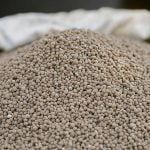
Nitrogen fertilizer, seen here in ammonium nitrate form, at a Russian production facility, is a major contributor to crop yield and greenhouse gases.

Study says billions hang in the balance on fertilizer use

But others say cutting fertilizer-related emissions doesn’t necessarily mean lower yields

A recent study says cutting fertilizer use to fight climate change could cost farmers almost $48 billion in lost revenue. Commissioned by Fertilizer Canada, the Meyers Norris Penny (MNP) report says reducing fertilizer use by 20 per cent between 2023 and 2030 will significantly lower yields of crops like corn, canola and spring wheat. The findings are
The USDA building in Washington, D.C. (Art Wager/iStock/Getty Images)

CBOT weekly outlook: U.S. corn, soybean carryovers could increase

Declines expected for wheat stocks

MarketsFarm — Ahead of the next supply and demand report from the U.S. Department of Agriculture (USDA), expectations are for corn and soybean ending stocks to increase, according to Steve Georgy, president of Allendale Inc., in McHenry, Ill. “The wheat market could see carryout numbers decline slightly on this report,” he added. USDA is scheduled


Wheat being loaded onto a cargo ship in Vancouver in 2011. (File photo: Reuters/Ben Nelms)

Exports tumble as supplies simply not there

'There's very little to sell'

MarketsFarm — Cereal and oilseed exports out of Canada nosedived in August just as the 2021-22 marketing began, according to the monthly export report from the Canadian Grain Commission (CGC). At about 2.24 million tonnes, total grain exports were down 38.5 per cent overall compared to those in August 2020. “There’s very little to sell.

CBOT December 2021 corn (candlesticks) with 20-, 50- and 100-day moving averages (yellow, orange and dark green lines). (Barchart)

U.S. grains: Corn, soybean futures fall

Chicago wheat futures firm

Chicago | Reuters — Chicago Board of Trade corn and soybean futures fell on Wednesday on seasonal harvest pressure and forecasts that should allow U.S. farmers to continue to make good progress with the cutting of their crops, traders said. “Harvest should continue to expand with weather allowing for quick progress with yields holding up


Manitoba harvest 95 per cent complete, soils remain dry

Manitoba Crop Report and Crop Weather report for October 5

Southwest Region Temperatures have been variable, with daytime highs ranging from 27 to 32 C. Overnight lows dropped to as low as 5.0 to -0.5 C, with no severe frost reports. Average daily temperatures range from 14 C to 16 C. Forecast looks promising for the remainder of harvest. Above normal temperatures are making harvest


Scientists around the world have demonstrated the use of gene editing tools is as safe as any of the methods that have been used for thousands of years.

Opinion: Plant-breeding innovations fuel future

This new technology can help solve some of the biggest challenges of tomorrow

Just as we’ve seen the importance of science and innovation in combating the current public health challenge, they stand to play an equally important role in helping agriculture tackle the challenges it faces ahead. New pests and major weather events are increasing, making the job of producing food for a growing population even more challenging.

CBOT November 2021 soybeans (candlesticks) with 20-, 50- and 100-day moving averages (yellow, green and black lines). (Barchart)

U.S. grains: Soybean futures extend losing streak

CBOT wheat firm, corn weak

Chicago | Reuters — U.S. soybean futures fell for the third session in a row on Monday, sinking to their lowest in 9-1/2 months on continued pressure from a government report that showed domestic supplies were bigger than expected. Wheat firmed to its highest since mid-August on technical buying. Corn futures ended slightly lower after


Harvest projections are trending lower due to this year's drought conditions.

A silver lining following challenging summer?

BMO report cautiously optimistic about the strength of the industry after hot, dry summer

A new report from BMO Economics sheds some light on the economic impacts of the hot, dry conditions that persisted across North America this summer. The report, issued on September 17, describes how the widespread growing challenges North American farmers faced this summer affected an agricultural sector still trying to make sense of the impacts