

pigs on the farm

PED vaccine could aid in disease fight

Developers are waiting for approval to begin clinical trials

Pork producers may soon have a powerful new tool in the fight against porcine epidemic diarrhea or PED. The Vaccine and Infectious Disease Organization’s International Vaccine Centre at the University of Saskatchewan, better known as VIDO-InterVac, is waiting for final approvals from the Canadian Food Inspection Agency (CFIA) to begin clinical trials of a vaccine
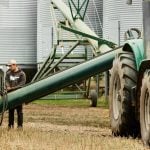
grain cars at terminal

NFU misses mark on the cause of 2013-14 grain backlog

Wheat board co-ordination can’t overcome insufficient system capacity

The National Farmers Union (NFU) has a well-deserved reputation for doing sound analytical work. That’s why I was disappointed in its opinion piece published in the Manitoba Co-operator June 17. The NFU contends G3, the company taking over CWB — the remnants of the old wheat board — is planning to build a grain terminal


oats

Yorkton oat processor no longer accepting oats treated with pre-harvest glyphosate

Grain Millers Canada says its research links timing of application to reduced processing quality

Starting with the 2015 crop, oat buyer Grain Millers will no longer accept oats or oat products treated with glyphosate because of research showing it can change the processing quality. “We wouldn’t have taken this step if we didn’t think we had to,” said Terry Tyson, grain procurement manager for Grain Millers Canada based in

two petri dishes of grain samples

Infrared technology identifies and removes fusarium-infected grain

Technology coming to Winnipeg feed mill will also provide the building blocks for a new biomass fuel

A Winnipeg feed mill is about to become the first in North America to install infrared grain-sorting technology in a commercial facility. Thanks in part to $1.1 million in funding from Growing Forward 2, Standard Nutrition Canada will integrate two BoMills into its St. Boniface facility over the next four months. The main allure of


Cigi CEO JoAnne Buth

New milling and sorting equipment for Cigi

The Canadian International Grains Institute still plans to expand, but isn’t looking for funding just yet

Some unique and cutting-edge technology is about to be installed at the Canadian International Grains Institute (Cigi), courtesy of $2 million in funding from the federal and provincial governments. “Agriculture is changing, we need to cater to the international markets and Cigi has always been known for the testing, developing work it does,” said Manitoba’s

feedlot cattle eating hay

Keeping feed consistent key for cattle rumen health

Cattle — and microbes in their rumens — need a consistent supply of both dry matter 
and nutrients to improve performance and reduce digestive diseases

Cattle feeders aren’t just feeding cattle — they’re also feeding the microbes that live in the rumen. And those little critters are picky. “Regardless of the production system, the challenge that we face is variation in dry matter intake and total nutrient intake,” said Greg Penner, assistant professor of animal and poultry science at the


Rod Merryweather, CEO of FP Genetics, asking the Prairie Recommending Committee for Wheat, Rye and Triticale Feb. 26 to vote in favour of giving Elgin ND, a high-yielding American Dark Northern Spring wheat, a three-year interim registration for market development purposes.

Nine new CWRS wheats recommended for registration

Sixteen of the 36 cultivars reviewed were automatically endorsed

A record 36 cultivars sought the Prairie Recommending Committee for Wheat, Rye and Triticale’s support for registration at the committee’s annual meeting here Feb. 23 to 26. The committee of experts representing the grain industry from breeders and farmers to seed companies, marketers and end-users, assesses new cultivars to see if they meet the agronomic,

grain being loaded onto a cargo ship

Sask. Wheat says wide basis costing wheat growers billions

Economist Richard Gray says elevator prices are down even though f.o.b. Vancouver prices have remained steady to higher since

The Saskatchewan Wheat Development Commission (SWDC) says export wheat prices are similar to or higher than last October, but farmers are receiving about $20 per tonne less. “Rail transportation and handling capacity have not improved and this is being reflected in even lower returns for producers and a lower share of export values as the


vintage newspaper advertisement

Ag Canada seeds officer concerned of blackleg spread in canola

Our History: February 1981

This ad from Feb. 5, 1981 reminds us that canola is no longer called rapeseed, Furadan is no longer registered and Chemagro no longer exists — it later became part of Bayer. That week we reported that an Agriculture Canada seeds officer was concerned that Manitoba farmers purchasing rapeseed from Saskatchewan risked spreading “a sclerotinia-type

PHOTO: canstock

Saskatchewan researchers help crack the wheat genome

The development could unlock untapped yield and quality potential

University of Saskatchewan researchers are part of an international team who published the first chromosome-based draft sequence of the wheat genome, a development that promises wheat breeders powerful new tools in developing varieties to meet the challenges of world population growth and climate change. “The release of the chromosomal draft of the wheat genome sequence will accelerate gene