

flea beetles

Insect numbers low, flea beetles requiring some control in canola

Manitoba Insect & Disease Update for May 31

Insect pest concerns are currently low overall. There have been some insecticide applications for cutworms on corn and soybeans in the Central Region, and on peas and lentils in the Northwest. Some species of cutworms, such as dingy cutworm, have started to turn to pupae in some field. Cutworm staging can be quite variable depending on the dominant species
MBFI research co-ordinator Kristelle Harper stands in front of the herd at the Manitoba Beef and Forage Initiatives Johnson Research Farm.

Putting spurge on the menu for research — and cattle

With an incoming learning centre and research ranging from rodent control to grazing systems and leafy spurge, 2017 looks to be busy for Manitoba Beef and Forage Initiatives

Manitoba Beef and Forage Initiatives (MBFI) is ramping up for 2017. Preparations are underway for a long list of projects at the collaborative’s three test farms outside of Brandon. “Some of them are continuing projects from last year,” said MBFI president Ramona Blyth. “Research is never just done in one year, so there’s the carry-over


Insect levels seen low, stripe rust reported in winter wheat

Manitoba Insect & Disease Update for May 24

Insect pest concerns are currently low overall. There have been some insecticide applications for cutworms in the Northwest, and for flea beetles in canola in the Central and Northwest Regions. Striped rust has been reported from a winter wheat field; no other plant pathogen activity has been reported. Stripe rust overwinters in winter wheat Stripe rust was

Early signs say winter wheat didn’t fare very well in parts of the province this season, and much of the crop is in doubt in affected areas.

Winter wheat takes a beating in the east

The mid-winter melt may have felt good at the time, but winter wheat 
producers are now getting a first-hand look at its downside


Mid-winter thaws hit hard at overwintering cereals in January and February, and farmers in eastern Manitoba are just now discovering the impact. Jake Davidson, executive manager of Winter Cereals Canada, said winter wheat acres north, south and east of Winnipeg suffered significant crop damage when water-saturated ground later refroze. Other growers who escaped that weather


Weather cooperates, drying fields, improving seeding progress

Manitoba Crop Report and Crop Weather report for May 8, 2017

Manitoba Agriculture – Warm, dry and windy weather conditions prevailed across the province allowing for favourable drying of soil surface. More and more fields are accessible for field work and seeding operations to progress. Planting of cereal grains advanced the most. Field peas, canola and corn are also being planted. Many areas continue to report soil

Neil Hamilton of MASC is retiring this spring.

MASC president and CEO set to retire

Neil Hamilton’s 36-year career in agriculture includes 28 years at crop insurance and the Manitoba Agricultural Services Corporation

Manitoba Agricultural Services Corporation (MASC) president and CEO Neil Hamilton is retiring June 2. Although planned for a while, it still wasn’t an easy decision, Hamilton said in an interview April 24. “There are certain things I am going to miss about it, but it’s just time probably for someone else to take charge and


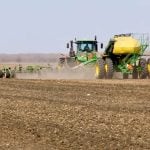
Spring seeding is ramping up in Manitoba as farmers still have no good answers on what to plant. Rosebank Farms was seeding wheat west of Miami April 29. Moist soil conditions saw little dust flying. Field activity was expected to build this week if the weather continued to co-operate.

Wheat weakness brings seeding uncertainty

Producers aren’t happy when they look at wheat futures forecasts, 
but their seeding options might be limited

Low prices, high global supply and a near-record high on U.S. wheat carry-over have some Manitoba producers scratching their heads on what to put into the ground. “If you look at almost anything, nothing really looks overly good, in my opinion anyway,” Doug Heaman, a Virden seed grower and board member of the Manitoba Seed

It’s important that growers recognize symptoms of late blight, which can appear on the plant’s leaves, stems and fruits, says a provincial extension pathologist.

Get an early start on preventing late blight

There are many steps we can take now — including starting tomato seedlings 
from seed from reputable suppliers — that can help ward off another infection in 2017

Commercial potato growers, market gardeners and home gardeners were hit hard by late blight last year, but there are steps to take to avoid a repeat in 2017, say Manitoba Agriculture staff. The key is managing for the fungal disease before it becomes a serious problem. The precautions to take range from choosing tomato varieties


One more webinar remains in the four-part series, sponsored by the Red River Basin Commission.

Four-part webinar series takes tile drainage education into the digital age

A recent educational effort by Agriculture Manitoba and the Red River Basin Commission means farmers are staying home to take in information on tile drainage

Manitoba Agriculture and the Red River Basin Commission have taken to the web on tile drainage. A series of four webinars is running until March 18, with topics spanning the on-farm benefits, downstream implications, environmental concerns and government considerations of tile drainage. “It’s established in other places, such as south of the border, but here

Manitoba Beef Producers’ new program to promote habitat enhancement will benefit birds like the threatened Sprague’s pipit which is not thriving as grassland habitat it needs to thrive has disappeared.

Manitoba Beef Producers working to protect species at risk

Producers teaming up with conservation group for protection of threatened habitat

Beef producers will lead a new program in Manitoba aimed at improving the habitat — and thereby chances of survival — for grassland birds whose populations are in perilous decline. Manitoba Beef Producers (MBP) will receive $750,000 from Environment and Climate Change Canada’s Species at Risk Partnerships on Agricultural Lands (SARPAL) over three years to