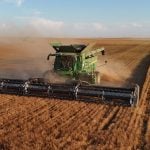
Staging critical for pre-harvest glyphosate

The crop must be mature before applying the non-selective herbicide

“Glyphosate is not a desiccant.” And just to be sure listeners got the message Manitoba Agriculture cereals specialist Pam de Rocquigny repeated the statement again during the Westman CropTalk webinar July 27: “Glyphosate is not a desiccant. “I no longer want to see anyone referring to when they are applying a pre-harvest glyphosate application… that


“Typically the (FHB) symptoms start to appear anywhere from 14 to 21 days after infection.” Pam de Rocquigny, Manitoba Agriculture.

Low levels of fusarium head blight are being observed in some crops

Manitoba Agriculture cereals specialist Pam de Rocquigny has some management tips

Fusarium head blight (FHB) symptoms were appearing in unprotected winter wheat and spring cereal variety trials last week, but at low levels. “Typically the symptoms start to appear anywhere from 14 to 21 days after infection,” Manitoba Agriculture cereals specialist Pam de Rocquigny said during the Westman CropTalk webinar July 27. “For the most part

Manitoba Crop Report and Crop Weather report: No. 14

Conditions as of August 2, 2016

Winter wheat and fall rye harvest is underway in Manitoba. To date, preliminary reports indicate winter wheat yields range from 60 to 95 bu/acre, and fall rye yields range from 40 to 90 bu/acre. Weekend thunderstorms resulted in variable amounts of precipitation, hail activity and lodging of crops across some areas of Manitoba. The majority


(Photo courtesy Canada Beef Inc.)

Klassen: Feeder cattle market seeking stability

Western Canadian feeder cattle prices continued on a downward trajectory trading $3-$5 below week-ago levels. Erratic buying interest resulted in inconsistent price action across the Prairies which made the market difficult to define. Smaller groups of various quality cattle were on offer, justifying the softer tone, but feedlot operators demonstrated unwavering fortitude even on genetically


Manitoba Crop Report and Crop Weather report: No. 13

Conditions as of July 25, 2016

Severe weather systems containing strong winds, tornadoes, heavy rains and hail passed through several areas of Manitoba. Field and forage crops, as well shelterbelts and farm infrastructure, were impacted by the storms. Crop damage, including lodging and stalk breakage, ranges from light to severe. Assessments are continuing. The warmer temperatures benefitted all crops, particularly the


Manitoba Crop Report and Crop Weather report: No. 12

Conditions as of July 18, 2016

Generally good growing conditions continue to advance crops across Manitoba. Localized thunderstorms did result in significant precipitation amounts and crop lodging in some areas of the province. Majority of acres and crop types are in the flowering and grain fill stages of development. Disease pressure and insect activity continues to be monitored as the growing

Rainfall for July 13, 2016 as of 6:40 p.m. CT. (CoCoRaHS.org)

Storms trim potential for big Prairie crops

Reuters — Heavy rain and strong winds are likely to curb the potential for Western Canada’s crops, government officials said, but the harvest may still be bigger than average. Pockets across Saskatchewan, Canada’s biggest wheat- and canola-growing province, received as much as five inches of rain, strong winds and hail since Sunday. The storms flattened