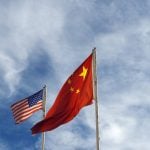
U.S. President Donald Trump and China’s President Xi Jinping won’t be signing any deals at the cancelled APEC Summit in Chile.

More curveballs for U.S./China trade pact

Chile will no longer be the venue for signing the partial trade agreement 


With a tremendous amount of anger and frustration pouring onto the streets of Santiago, Chile, the country’s president cancelled the upcoming Asia-Pacific Economic Co-operation Summit. The gathering of government leaders from around the Pacific Rim was to take place in the Chilean capital on Nov. 16 and 17. However, floods of demonstrators protesting against harsh economic conditions


U.S. President Donald Trump talks to China’s Vice Premier Liu He during their meeting in the Oval Office of the White House after two days of trade negotiations in Washington, Oct. 11, 2019. Photo: Reuters/Yuri Gripas

Beijing’s refusal to order U.S. farm buys becomes pain point

Washington/Beijing/Reuters – U.S. President Donald Trump’s demand that Beijing commit to big purchases of American farm products has become a major sticking point in talks to end the Sino-U.S. trade war, according to several people briefed on the negotiations. Trump has said publicly that China could buy as much as $50 billion of U.S. farm


Farmer Mike Appert stands in front of some of his storage bins and machinery on his 48,000-acre farm in Hazelton, North Dakota on July22.

Big U.S. farms get even bigger amid China trade war

Larger farms have an advantage even when it comes to adversity

As the 2018 harvest approached, North Dakota farmer Mike Appert had a problem — too many soybeans and nowhere to put them. Selling was a bad option. Prices were near decade lows as U.S. President Donald Trump’s trade war with China weighed heavily on the market. Temporary storage would only buy him a little bit of


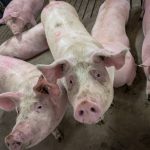
File photo of piglets at a hog operation in China. (KuLouKu/iStock/Getty Images)

China to exempt U.S. pork, soybeans from additional tariffs

Shanghai | Reuters — China will exempt some agricultural products from additional tariffs on U.S. goods, including pork and soybeans, China’s official Xinhua News Agency said Friday, in the latest sign of easing Sino-U.S. tensions before a new round of talks aimed at curbing a bruising trade war. The United States and China have both

The USDA building in Washington, D.C. (Art Wager/iStock/Getty Images)

Global wheat production to decrease, USDA says

MarketsFarm — In the latest supply and demand report from U.S. Department of Agriculture (USDA), the global wheat forecast was revised downward due to difficult weather conditions. USDA has now projected 765.53 million tonnes of wheat to be produced in 2019-20, according to the department’s world agriculture supply and demand estimates (WASDE), released Thursday. That’s


U.S. soybean sales are at a 13-year low.

Comment: U.S. corn, soy sales at 14-year low

The dawn of the new U.S. marketing year comes with burdensome supplies and absent buyers

As the 2019-20 U.S. corn- and soybean-marketing years begin, the amount of product sold for export through mid-month is dismal, dampening the chances of trimming domestic supplies over the next year. Through Aug. 15, some 9.94 million tonnes of corn and soybeans have been sold to foreign buyers for shipment in 2019-20, down 55 per

China is buying increasing volumes of canola oil and meal from Canada, says Chris Vervaet, executive director of the Canadian Oilseed Processors Association.

New record for Canadian canola crushing in 2018-19

TRADE Back-to-back record canola crushing is unlikely to result in increased crushing capacity due to trade uncertainty

China all but stopped importing Canadian canola seed in March, but it’s buying more Canadian canola oil and meal than ever. Meanwhile, Canadian processors crushed a record 9.295 million tonnes of canola seed during the 2018-19 crop year, ending July 31, Statistics Canada figures show. That’s up 0.3 per cent, or 26,000 tonnes, from the