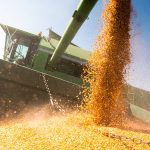
Richardson International’s rise to share top grain spot

The pending multibillion-dollar sale of Viterra demonstrates the value of patient capital and private ownership, says Richardson International president Curt Vossen. Last week publicly traded Viterra, Canada’s largest grain company, announced it was selling to the world’s No. 1 diversified commodities trader, Swiss-based Glencore, for $16.1 billion. But in a move believed aimed at getting

The virtues of patient capital

The story of the Prairie grain co-operatives is certainly one for the business books. Starting from nothing in 1923, by 1929 the Pools through the Central Selling Agency had the largest sales of any business in Canada. A year later it collapsed, but the Pools rose again as handling companies, and along with UGG, dominated


CDC Triffid contamination on the decline

Officials from Canada’s flax industry are in Europe this week to brief government and industry officials on the progress Canada is making removing traces of CDC Triffid, a genetically modified (GM) flax, from Canadian flax. “It’s getting less and less frequent and less and less intense,” Flax Council of Canada president Will Hill said in

Who is Glencore International?

Who is Glencore International? A lot of people are asking as the giant, Swiss-based, publicly traded multinational firm prepares to buy Viterra and become a dominant player in Canada’s grain industry. Glencore describes itself as the world’s largest commodity trader — mostly in metals and minerals, but also crops. It employs more than 2,800 people


Canada’s Harper says Viterra bid not “primarily” foreign

reuters / Canadian Prime Minister Stephen Harper said March 25 that the structure of Glencore’s $6.1-billion deal to buy No. 1 Canadian grain handler Viterra means it should not necessarily be seen as a full foreign takeover. Harper’s comments come as the Canadian government and regulators begin reviewing the offer by Swiss-based Glencore, already the

Canadian Wheat Board seen gaining grain-handling deals

Canadian Agriculture Minister Gerry Ritz said Feb. 27 he is confident the Canadian Wheat Board will strike agreements with grain handlers to allow it to start buying farmers’ 2012 crops for future delivery. As of Aug. 1, the wheat board plans to continue buying and selling upcoming crops, even though farmers will be no longer


U.S. farm co-op buying Canada durum

The largest U.S. grain co-operative, CHS Inc., is buying Canadian durum and looks to bulk up on other crops there to seize the “phenomenal” opportunity left by the end of the Canadian Wheat Board marketing monopoly later this year, a CHS executive told Reuters Feb. 27. In mid-December, a Canadian bill became law that will

Port group to close as CWB monopoly ends

The 103-year-old organization that co-ordinates shipments through Canada’s two biggest grain-shipping ports is winding down, saying it may not be needed once the Canadian Wheat Board loses its monopoly. The Winnipeg-based Canadian Ports Clearance Association (CPCA) will cease operations this summer on Aug. 31, one month after the wheat board loses control over Western Canada’s


Richardson buys independent terminal in Alberta

Staff / Canada’s second-biggest grain handler has made another play to expand its handle in northwestern Alberta’s Peace region, this time buying from an independent player. Richardson International announced Wednesday it will buy the Great Northern Grain terminal and crop input business at Nampa, Alta., about 26 km south of Peace River, for an undisclosed

Breakfast of champions

The bodies and minds of students at two area communities were nourished when the famous Made in Manitoba Breakfast program was featured, connecting students to where that food came from. The breakfast and agriculture education program is one of a number run by Agriculture in the Classroom-Manitoba Inc. (AITC-M), a non-profit organization supported by individuals