Varroa mites feeding on honeybee pupae.

Bees hit with pesky symptoms

Atypical weather this year impacted pest management for beekeepers

While an extended season has been a boon for the honey sector, experts say it may have also played into the varroa mite issues that have plagued some operations. Ian Steppler, chair of the Manitoba Beekeepers’ Association, said producers reported higher mite counts this year, requiring treatment. Infestations of the parasite are associated with weak

A Lygus bug crawls on a green canola pod.

Re-thinking Lygus bug thresholds

Producers may want to ease off Lygus bug control in lower populations

Canola growers should be keeping a different threshold in mind when it comes to gauging damage from Lygus bugs. Provincial entomologist John Gavloski says the most recent research on Lygus bug damage pegs a threshold of 20 to 30 bugs per 10 sweeps of the scouting net, much higher than previously considered. “It is something


Alfalfa looper larva. (CanolaCouncil.org)

U.S. to ban use of chlorpyrifos on food crops

Cancellation already scheduled for most outdoor use in Canada

UPDATED, Aug. 25 –– Chicago | Reuters — The U.S. Environmental Protection Agency on Wednesday said it will ban the use on food crops of chlorpyrifos insecticide, which has been linked to health problems in children. The decision is a victory for environmental activists who have fought to stop the use of the chemical that

Cereal leaf beetle larvae may leave long, white streaks on cereals, forage grasses and some grassy weeds.

AAFC wants your cereal leaf beetles

Agriculture and Agri-Food Canada has put out a call for samples to monitor biocontrol on the insect

Agriculture and Agri-Food Canada (AAFC) is asking farmers to keep an eye out for feeding damage and “shiny, slug-like creatures” on cereals, potential markers of cereal leaf beetle larvae.  “We need samples to monitor the biocontrol insect that kills this pest,” said Dr. Haley Catton. If found, AAFC is asking farmers to send them samples


June bugs are an important food source for many other insects.

Comment: June bugs. The ‘crouton of the sky’

Widely thought a pest, these creatures deserve a second look

Many people grit their teeth in anticipation of the arrival of June bugs. You might already have had your first run-in with one. Perhaps you heard one clumsily bounce off your window? Maybe you saw one loop around the porch light? Possibly, you felt one tangle its six sticky legs into your hair? June bugs,

Editor’s Take: Crop protection under fire

It’s shaping up to be a tough year on the crop-protection front. I don’t mean pests, diseases and weeds. For any producer, those are perennial challenges that will wax and wane with weather and pest pressure. I speak instead of the regulatory and legal fronts, where as you will read in our May 27 issue,


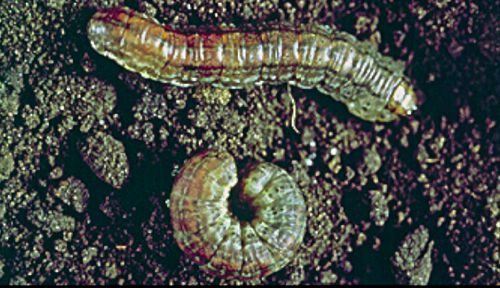
Cutworms. (Photo courtesy Canola Council of Canada)

Prairie growers on lookout as insects seize opportunity

Dry conditions, delayed seeding lift pest counts

MarketsFarm — With most Prairie growers’ newly seeded crops already up against dry conditions, growers remain on the lookout for insects which further threaten the health of those seedlings. Considering the high prices of many crops this season, the potential damage would be more costly. John Gavloski, entomologist for Manitoba Agriculture, said there is a

Flea beetles.

The four horsemen of the crop-pocalypse

Three of the big four crop pests could be poised for a comeback in the coming season

Four pests caused the most problems last season, and given the right spring conditions, three are poised to return. That’s according to John Gavoloski, provincial entomologist, who says farmers should head into spring watching the weather and with their eyes open. “If I had to predict which three pests farmers could be at a higher


Flea beetle is one of the pests a Manitoba researcher is targeting with biotechnology.

Targeting your crop enemies

Is the future of crop protection environmentally friendly biotechnology?

So far biotechnology in agriculture has driven the use of crop protection products through genetically engineered herbicide resistance. But the next wave could displace at least some of those applications by opening up another front in the war on two familiar canola concerns — sclerotinia and flea beetle. Mark Belmonte, a professor of biological science

(Innovafeed.com)

ADM, InnovaFeed to build world’s biggest insect protein plant in Illinois

Chicago | Reuters — U.S. grain trader and processor Archer Daniels Midland and French biotech company InnovaFeed announced plans on Thursday to build the world’s largest insect protein plant at Decatur, Illinois. The announcement comes amid rising global feed grain prices and tightening supplies, and as more companies work toward reducing the carbon footprint of