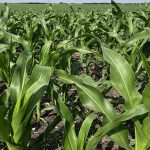
Canadian, Manitoba farmland values higher in 2019

Canadian, Manitoba farmland values higher in 2019

The yearly growth has slowed in recent seasons and that trend is expected to continue

Average Manitoba farmland values rose four per cent in 2019, just slightly higher than the 3.7 per cent increase recorded in 2018, Farm Credit Canada (FCC) says in its 2019 Farmland Values report released April 6. The biggest increase — 8.9 per cent — was in the Eastman region followed by 4.7 per cent in

A recent Farm Credit Canada report says land purchases by next-generation producers from producers exiting the industry accounted for many transactions.

A closer look at Manitoba farmland values

Eastman region saw the highest percentage increase at 8.2 per cent

Manitoba’s modest four per cent increase in farmland values in 2019 coincided with a mixed year for farmers. Cereal and canola yields were generally average, with lower yields for soybeans, corn and sunflowers, the Farm Credit Canada (FCC) report says. A lot of potatoes didn’t get harvested due to wet weather, some crops went unharvested, while hay, pasture and feed corn were hurt during


(Dave Bedard photo)

Canadian farmland trending less affordable in FCC report

Average values continue rising across board

The average value of farmland in Canada is continuing to rise faster than farmers’ ability to generate revenue from it, Farm Credit Canada’s latest Farmland Values Report suggests. The report, released Monday, shows the average value of Canadian farmland rose 5.2 per cent in 2019 over 2018, the smallest year-over-year increase since 2010, and down

Minister of Agriculture and Agri-Food Marie-Claude Bibeau and Minister of Innovation, Science and Industry Navdeep Bains at a March 23 news conference as efforts continue to help slow the spread of coronavirus.

Bibeau defends COVID-19 response for agriculture

Canada’s agriculture and agri-food minister says FCC boost and advance repayment deferrals will help with cash flow for farmers

The government’s boost to Farm Credit Canada’s lending capacity and delaying repayment of cash advances is aimed at addressing immediate agriculture sector cash flow concerns — but there’s more to come. That was the word this week from federal Agriculture and Agri-Food Canada Minister Marie-Claude Bibeau. FCC is getting a $5-billion boost to its lending


(Photo courtesy Canola Council of Canada)

Cash advance repayment deadlines extended

FCC gets added capital to boost lending capacity

Canadian farmers who have repayment deadlines coming up on their cash advances between now and the end of April will get extra time to repay those loans. The federal government on Monday announced a stay of default on loans coming due on or before April 30 under the Advance Payments Program (APP), among other measures

Dennis Laycraft. (John Greig photo)

Beef sector mobilizes against supply disruptions

Keeping border open, meeting demand for beef are top priorities

Teams of livestock and government officials are quickly creating plans and policies to keep the sector functioning during the COVID-19 pandemic, says the executive vice-president of the Canadian Cattlemen’s Association. “Our primary objective obviously is to insure there is stable beef production and trade that can continue under the situation with the COVID-19 pandemic,” Dennis


Comment: Farmers, public deserve clarity on future of Farm Credit Canada

Comment: Farmers, public deserve clarity on future of Farm Credit Canada

Just what did the Liberal campaign promise to alter FCC really mean?

Glacier FarmMedia – The Liberals’ vague promise to expand and enhance Farm Credit Canada (FCC) remains as unclear now as it was when it was proposed ahead of the last federal election. There is still no clear indication as to how Ottawa will rename FCC to “Farm and Food Development Canada,” let alone what that

We need to have some type of avenue for young farmers, who are not at 85 per cent equity because this land will not pay for itself.” – Bill Campbell, KAP president

KAP passes resolutions on farmland access

Delegates raised concerns of private investors buying land and squeezing farmers out of the market

Access to land, particularly for young farmers, was front and centre on the second day of Keystone Agricultural Producers’ (KAP) annual general meeting. Two resolutions related to increasing land access passed in the final day of the meeting. The first called on KAP to lobby for tax breaks for landowners who rent or sell to


Weather disruptions can lead to production losses across major agriculture-producing regions.

Farm Credit Canada highlights three disruptors in 2020

The federal ag lender says climate change, protectionism and automation are the issues to watch this year

Farm Credit Canada (FCC) believes there are three major factors that will disrupt Canadian agriculture in 2020, according to a prepared statement from the federal agency. Those disruptors are climate change, protectionism and automation, which FCC chief agricultural economist J.P. Gervais said could promote or inhibit growth in the industry. “We call them disruptors for

Huawei chief financial officer Meng Wanzhou leaves B.C. Supreme Court on a lunch break during her extradition hearing in Vancouver on Jan. 22, 2020. (Photo: Reuters/Jennifer Gauthier)

Improving global ag trade may not favour Canada

MarketsFarm — When it comes to improving global trade relations, a rising tide may not lift all boats. In the recently-signed Phase One trade deal between the U.S. and China, Beijing pledged to significantly increase Chinese purchases of U.S. soybeans and other agriculture goods. “Where does that leave room for Canada, given the demand side