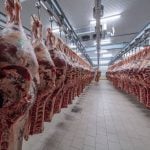
chickens

Which chicken, in what pot?

Supply management doesn’t fit well with speciality production and a proposed new quota program is a misstep

Over 50 farmers gathered at the St. Norbert Community Centre on November 1 to hear Wayne Hiltz, executive director of the Manitoba Chicken Producers, present the new Annual Specialty Quota Program announced in September. The new program is designed to serve niche markets in the province with fresh Manitoba-raised chicken year round. This is done

CBOT oat December 2016. (chart as of Nov. 18, 2016)

Drozd: Oat futures rally to a one-year high

Market Outlook: The increase might seem sudden but charts predicted upward movement

Oat futures at the CBOT experienced a 40 per cent gain from September 13 to October 28, 2016. The December 2016 oat futures rallied $.69 per bushel (all figures U.S. funds), going from a low of $1.71 to $2.40, a one-year high. The December oat futures contract had been in a major downtrend since it


Various hanging international flags.

Harvesting prosperity from seven years of negotiation

Threats to rip up NAFTA and trash the TPP send a chill down the spines of Canadians whose livelihoods depend on trade. While the Trump administration’s action plan is not yet clear, it is crystal clear that Canada’s past and future depend on trade. Throughout history with a small population and huge resources, Canada has

Preparing for Trump’s food world

Many Trump policies could have wide-ranging impact on food and agriculture around the globe

After the shock comes the reality of understanding what a Trump presidency and a Republican-dominated Congress will mean to all of us. Over the last two years, policies on immigration, trade and security have dominated the campaign. Not much was said about agriculture or food policies. By the looks of it though, a new approach


Agriculture labour crunch worsening

Over the last decade the number of unfilled jobs has nearly doubled

The agri-food industry has suffered a steadily worsening labour shortage during the last decade. Without remedial action, it will be far worse 10 years from now, says Portia MacDonald-Dewhirst, executive director of the Canadian Agricultural Human Resource Council (CAHRC). From a shortage of 30,000 workers 10 years ago to a current shortfall of 59,000, there

Wheat and US dollars

U.S. trade double standard confirmed

American trade expert Joe Glauber sees continued pressure on Canada’s supply 
management and rising domestic farm subsidies in developing countries

Joe Glauber confirmed what many Canadian farmers believed during the Doha Round of World Trade Organization (WTO) talks from 2001 to 2008: the Americans were promoting farm subsidy cuts, while increasing their own. In 2001 the United States spent $10 billion in market loans to offset low prices for U.S. wheat, corn and soybeans, Glauber,


Trade liberalization isn’t popular now but former USDA chief economist and U.S. agricultural trade negotiator Joe Glauber hopes it will regain support because, in his view, it’s good for farmers.

Support for free trade ain’t what it used to be

What was ‘accepted wisdom’ is under populist attack, but a veteran American trade advocate 
expects a revival in trade liberalization because of the benefits

After more than two decades trade liberalization seems out of style, but like fat lapels or skinny ties, it’s likely to be vogue again. That’s because of the benefits, especially for farmers, says Joe Glauber, the United States Department of Agriculture’s former chief economist and senior research fellow at the International Food Policy Research Institute

MGEX spring wheat weekly nearby (chart as of Nov. 2, 2016)

Spring wheat futures stuck in a rut

MGEX spring wheat futures are rangebound and going nowhere fast

The nearby MGEX spring wheat futures have been stuck in a US$.60-per-bushel trading range since July 2015. Prices have thus far been unable to exceed resistance in the US$5.42 area, as the selling overcomes the buying. Subsequently, the US$4.82 level is proving to be support, an area where the buying picks up and the market


Prime Minister Justin Trudeau at the EU-Canada Leaders’ Summit and CETA signing ceremony in Brussels, Belgium on Oct. 30, 2016.

Ratifying CETA was the easy part

Now comes the hard work of dealing with domestic effects, like opening markets to dairy imports

Looks like we are going ahead with CETA after all. After a few meltdowns and temper tantrums, both sides are now willing to ratify the deal. In the aftermath of several anti-trade occurrences in recent months, having a deal with the EU is nothing short of a miracle. CETA was initially about growth and prosperity,

Photo: Thinkstock

Green jobs eligible for wage subsidy

A new Career Focus Green Jobs program is offering wage subsidies to help employers with an environmental focus hire new graduates, a federal release says. The program targets small- and medium-sized businesses to help reduce the cost barriers of hiring new graduates by subsidizing their salary by 50 per cent to a maximum of $13,500