

An example of rill erosion which occurs when run-off water forms small channels while running down bare soil.

More emphasis should be placed on soil health, MCDA speaker says

Cover crops, reduced tillage, crop and livestock diversity can all help reduce watershed challenges

We’ve all had those moments when we realize what we do most of the time matters more than what we attempt once in a while. One of those light bulbs snapped on for Ryan Canart while sitting at a soil health conference in Alberta awhile back. The district manager for the Upper Assiniboine River Conservation

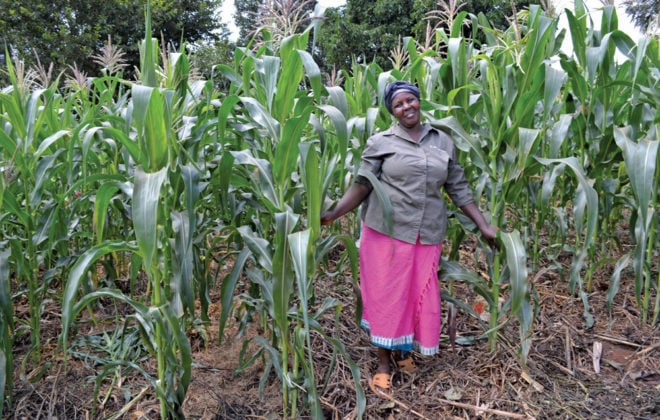
Jane Wanjiko standing in her maize field.

African smallholders are adopting conservation agriculture techniques

When you’re subsisting on three-quarters of an acre, increasing 
maize production from 32 kg a year to 990 kg is a life-changing event

This summer Stefan Epp-Koop travelled to Kenya as part of a Canadian Foodgrains Bank learning tour, focused on the importance of agriculture in achieving numerous development goals: reducing hunger, increasing incomes, empowering women, adapting to a changing climate, and improving nutrition. Throughout the trip he visited farmers, government officials and researchers, exploring solutions that were


Manitoba Agriculture soil fertility specialist John Heard, soil sampling the old-fashioned way, says sampling cereals fields right after combining provides some advantages.

Soil test right after the combine

The tradition has been to sample for soil nutrients later in the fall, but there are compelling reasons to go sooner than later

It’s been the accepted wisdom to soil test as late as possible in the fall, but one soil test lab says it might pay to go earlier. Agvise Laboratories, that has soil-testing labs in North Dakota and Minnesota and a large stable of Canadian customers, told growers in a recent email it may be a

Ducks Unlimited hosted a grazing tour at Ryan Boyd’s operation on June 30 to discuss the benefits and challenges of growing winter wheat in western Manitoba.

Demonstrating the benefits of growing winter wheat in Westman

Ducks Unlimited recently partnered with a Brandon-area farmer to illustrate how winter wheat 
can be a positive addition to your crop rotation

Why waste three months of sunlight on bare ground when you could grow some profit? That is the notion a number of western Canadian producers have begun to experiment with, including Forrest-area producer Ryan Boyd, who says he’s seen several benefits from adding winter wheat into his rotation. “Looking at dollars and cents I think


Sclerotinia relies on a very specific set of environmental conditions to thrive in your canola.

Consider conditions, margins before spraying for sclerotinia

Spray for sclerotinia or give it a pass? That’s no simple black or white question, but one thing is certain — by the time you can see it, it’s too late. Anastasia Kubinec, Manitoba Agriculture, Food and Rural Development oilseed specialist, said that doesn’t mean you shouldn’t scout though. If anything it means it’s more

Gabe Brown is pictured while hosting a field tour on his North Dakota operation in October 2015.

Cover cropping – tips of the trade

Cover crop grower Gabe Brown says the best place to start when designing a species mix is to understand what your field needs and find the species that best addresses those issues

The first step to success using cover crops is defining the problem you need to fix. Gabe Brown, a North Dakota farmer and cover crop advocate, told an April 6 Ducks Unlimited grazing club meeting in Lenore that too often farmers plant before they truly have a strategy. “The first thing you need to do


Cutaway of Plant and Roots in Dirt

Healthy soils mean a sustainable future

Causes, consequences of and solutions to soil erosion are always connected

Healthy societies and healthy economies are the product of healthy soil. Healthy soil produces abundant inexpensive food in a sustainable and reliable way. This requires soil care on the part of land managers and courage on the part of policy-makers who oversee soil protection. Scientists who understand soil formation tell us the only sustainable way

Pratisara Bajracharya, field crop pathologist with Manitoba Agriculture, Food and Rural Development spoke on clubroot at the Dauphin Agriculture Society’s Farm Outlook 2016 held on March 10.

Careful management key to keeping clubroot level low in province

Experts call for soil testing, scouting and diligent rotations to keep clubroot at low levels

Manitoba canola growers aren’t facing the full mischievousness of clubroot — yet. The soil-borne disease is a major issue for farmers in other locales, where it limits cropping options, stunts plants and hampers yield. Provincial specialists say they hope it remains a mild problem here, and scouting and diligent crop rotation will be the key


Rainbow over green wheat field

Survey to gauge changes in crop rotation

Data needed to measure climate benefit from changes farmers already made

Rather than wait for new rules on Canadian farms to cut greenhouse gas and carbon emissions, a crop researcher hopes to show how growers may have already helped to do so. Stuart Smyth, a professor in the University of Saskatchewan’s department of bioresources policy, business and economics, on Jan. 15 launched a national online farmer

Hand and harvester

Editorial: A whole-farm approach

If you think the future of government support for agriculture lies in doing more of the same but only better, you’ll get little comfort from Manitoba’s Agriculture Risk Management Review Task Force report released last week. The 25 recommendations and the supporting appendix report should also make you a little uncomfortable if you think the