
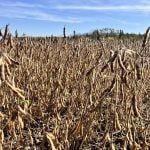
Aster yellows doesn’t strike often — but when it does…

Yes, 2012 was a bad year for aster yellows in canola, but we have to keep this disease in perspective. Sclerotinia and blackleg are potential threats each year, and remain the top two most important canola diseases. Aster yellows has had only four bad years on the Prairies to date: 1957, 2000, 2007 and 2012.

Drought repercussions will weigh on livestock sector for months to come

Low protein in soymeal and higher toxin levels in distillers grains add new challenges for pig, poultry and cattle feeders


Reuters / The repercussions of this year’s drought across the U.S. Midwest will likely continue to affect the livestock feeding industry for many months to come. Drought not only impacted the quantity of crops produced but also quality, leading to abnormally low protein content in soybeans and higher-than-usual toxin levels in corn that stand to


Canola variety selection tool now live with 2012 results

The tool includes an economic calculator, interactive maps, and the ability to refine searches by five traits

The online Canola Variety Selection tool is now live with data from the 2012 Canola Performance Trials (CPT), giving canola growers another tool to compare variety performance. The CPT provides science-based, unbiased performance data that reflects actual production practices. The selection tool provides comparative data on leading varieties and newly introduced varieties. The tool includes

Nutrition and your vision

Vision acuity is measured on a 20/X basis, where the first number is the standard distance of 20 feet between the eye being tested and the eye chart. A person with 20/40 vision can see clearly at 20 feet what a person with normal vision would see at 40 feet. Eyeglasses and contact lenses can


Syngenta to enter Prairie canola seed market

Syngenta plans to broaden its canola portfolio beyond chemicals and launch its own new canola seed varieties on the Prairies starting next fall. “This is an exceptional time to be in the canola seed market, given the extent of breeding and varietal development activities going on across the country,” Dave Sippell, Syngenta’s head of diverse


Churchill port wraps up its shipping season

Grain shipments through Churchill have fallen this year, but officials say they’re encouraged because the port attracted new customers and shipped a greater variety of products. “It was a successful year,” but “probably not as successful as we would have liked it to be,” said Jeff McEachern, executive director of the Churchill Gateway Development Corporation.

Monsanto’s dicamba-tolerant soybeans approved

Monsanto Company’s dicamba-tolerant soybean product has received full food, feed and environmental release approval from Health Canada (HC) and the Canadian Food Inspection Agency (CFIA). The approval brings Monsanto Canada one step closer to introducing dicamba tolerance stacked with Monsanto’s existing Genuity(R) Roundup Ready 2 Yield(R) trait technology in soybeans. Plans are to commercially brand