
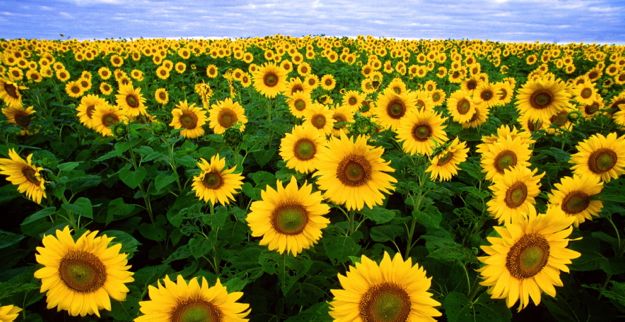
(Bruce Fritz photo courtesy ARS/USDA)

Sunflowers fight for acres in crowded Manitoba fields

CNS Canada — Better prices have created some optimism for sunflower growers in Western Canada — a feeling that may be needed to help the crop maintain acres in the face of so much competition. “I think in Manitoba we’re going to be battling for acres compared to some of those competitive crops,” said Darcelle

Just paying Canadians more to work in the farm sector or further automating farms "may not be possible," the Conference Board of Canada writes.

Canadian farms need foreign workers

The Conference Board of Canada says the industry is facing a growing labour crunch

Canadian agriculture faces a serious roadblock to future expansion through a growing shortage of workers with the right skills, says a report from the Conference Board of Canada. The report, entitled Sowing the Seeds of Growth, says the agriculture sector is “on a seemingly unsustainable path, with an ever-growing labour gap that is likely to


Manitoba Crop Report and Crop Weather report: No. 24

Final Report of 2016: Conditions as of October 17, 2016

Provincially, harvest in Manitoba is estimated at 92 per cent complete. Harvest of cereal crops and field peas is 99 per cent complete, canola and edible beans 95 per cent complete, soybeans 88 per cent complete, flax 50 per cent complete, and sunflowers and grain corn harvest at 20 to 25 per cent complete. Wet


Good reasons to desiccate sunflowers

Good reasons to desiccate sunflowers

Improved yield and quality and increased peace of mind are all part of the equation

If a hard frost isn’t in the forecast, sunflower farmers might want to consider applying liquid frost — a.k.a., a desiccant. That’s the advice Manitoba Agriculture oilseed specialist Anastasia Kubinec gave during the Crop Talk Westman webinar Sept. 28. Kubinec, who also farms with her husband and father, knows of what she speaks. Their sunflowers

(Bruce Fritz photo courtesy ARS/USDA)

Manitoba sunflowers ready for harvest

CNS Canada — Most sunflower fields in southern Manitoba are ready for harvest, but the province first needs to see some drier weather. A handful of fields have seen some harvest activity already, “but the bulk is still to come,” said Ben Friesen, purchasing manager with Scoular Canada at Winkler, Man. “If the sun shines,


Manitoba Crop Report and Crop Weather report: No. 23

Conditions as of October 3, 2016

Favourable weather conditions of warmer temperatures and minimal rainfall allowed for good harvest progress across most of Manitoba over the past week. Winter wheat and fall rye are emerging with excellent germination and stand establishment reported. Fall field work including post-harvest weed control, fall fertilizer applications, tillage and soil testing is on-going. Click here for

Manitoba Crop Report and Crop Weather report: No. 22

Conditions as of September 26, 2016

Producers in Manitoba continue to harvest spring cereals, canola, flax, edible beans and soybeans. The first acres of sunflowers and grain corn were also harvested. However, harvest progress was slowed over the weekend due to rainfall. Winter wheat and fall rye is emerging with excellent germination and stand establishment reported. Fall field work including post-harvest


Manitoba Crop Report and Crop Weather report: No. 20

Conditions as of September 12, 2016

Wet weather over the past week slowed harvest progress in Manitoba. The recent weather is also impacting crop quality in spring wheat and barley. Some crops are being harvested at tough or damp moisture levels, requiring aeration or artificial drying to achieve safe storage moisture levels. Soybeans, grain corn and sunflowers are maturing quickly. Silage

Manitoba Crop Report and Crop Weather report: No. 19

Conditions as of September 6, 2016

Harvest 2016 continued across Manitoba with good progress made in cereal crops and canola. However, wet weather over the weekend in some areas of the province impacted harvest operations. Harvest will resume quickly in areas that received lower rainfall amounts and where field conditions allow. Field operations will be delayed in areas that received significant