
Manitoba Crop Report and Crop Weather report: No. 4

Conditions as of May 24, 2016

Excellent field and weather conditions allowed seeding operations to continue across Manitoba. Provincially, seeding progress is estimated at 88 per cent complete. Many areas of Manitoba received precipitation over the weekend which was of benefit to crops, hay and pastures. However, additional precipitation would still be welcomed to assist with crop germination, emergence and growth.

(AOHVA.com)

Alberta lifts off-roading ban

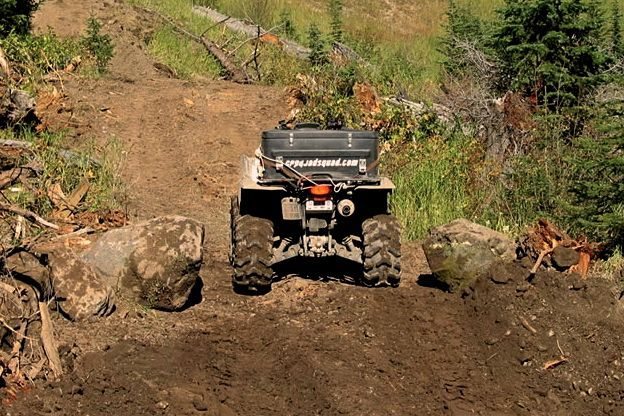
Citing an outbreak of “wet and cool weather” across parts of the province, reducing the overall fire hazard, the Alberta government has lifted most of its restrictions on off-highway vehicle (OHV) use. The province lifted its OHV ban for “much of the province” except for its forest areas around Lac La Biche and Fort McMurray,


Editorial: What’s in a name?

Editorial: What’s in a name?

The newly elected Pallister government wasted little time putting its stamp on government in this province. Almost as fast as you can say Ralph Eichler, the provincial department responsible for agriculture got a new name this month: Manitoba Department of Agriculture (MDA). It has a nice simple ring to it. But it also reflects a

Forecast: An unsettled long weekend en route

After a pretty chilly weekend it looks like summer is going to try and move back in during this forecast period, with plenty of sunshine and warm temperatures expected. This forecast period will begin with an area of high pressure building to our southeast and an area of low pressure over far Western Canada. Together,


Dawson: MAFRD is now MDA

Dawson: MAFRD is now MDA

When Premier Brian Pallister and his 12 cabinet ministers were sworn into office May 3 most of their ministries got a new name, including Manitoba Agriculture, Food and Rural Development (MAFRD). Once again it is the Manitoba Department of Agriculture (MDA). Rural development is now part of Indigenous and Municipal Relations under Minister Eileen Clarke.

Proper rations, location, and salt additives are key to managing mineral intake of cattle gone to pasture.

Manage your cattle’s mineral menu

Consistent monitoring, proper salt use and location are all key to ensure 
minerals and supplements are effective

Minerals and supplements are necessary tools in cattle production but how do you ensure the herd has what it needs while avoiding expensive waste? Animal nutrition expert D.J. Woodward says striking that balance means monitoring, proper rations and appropriate salt use. “Cattle have to consume minerals in order to have all of the health benefits


Wildfires in the RMs of Piney and Stuartburn in the spring of 2012 starkly illustrated the need for better rural telecommunications.

CRTC chief deems Internet a necessity

Modern telecommunications are still rare as hen’s teeth in rural areas, but hope is on the horizon

A mid-hearing speech, made by the chairman of the Canadian Radio-Television and Telecommunications Commission, is welcome news to rural advocates of digital equality. In recent televised remarks, Jean-Pierre Blais said the necessity of broadband Internet access was a “self-evident truth,” shifting the focus of the current review of basic telecommunications services from proving the need


Vancouver-based Earls has backed away from its decision to seek Certified Humane Beef exclusively from a Kansas-based supplier.

Earls’ reversal wins battle, not war

One of Canada’s highest-profile food and agriculture commentators says the beef industry shouldn’t be celebrating victory over getting Earls to roll back its humane beef certification decision. Sylvain Charlebois, a professor of marketing studies at the University of Guelph who frequently writes about food consumers and how they interact with the agriculture and food industry,

(Doug Wilson photo courtesy ARS/USDA)

Lethbridge feed barley’s spring rally muted

CNS Canada — Lethbridge feed barley should be seeing its largest premium over fall and winter months, but so far this year the market’s spring rally has been limited. “This year all we’ve seen is a $5 to $10 per tonne move higher,” said Jim Beusekom, analyst at Market Place Commodities. “So it’s pretty minimal