Stubble on a harvested oat field near Winnipeg. (Shannon VanRaes photo)

Carbon price worries farmers, fertilizer makers

Winnipeg/Toronto | Reuters — Canada’s plan to price carbon emissions may weaken the farm sector in one of the biggest grain-shipping countries, raising farmers’ costs and discouraging investment in fertilizer production, industry groups say. Ottawa this month promised a price on carbon emissions by 2018, and will let provinces choose a tax or cap-and-trade system.


Manitoba Crop Report and Crop Weather report: No. 24

Final Report of 2016: Conditions as of October 17, 2016

Provincially, harvest in Manitoba is estimated at 92 per cent complete. Harvest of cereal crops and field peas is 99 per cent complete, canola and edible beans 95 per cent complete, soybeans 88 per cent complete, flax 50 per cent complete, and sunflowers and grain corn harvest at 20 to 25 per cent complete. Wet

Wolves in Saskatchewan’s Prince Albert National Park in 2014. (Parks Canada photo, pc.gc.ca)

Saskatchewan to thin out wolf pack along treeline

Aiming to prevent “wolf-livestock conflicts” in the region, Saskatchewan’s environment department will again offer a wolf hunting season along the provincial forest fringe starting Saturday. The wolf hunt, running from Oct. 15, 2016 through to March 31, 2017, is to be allowed in wildlife management zones 43 (Melfort, Tisdale), 47 (North Battleford, Turtleford), 48 (Preeceville,


Syngenta’s Interaction Centre at Stein, Switzerland. (Syngenta.com)

ChemChina, Syngenta ready to offer EU remedies over merger

Florence | Reuters — Chinese state-owned chemical company ChemChina and Swiss pesticides and seeds group Syngenta are prepared to offer concessions to EU antitrust regulators to ease concerns over their US$43 billion deal, a person familiar with the matter said Friday. The companies will meet European Commission officials on Monday in a meeting called by

Mario Tenuta, professor of applied soil ecology at the University of Manitoba predicts, among other things, that anhydrous ammonia and urea — popular nitrogen fertilizers — will be banned because they produce too much nitrous oxide — a powerful greenhouse gas.

In the battle to mitigate global warming farmers’ nitrogen use will be scrutinized

But soil scientist Mario Tenuta says there are things farmers can do to help themselves

The fight to control global warning will bring about big changes in how Manitoba farmers farm, says Mario Tenuta, professor of applied soil ecology and chair and adviser of the B.Sc. Agroecology Program at the University of Manitoba. “I predict eventually they will outlaw anhydrous ammonia and urea and replace it with high-efficiency (nitrogen) fertilizer,”


U.S. forecaster sees La Nina likely in coming months

New York | Reuters — A U.S. government forecaster on Thursday said the chance has increased for weather phenomenon La Nina developing in the coming months in the Northern Hemisphere fall and persist into winter 2016-17. The Climate Prediction Center (CPC), an agency of the National Weather Service, in a monthly forecast pegged the chance


(Dave Bedard photo)

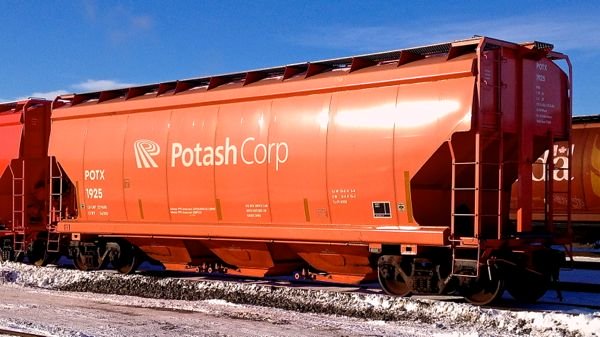
Agrium, PotashCorp shareholders vote on merger next month

Reuters — Agrium and PotashCorp shareholders will hold separate meetings next month to vote on a merger agreement between the two fertilizer companies, they said in a filing on Thursday. The all-stock deal would combine Potash’s crop nutrient production capacity, the world’s largest, with Agrium’s farm retail network, North America’s biggest. Agrium shareholders will meet