A rail line in Aguas Calientes, Peru. (CIA.gov)

Pacific trade bloc adds ‘associate’ members, including Canada

Cali, Colombia | Reuters –– Four new countries will be admitted to the Pacific Alliance as associate members, the trade group said on Thursday, as it seeks to expand commerce with the Asia-Pacific region while the U.S. pushes for protectionist measures. The alliance, which comprises Colombia, Chile, Mexico and Peru, will on Friday admit Singapore,
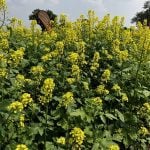
short soybeans - Allan Dawson

Alfalfa weevil still at high levels, root rot in soybeans reported

Manitoba Insect & Disease Update for June 28

Alfalfa weevil continues to be reported at high levels in some alfalfa fields. Cereal leaf beetle and thrips are noticeable in some fields of small grain cereals, but at below economical levels. Initial tests of levels of parasitism of cereal leaf beetle larvae show quite high levels in the Central region, with samples from other regions soon to be tested. Thanks to


There were four elevators at Elgin when this photo was taken in 1981. The 30,000-bushel elevator in the foreground, built in 1928 by the  Canadian Consolidated Grain Company, had two balloon annexes and  fertilizer shed when it was sold to United Grain Growers in 1959. It  closed in 1985 and was demolished. The 50,000-bushel Manitoba Pool  elevator and annex beside it dates from 1926, while the side-by-side  Paterson elevators in the background consisted of a smaller one built  here in 1923 and a larger one brought from Wakopa in 1966. The Paterson  elevators were sold to Pool in 1981. The following year, the smaller one  was demolished as the larger one was renovated extensively and a modern  crib annex was built beside it. Today, only the former Paterson elevator  and its annex remain at the site, in private ownership.

PHOTOS: This Old Elevator: June 2017

The Manitoba Historical Society wants to gather information about all the grain elevators in Manitoba

In the 1950s, there were over 700 grain elevators in Manitoba. Today, there are fewer than 200. You can help to preserve the legacy of these disappearing “Prairie sentinels.” The Manitoba Historical Society (MHS) is gathering information about all elevators that ever stood in Manitoba, regardless of their present status. Collaborating with the Manitoba Co-operator


(OatMillers.com)

Confidence seen in oat sector with Richardson deal

CNS Canada –– Richardson International’s decision to buy British-based European Oat Millers is seen as a strong sign of confidence in the oats sector, even if it has little effect on Prairie farmers. “I think it’s very positive. We’re seeing lots of activity in the oats industry,” Art Enns, president of the Prairie Oat Growers


Edward “Ted” Poyser, 90, now retired soils specialist with Manitoba Agriculture, can recall the work underway in the 1940s and onward, that went into the development of the Manitoba Soil Survey.

How Manitoba’s provincial soil was named

Ted Poyser, now retired soils specialist with the province vividly recalls the work that went into the Manitoba Soil Survey

Edward “Ted” Poyser doesn’t remember too much about the Manitoba village the provincial soil is named after. “Just that it wasn’t a very big place,” says long-retired provincial soil specialist now 90, who grew up on a farm at Austin, Man. Many decades have passed since he and his colleagues spent time there, digging and


(Photo courtesy BASF SE)

BASF ready to snatch seed bargains as rivals sell assets

Ludwigshafen, Germany | Reuters — BASF will consider buying seed assets that rivals are putting on the block to win antitrust approval for tie-ups, saying bargain prices could persuade BASF to overcome its traditional reluctance to expand into the seeds industry. Sources familiar with BASF’s thinking have said that competition regulators looking at potential buyers

Just say no to Crow

Just say no to Crow

Our History: June 1983

The Crow rate was a hot topic in June 1983. Jean-Luc Pepin, transport minister in the Pierre Trudeau government, had tabled a bill providing for annual payments to offset the money-losing rate, but debate continued on whether the payment should go to the railways (therefore only on grain shipments) or directly to farmers (which meant