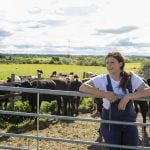
People will soon have to decide which direction they want to take their farms, says one agricultural industry leader.

The missing middle

Small farms will focus on domestic markets while the bigger ones will be eyeing foreign sales and mid-size ones will disappear

It’s a tale of two kinds of farms in Canada, without much in between. The well-established trend to fewer farms will continue in the coming years as smaller operations focus on supplying local markets and the larger ones concentrate on export sales, says Ron Bonnett, president of the Canadian Federation of Agriculture. Small farms will

Glyphosate-resistant kochia is still rare in Manitoba, but the time to prevent it from spreading is now.

ON THE GROW: Herbicide resistance is spreading quickly

Manitoba Agriculture is warning about new and looming threats when it comes to resistant weeds

Manitoba’s provincial weed specialist is urging a harder line on herbicide resistance. “Zero tolerance is really where you need to be,” Tammy Jones of Manitoba Agriculture said. “Controlling your escapes. Control them with mowing; control them with tillage. If you really want to, control them with hand weeding, but if you have resistant wild oats


Opinion: What’s the future of farm groups?

What is the future of farm organizations? How can they continue to make an impact? What do they need to change? Those were the weighty topics the Christian Farmers Federation of Ontario asked guest speaker Rene Van Acker to tackle during its annual meeting and leadership summit in late March. Van Acker is dean of

Editorial: Why all the fuss?

Canada’s dairy system has figured prominently in the rhetorical storm surrounding NAFTA renegotiations. The Canadian government has so far remained steadfastly opposed to any significant change. Two documents that surfaced recently help explain why. The first, the U.S. Department of Agriculture’s “Regulatory Economic Impact Analysis of the Final Decision to Establish a California Federal Milk


University of Guelph president Dr. Franco Vaccarino (right) and Ontario Agriculture Minister Jeff Leal sign a new research partnership agreement, with Guelph-area MPP Liz Sandals. (John Greig photo)

Ontario, U of Guelph renew ag research partnership

Up to $713 million in agriculture research will be funded at the University of Guelph over the next 10 years through a renewal of the university’s agreement with the provincial ag ministry. The new agreement has been updated to manage digital data and is aimed to provide a base from which to leverage more research


Recent research says fish, like these chinook salmon, may be the better source of omega-3 fatty acids.

Not all omega-3s are created equal

It turns out the source of these healthy fatty acids is important

Fish or flax? That’s the question researchers from the University of Guelph have been trying to answer when looking at the cancer-prevention qualities of various sources of omega-3 fatty acids. David Ma, a professor in the university’s department of human health and nutritional sciences, says so far fish is coming out on top. His work

Dana McCauley has been working to launch Accelerator Guelph since she joined the Research Innovation office at the University of Guelph late last year. (John Greig photo)

Guelph to host new agri-food accelerator

The University of Guelph has created a new organization to help launch agri-food ideas and innovations. Accelerator Guelph aims to provide business training, help create networks and provide a process to innovators in agriculture and food at the university. Why does it matter? Getting research and great ideas from university researchers to the market has


Food bills will rise in 2018

Food bills will rise in 2018

Weather conditions and a switch to convenience foods will drive the trend

The average Canadian family of four will be paying $348 more to feed themselves in 2018, with total expenditures pegged to rise to $11,948. That’s according to the eighth annual Canada’s Food Price Report jointly released Dec. 13 by Dalhousie University and the University of Guelph. “Canadians want to know what will impact the prices

Brady Deaton, a University of Guelph agricultural economist and McCain Family Chair in Food Security, was the University of Manitoba’s 2017 Kraft Lecturer.
His lecture underscored the importance of communities, such as First Nations, progressing when they have authority to manage themselves instead of being constrained by rules such as the Indian Act. This was the 9th annual Kraft Lecture created in memoriam of renowned University of Manitoba agricultural economist DarylKraft.

Local control key to better resource management

Brady Deaton, the University of Manitoba’s 9th annual Kraft Lecturer, says the Indian Act prevents First Nations from taking action to improve their citizens’ well-being

Justin Trudeau has promised to end boil-water advisories on First Nations, but some could fix the problem themselves by working with neighbours if First Nations controlled their land, says University of Guelph agricultural economist and McCain Family Chair in Food Security, Brady Deaton. “With respect to land, I am arguing the Indian Act basically removes