

Craig Koenig, CFIA’s regional chief inspector for Manitoba, told a Manitoba Seed Growers’ Association meeting his staff are willing to work with private pedigreed seed inspectors to help them do a better job.

Privatized seed inspection sore point for growers

Critics say the Canadian Food Inspection Agency is treating Manitoba differently than other provinces, but add it can fix the problem by working more closely with private inspectors

Manitoba pedigreed seed growers say they’re being held to a more rigid standard than farmers in other provinces. The complaints, levelled at the Canadian Food Inspection Agency (CFIA) were raised at a Manitoba Seed Growers’ Association (MSGA) meeting here Nov. 30. The allegations, which CFIA officials denied, come from some seed growers and companies providing
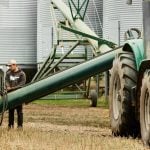
Manitoba farmers with crop still in the field have now experienced both ends of the moisture spectrum in a single season.

Formerly parched grain now fighting moisture after September rains

2017 will be remembered as a dry year, but the latest harvest is still fighting high moisture 
after a series of rains in September

Manitoba’s early harvest was dry, but now a rash of rains has left producers fighting moisture and wondering when to give up on drying in the field. Francois Labelle, general manager for the Manitoba Pulse and Soybean Growers, said most grain being harvested is several percentage points above safe storage since the dry spell broke.


(Scott Bauer photo courtesy ARS/USDA)

Hogs seen as key factor in input cost hikes

CNS Canada — Canada’s Farm Input Price Index has climbed slightly for the first quarter of this year. Canada-wide, the index rose 1.3 per cent for the first quarter of this year compared to the final quarter of 2016. When comparing this year’s first quarter to last year’s first quarter, however, input prices in the


Flax Council cautions on seed integrity

Flax Council cautions on seed integrity

The group is worried more acres could see the return of Triffid

With the latest official acreage estimates showing a jump in flax acres across much of Western Canada, the Flax Council of Canada is urging caution. Agriculture and Agri-Food Canada’s latest Seeded Acreage Report is expecting 1.1 million acres to go into the ground this year, putting pressure on seed supplies, and putting the integrity of

In-field effects: The seed planted in both wheat plots had 12 to 15 per cent fusarium infection, but the seed on the left was treated and the seed on the right was not.

Check the germ on that wheat seed

High fusarium infection means farmers should test and consider a seed treatment before planting

This is a seeding season where pre-planting testing of wheat seed is an important first step, and seed treatments may be more important than ever. With unprecedented levels of fusarium head blight infection in Manitoba wheat in 2016, farmers should get their wheat seed tested for germination, consider testing for the presence of pathogens and


Seed institute executive director Roy van Wyk says organic seed growers are among its new clients.

Soy boom boosts bulk pedigreed seed storage

Executive director of the Canadian Seed Institute reports on recent accreditation and training activity

An increase in the number of bulk pedigreed seed storage facilities in Western Canada is keeping inspectors busy, says the executive director of the Canadian Seed Institute (CSI). “We are seeing an increase in bulk storage facilities right now. We believe this is largely due to the increase in the movement of soybeans in Western


SeCan is celebrating its 40th anniversary. The not-for-profit company is Canada’s biggest distributor of certified seed.

SeCan celebrates 40th anniversary

Canada’s largest certified seed distributor is even more relevant today, says general manager Jeff Reid

SeCan was ahead of the curve when founded in 1976 — and still is today, says general manager Jeff Reid. “I think it is interesting that 40 years after SeCan was initiated, it seems in many respects to almost be just coming-of-age now, with all the talk about public, private and producer partnerships,” Reid said

This soybean plant is regrowing after being frozen.

Get your soybeans in soon or face higher frost risk in fall

In Manitoba soybeans should ideally be in the ground by the end of May

Time is running out for Manitoba farmers to seed soybeans. “You still have some time to get them in, but I like to see soybeans in the ground in May and that gives you enough time for the plants to mature and reduce the risk (of damage from) a fall frost,” Dennis Lange, the Manitoba