
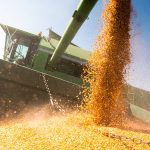
Organic Wheat Tough To Move, Says CWB Marketer

Canadian organic wheat farmers have effectively been shut out of the European market due to lower-priced competition from Kazakhstan. After the meteoric rise of organic wheat to $30 per bushel in the spring of 2008 that ended in the global economic recession that began later that fall, food manufacturers started looking elsewhere for raw materials.
New Association Advances Composting Practices

Composting is about to get a boost in Manitoba with the emergence of a new group focused on advancing both the science and the art of managing organic waste. The Manitoba Composting Association was formed after a meeting last September of representatives from Manitoba Agriculture, Food and Rural Ini t i a t i v


New Handbook For Organic Certification – for Dec. 2, 2010

Canadian Organic Growers (COG) has releasedRecord Keeping for Organic Growers,another handbook in its Practical Skills series of technical manuals for organic agriculture. COG’s says its aim is to help farmers reduce their time and anxiety around the record-keeping required for organic certification. Most farmers already save information about their inputs, products and methods, so this

Feedback Sought On Stricter Organic Labelling Rules

Organic growers have a chance to speak up if they’re experiencing problems with new organic labelling laws. New regulations went into effect in June 2009 aimed at ensuring all products labelled “organic” or displaying the “Canada Organic” logo are certified and comply with clearly defined organic practices. But the clock is ticking down on the


Organic Farmers Look For Workable Solutions

It’s National Organic Week Oct. 11 to 16 in Canada, a week when the industry celebrates its continued growth as an industry. So where does Manitoba fit into the national picture? Organic farmers represent just two per cent of total farms in this province, or an estimated 300 certified farms covering about 100,000 acres. But

Phosphorus Depletion An Ongoing Concern

The excess moisture that has plagued Manitoba’s Interlake forced Bragi Simundsson to cut back on his organic operation last year. “If you can’t cultivate for over a year, you’re pretty much beat trying to be organic,” says Simundsson, who had as many as six quarters of his 2,000-acre mixed grain farm near Arborg certified. Organic


Federal Support For Organic Marketing

Agriculture Minister Gerry Ritz has announced an investment of more than $150,000 to assist the Canada Organic Trade Association (COTA) in promoting Canada’s high-quality organic products to consumers abroad. COTA is one of several organic organizations across the country that is partnering to make Organic Week Oct. 11 to 16 a success. “This investment will

Organic Agriculture Is The Future

Does organic agriculture have a future? For some, such as well-known plant scientist E. Ann Clark, organic is the future. In a paper released earlier this year, the University of Guelph professor joined those who say that the end of cheap oil will mean the end of conventional agriculture as it’s currently practised. “(T)he future


Blending Farmer Innovation With Science

A60-bushel-per-acre crop of wheat would make any farmer proud, but how about one that was grown without pesticides or non-organic fertilizer? That’s how organic wheat yielded last year on a 1.5-acre field plot at the University of Manitoba’s Ian N. Morrison Research Farm at Carman. The average wheat yield in the R. M. of Dufferin,

Our “Response Ability”

But can it feed the world? The question routinely arises when the conversation turns to organic agriculture. Conventional wisdom says organic agriculture is a nice niche for those who can afford to pay the higher premiums as compensation for the farmers’ lower yields. But the production system can’t possibly achieve the productivity that will be