

National Farmers Union denounces Lethbridge ‘libricide’

The National Farmers Union has denounced the destruction of publicly funded science documents that were reportedly destroyed recently at Agriculture and Agri-Food Canada’s Lethbridge research station. “This is just the latest in a long line of government libraries where collections were tossed into dumpsters, burned or went to landfills,” the NFU said in a release.
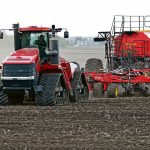
Jethro Hamakoko breeds Brahman cattle on a small ranch about an hour outside of the Zambian capital of Lusaka.

Zambian herd grows, despite ticks, poachers

While not without challenges, some farmers forced out of Zimbabwe 
have found a home ranching in Zambia

Quietly, after the bulk of journalists has moved on to other things, Graham Rae describes the situation as 15 to one. That is 15 poachers and one security guard shot so far. On a still morning near the central Zambian town of Chisamba, it’s hard to imagine, but cattle rustling is a major problem for


grain cars at terminal

NFU misses mark on the cause of 2013-14 grain backlog

Wheat board co-ordination can’t overcome insufficient system capacity

The National Farmers Union (NFU) has a well-deserved reputation for doing sound analytical work. That’s why I was disappointed in its opinion piece published in the Manitoba Co-operator June 17. The NFU contends G3, the company taking over CWB — the remnants of the old wheat board — is planning to build a grain terminal

A terminal at the Port of Vancouver

Desire for grain price control drives G3 port plans

More port capacity will allow grain companies to widen their margins

G3 has announced it may build a new grain terminal at the West Lynn terminal on the North Shore of Vancouver’s Burrard Inlet. G3 is the joint venture of U.S.-based multinational grain company, Bunge Ltd., and the Saudi Agricultural and Livestock Investment Co. (SALIC), owned by the Saudi government. It was given the assets of


farmer combining wheat

U.S. wheat industry alleges Canada discriminates

U.S. Wheat Associates says Canada’s grading system is like COOL in reverse

The United States’ wheat lobby is glad to be rid of Canada’s single-desk wheat seller; now it wants better access to Canadian wheat markets. U.S. Wheat Associates sent a letter to Agriculture Minister Gerry Ritz May 20 saying Canadian wheat grading and varietal registration regulations unfairly discriminate against U.S. imports. “It is readily apparent to

Dave Hatcher

New interim wheat class coming for Faller, Prosper, Elgin-ND

Market potential will be studied before its made permanent. In the meantime the CGC will strengthen the quality specifications for the CWRS and CPSR classes

Changes are coming to Western Canada’s milling wheat classes along with some additional study and more industry feedback, the Canadian Grain Commission (CGC) announced May 8. After consulting the grain sector earlier this year the CGC has decided to introduce a new interim milling wheat class to take effect Aug. 1 and continue until at


CWB building

Mixed reaction to sale details: some like it not, some like it sold

Opponents say the lack of farmer control and foreign ownership is offensive while others are glad the deal is done

The Friends of the Canadian Wheat Board (FCWB) and National Farmers Union and federal NDP oppose the sale. “This was just another step in the largest transfer of wealth away from farmers in the history of this country,” said FCWB chair Stewart Wells who farms at Swift Current, Sask., and served as an elected wheat

wheat with green stem

Editorial: The farm organizations ‘that matter’

The recent decision to join UPOV ’91, the international agreement on plant breeders’ rights, was part of Bill C-18, “The Agricultural Growth Act.” Back in the day, it would have been called something like “An Act Regarding the Application of Plant Breeders’ Rights in Canada.” The previous Bill C-18 would have been “An Act to


book cover

Non-farming investors make for tough competition

Your pension money is at work competing with you for farmland, says an NFU report

If you want to buy farmland, you’re up against some tough competition, the National Farmers Union says in a new report highlighting the presence of offshore investors in Canadian farmland. “Farmland investment companies are shifting ownership of Canadian farmland from the hands of actual farmers into those of absentee landlords, thus recreating the tenant farmer

NFU recommendations to protect farmland, tackle farm debt

1. Enact laws to restrict farmland ownership to individuals who live in the province the land is in and the same for incorporated farming operations, including co-operatives. 2. Provincial governments should monitor farmland ownership and report changes annually and also consider legislating the maximum amount of farmland an individual or incorporated family farm can own.