
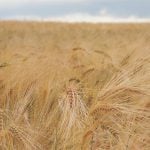
Frozen cropland may be a larger source of nitrous oxide emissions than previously understood.

Frozen soils might be major emitter

A University of Manitoba study has discovered 
the previously overlooked emissions

A new study suggests global greenhouse emission calculations have overlooked an important aspect of the agricultural sector. Emissions, especially of the key gas nitrous oxide, may in fact be about 17 to 28 per cent greater for cultivated soils frozen in winter than currently thought. Mario Tenuta, professor in applied soil ecology at the University
Manitoba Beef Producers releases carbon pricing policy

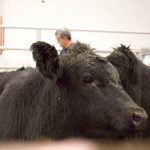
Manitoba Beef Producers releases carbon pricing policy

The beef industry is part of the solution and must not have punitive 
profit-killing measures enacted, says MBP

Manitoba Beef Producers is proposing a carbon pricing policy centred around recognizing its sector as part of the solution. Pastures and grassland play a key role in carbon sequestration and greenhouse gas reduction, the organization said. “We believe we have a valuable role to play in helping Manitoba achieve its goal of reducing GHGs,” said


Nitrogen use is going to get a lot more sophisticated in the coming years.

High-tech fertilizers offer great promise

More expensive fertilizer likely cheap compared to future N20 pricing

The fertilizers farmers use will one day be manufactured from algae or hydrogen fuel, not natural gas, and they’ll be ‘SMARTer’ too, said a speaker at St. Jean Farm Days last week. These will be long-lasting sensor-based nano fertilizers, not likely to be nearly as easy to handle as current products, and which may reside

Combines harvesting crop at sunset

KAP still working on carbon pricing policy

At the same time the Manitoba government is still consulting on a made-in-Manitoba plan to battle climate change

Keystone Agricultural Agricultural Producers (KAP) is fine tuning its carbon pricing policy even though Manitoba Premier Brian Pallister declined to sign a national framework to fight climate change at a federal provincial meeting in Ottawa Dec. 9. “It doesn’t change anything with our approach and what we are looking for in the system,” KAP president


exhaust pipe under car bumper

No easy answers to greenhouse gas emissions

We’ll all have to be part of the solution or we’ll be part of the problem

The solution to pollution is dilution is an old saying, but unfortunately there is a limit to its truth. For well over a century we have been mining, drilling and burning fossil fuels as if Mother Nature intended us to. One gallon of gas can give the equivalent of 600-man hours of labour. Coal and

Australian researchers say seaweed like this can slash methane emissions from cattle.

Seaweed supplement could slash cattle methane

Australian researchers have seen as much as 99 per cent 
of emissions eliminated

Australian researchers are bringing a whole new meaning to ‘surf and turf.’ They’ve been working on a project funded by that country’s Commonwealth Science and Industry Research Organization (CSIRO) to use dried seaweed as a supplement in cattle feed to reduce methane emissions from cattle. They’ve discovered just a small amount of seaweed can mean


Wetland expansion due to heavier rainfall seems to be fuelling higher methane emissions, along with agricultural activity.

Floods and farms fuel jump in methane emissions — researchers

Microbial sources of methane emissions are seen as the most likely source and are common to wetlands and farming

A sharp increase in methane, a potent greenhouse gas, in the Earth’s atmosphere since 2007 is the result of higher emissions from biological sources such as rice paddies, cattle and swamps rather than fossil fuels, researchers recently announced. Methane traps heat, contributing to global warming. In 2014 the growth rate of methane in the atmosphere

Mario Tenuta, professor of applied soil ecology at the University of Manitoba predicts, among other things, that anhydrous ammonia and urea — popular nitrogen fertilizers — will be banned because they produce too much nitrous oxide — a powerful greenhouse gas.

In the battle to mitigate global warming farmers’ nitrogen use will be scrutinized

But soil scientist Mario Tenuta says there are things farmers can do to help themselves

The fight to control global warning will bring about big changes in how Manitoba farmers farm, says Mario Tenuta, professor of applied soil ecology and chair and adviser of the B.Sc. Agroecology Program at the University of Manitoba. “I predict eventually they will outlaw anhydrous ammonia and urea and replace it with high-efficiency (nitrogen) fertilizer,”


KAP general manager James Battershill says a good carbon pricing plan can make farmers part of the solution to reducing greenhouse gas emissions and generate farmers some new revenues at the same time.

KAP takes proactive stance on carbon pricing

The group says a good plan could help farmers be part of the 
solution and generate new revenue while doing it

Pricing carbon to encourage fewer greenhouse gas emissions and mitigate climate change will affect all Canadians, including farmers. How depends on the program each province implements. It could raise farmers’ nitrogen fertilizer and fuel costs, but sequestering carbon with zero-till or rotational grazing could earn credits offsetting some of those costs. And while some farm