
“If it becomes a condition of trade down there, it becomes de facto mandatory.” – Dennis Laycraft, Canadian Cattle Association.

Livestock sectors react to VCOOL ruling

Feds, livestock groups view new ruling with suspicion

Canada’s livestock sector will monitor the effects of a new U.S. voluntary country of origin labelling (vCOOL) ruling announced March 11. “It is crucial to address any issues that threaten or diminish the cattle and beef trade between Canada and the U.S.,” said Nathan Phinney, president of the Canadian Cattle Association, in a media release.


Agriculture Minister Marie-Claude Bibeau and Parliamentary Ag Secretary Jean-Claude Poissant, at right, visited the Carrefour Alimentaire Centre-Sud in Montreal on June 17, 2019 to formally launch the federal Food Policy for Canada. in 2019 (Photo courtesy Agriculture and Agri-Food Canada)

Feds disburse funds on community food security projects

Since 2019 the Local Food Infrastructure Fund has committed $64.8 million to such projects

Wednesday, federal agriculture minister Lawrence MacAulay announced up to $9.98 million in funding for community food projects through the fifth phase of the Local Food Infrastructure Fund, an outworking of the Food Policy for Canada.


Photo: Thinkstock

Canadian food inflation to slow through 2024, report says

More certainty has brought an uptick in grocer promotions, but consumers are struggling

Canadian food prices are expected to rise between 2.5 and 4.5 per cent in 2024, according to a new report. “It is probable that Canadians will continue to experience the strain of food inflation compounded by increasing costs of housing, energy and various other expenditures,” according to Canada’s Food Price Report 2024.

Canada can produce its own sugar. But it doesn’t.

Editor’s Note: Sugar shortage makes for sticky business

How can a strike involving 138 workers at a single refining operation in Vancouver affect the availability of sugar for 11 million Canadians in the four western provinces — and what does this situation tell us about our national food system as a whole? It certainly suggests that our sweet tooth has become too dependent


Before you use sugar substitutes, it’s important to understand the multiple roles that sugar plays in baking.

No sugar? No problem: Sweet substitutes in a sugar shortage

Empty sugar shelves don’t have to derail holiday baking, there are easy alternatives

There’s a sugar shortage in Western Canada but your baking plans need not be kiboshed. Despite the bare sugar shelves in the grocery store, there are sweet alternatives to rescue your holiday treats and maintain the festive spirit. The science of sugar Before we use sugar substitutes, it’s important to understand the multiple roles that

“The entire time I’ve been beekeeping, I’ve never thought twice about sugar availability, other than just the price going up a little bit because of supply and demand.” – Ian Steppler, Manitoba Beekeepers Association.

‘We’ve always taken for granted that the sugar’s always been there’

Sugar shortage highlights beekeeper feed vulnerability

Beekeeping groups on the Prairies say it’s a good thing Western Canada’s sugar shortage didn’t happen a few months ago. The bees are now tucked away for the winter, but August and September are prime feeding seasons when beekeepers condition their colonies for winter and natural nectar sources are drying up. “We’ve always taken for granted that the


File photo of cattle on pasture northeast of Calgary. (James_Gabbert/iStock/Getty Images)

Report aims to show animal agriculture’s interconnections

CAPI hopes to broaden policymakers' perspective

A new report for the Canadian Agri-Food Policy Institute seeks to educate policymakers about the impact of animal agriculture on economic, social and environmental levels. The report, titled Forces Impacting Animal Agriculture In Canada: A Synthesis, delves into the issues surrounding cattle, dairy and poultry production in the country and how it is interconnected within

Comment: We must respect Mexico’s food sovereignty

Comment: We must respect Mexico’s food sovereignty

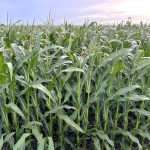
Mexico has a right to determine its corn policy, even if the U.S. and Canada don’t like it

Sept. 29 was Mexico’s national day celebrating the central place corn has in Mexican society and history. This year, there is a new threat to its future. Corn as we know it today was developed from an ancient plant called teocinte by Indigenous peoples over thousands of years, making Mexico the crop’s biological and cultural