Farm environmental plans to be made national

Farm environmental plans to be made national

Ottawa stakeholder summit suggests making the plans consistent across Canada

It’s time to take provincial farm environmental plans to the federal level to ensure consistency and simplicity for the industry. That’s why a steering committee of agri-food representatives is in the works to guide the transition to a national program, says Ron Bonnett, president of the Canadian Federation of Agriculture, speaking at a recent national
Farmer in wheat field

Do we really feed the world?

It’s a moral platitude that papers over a multitude of problems

The Environmental Working Group (EWG) is using this harvest season to solidify its reputation as the biggest not-for-profit policy organization American farmers love to hate. The hatred took root in 1995 when EWG published — on something called the Internet — a 10-year, searchable database of U.S. Department of Agriculture (USDA) payments to all American


The Manitoba chapter of the CFGB hosts a fall banquet every year to gather and thank participants from across the province.

CFGB to celebrate successful harvest with fall banquet events

This year Manitoba communities have grown approximately 5,600 acres that will be donated to the Canadian Foodgrains Bank

The final tally isn’t quite in yet, but communities throughout Manitoba have once again produced a sizable harvest for the Canadian Foodgrains Bank (CFGB). “You never know exactly at this time of year, but I am seeing about 5,600 acres and that includes a project in Thunder Bay, Ont., as well,” said Harold Penner, CFGB

school of mackerel

Deep waters: how can we protect our oceans and fisheries?

When it comes to animal protein, Canadians, despite having the 
longest coastline in the world, don’t think about fish

Typically when Canadians discuss protein-related foods, they look to our key livestock industries: cattle, hogs and chicken. In comparison to those terrestrial food sources, fish stocks are transient and invisible. That can make oceans and their issues easily overlooked. But fish and seafood must be part of any discussions about sustainable food systems. Oceans feed


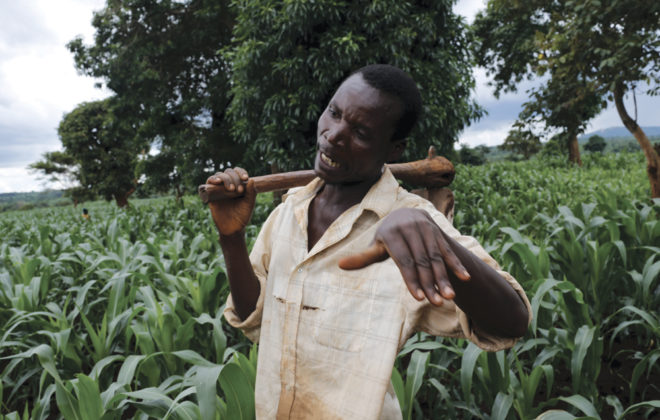
Malawian subsistence farmer Simon Sikazwe stands beside communal maize fields in Dowa near the capital Lilongwe, February 3, 2016. Late rains in Malawi threaten the staple maize crop and have pushed prices to record highs. About 14 million people face hunger in Southern Africa because of a drought exacerbated by an El Niño weather pattern, according to the United Nations World Food Program (WFP).

Smarter farming could cut hunger in drought-hit Southern Africa — researchers

Too few resources are available to educate the continent’s farmers 
about potential solutions to their problems

Southern African farmers facing hunger as a result of worsening drought know a lot about climate change but lack the resources to put solutions that work into place, agriculture and development researchers say. That is in part because government agricultural extension services, which offer training and advice to farmers, have too few agents, according to

Ismail Cakmak, who recently spoke at the University of Manitoba, sees nutrition security and food security as two related but separate issues.

Foliar fertilizer shows promise in reducing zinc deficiency

Yield can no longer be considered only in terms of volumes and weights

While many people are focused on the fight to end hunger, Professor Ismail Cakmak of Istanbul’s Sabanci University is focused on the fight to end hidden hunger. “Hunger is a lack of food and that is related to food security,” Cakmak told participants during a special seminar at the University of Manitoba this summer. “But


The FAO’s principles of sustainability say yield should not be the only criterion for farming, and that current intensification is detrimental to crop and animal biodiversity.

Defining just what ‘sustainable agriculture’ really means

The term ‘sustainable agriculture’ is used often, but what does it mean? The United Nations Food and Agriculture Organization (FAO) recently issued these five principles to define sustainable agriculture. 1. Improving efficiency in the use of resources is crucial to sustainable agriculture. Modifying current practices can do much to improve the productivity of many food

Erwin Northoff (r), chief of media for FAO, presents the Star Prize to Laura Rance at the 2016 IFAJ Congress in Bonn, Germany. (IFAJ.org)

FBC editorial chief wins major international awards

Laura Rance, editorial director of Farm Business Communications and editor of the Manitoba Co-operator, has won two major international awards for her work on African agriculture. Rance won the International Federation of Agricultural Journalists (IFAJ) Star Prize for ‘Africa’s Hunger Games,’ published in the Winnipeg Free Press in April 2015. The same piece was awarded


Industry applauds Canada-U.S. food safety deal but seeks details

The agreement covers existing programs, but both countries are in the process of developing new standards

Food that’s safe in Canada is now also considered safe in the U.S. and vice versa. That’s the bottom line after Canada and the United States have signed a food safety recognition agreement. It formally states the existing food safety systems of the two nations provide similar levels of protection to consumers. Farm and food

Editorial: Who will feed China?

Perhaps Chinese politicians, like ours, are prone to using jargon, or maybe it’s the fault of whomever translated the speech from the original Mandarin. Either way, we got a chuckle out of this introduction to a Reuters story last week. “China’s agriculture sector needs to undertake supply-side reform, especially in corn production, given bumper harvests