Winnipeg | Reuters –– Western Canadian farmers are scrambling to find scarce canola seed as they reseed crops snuffed out by frost and insects. Farmers in the region have until mid- to late June to plant ahead of insurance deadlines, but the later they sow canola, the higher the risk of damage later from heat

Tag Archives Flea beetle
Prairie farmers scramble for canola seed after frost
Cutworm, flea beetle pressure piling on Prairie crops
CNS Canada — High levels of cutworms and flea beetles are damaging crops in Western Canada this spring, according to Manitoba’s crop entomologist. Manitoba growers started noticing damage from cutworms this week, said John Gavloski, extension entomologist for Manitoba Agriculture, Food and Rural Development in Carman. “They were there in the fields, but they were
Be on the lookout for three early-season crop pests
MAFRD entomologist John Gavloski has advice on flea beetles, cutworms and wireworms for Manitoba farmers
Be on the lookout for flea beetles, cutworms and wireworms, all of which can take a bite out of yields early in the growing season, says John Gavloski, entomologist with Manitoba Agriculture, Food and Rural Development (MAFRD). Canola is especially vulnerable to flea beetle damage during the cotyledon to second true-leaf stage, Gavloski said during
Pests likely to survive Manitoba winter
CNS Canada –– Sufficient snow cover will likely help insect crop pests survive the winter in Manitoba, despite a recent bout of extremely cold weather. “Snow is a great insulator, so even though we have had some quite cool temperatures the last several weeks, where the insects are beneath the snow it’s actually nice and
Later canola seeding could mean less flea beetle damage
In addition to flea beetles, farmers should be scouting for cutworms, wireworms and grasshoppers
Flea beetles are munching on Manitoba canola crops but a provincial entomologist says the damage may look worse than it is. If there’s more than 25 per cent feeding damage after the canola crop has been planted for at least three weeks, an insecticide application could be economic, John Gavloski said in a Manitoba Agriculture,
Swede midge threat looms over Manitoba canola crops
A deceptively tiny bug can wreak non-stop havoc in canola
If you thought clubroot was scary, get ready for Swede midge — a voracious mosquito-like bug that can wreak havoc with your canola yields. First found in North America in 2000, and has appeared in low numbers in Manitoba in 2007 and 2013, said Julie Soroka, a Saskatoon-based entomologist with Agriculture and Agri-Food Canada. “The
Widespread frost early May 30 caused minimal damage
Weekly Provincial Summary The only remaining acres left to be seeded include greenfeed and millet crops and some isolated acres of canola, edible beans and soybeans. Reseeding of some fields is still occurring as stands were impacted by either high winds, insect activity, disease, seed placement or dry soil conditions at time of seeding. Most
Pests make an early appearance
Be watchful for flea beetle feeding Striped flea beetles (Phyllotreta striolata) have been emerging and feeding on volunteer canola since late March, provincial entomologist John Gavloski says in the first insect and disease report of the season issued April 27. “We often see striped flea beetles emerge earlier than the crucifer flea beetle (Phyllotreta cruciferae)
Flea Beetles Feasting On Canola
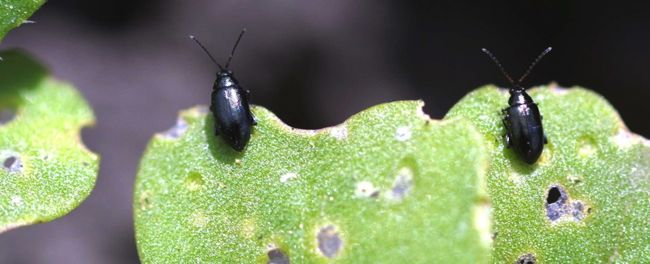
Flea beetles have been feasting on canola seedlings in Manitoba. Heavy infestations have warranted foliar insecticide treatments, Manitoba Agriculture, Food and Rural Initiatives says in a June 13 report. “Even if Helix or Prosper seed treatments have been used, some minor feeding to leaves and cotyledons is normal, as the flea beetles needed to ingest
Beetles Find It Tough Going In Manitoba
Manitoba has been using biocontrol beetles since 1988 in Spruce Woods Park, but the results haven’t been encouraging. In the 1990s, there were 3,500 beetle releases, mainly the black and brown flea beetle species, said John Johnson, president of the Manitoba Weed Supervisors Association. In 1996, 350,000 were brought in from a capture site in