
Editorial: Wheels within wheels

Canada’s current debate over carbon pricing, and Manitoba’s response to the federal requirements, highlight the complexities of making public policy. The federal government wants Canadian businesses, households and individuals to emit less carbon. That’s going to mean burning fewer fuels, using what we do use more efficiently and many other changes large and small throughout
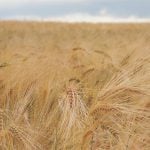
Dr. Alan Moulin takes tour attendees through the field.

Mixing and matching inputs and rotations

Brandon researchers spent 18 years combining three different input levels and crop rotations to study the impact on nutrients, soil quality, yield and implications for climate change

Farming for short-term yield will be different than long-term soil benefit. That’s not a new idea, but it has been driven home by 18 years of research spearheaded by researcher scientists Alan Moulin and Taras Lychuk of Brandon’s Agriculture and Agri-Food Canada research station. From 1994-2003, the pair’s team cross-compared organic, reduced- input no till,


Manitoba’s ‘climate and green’ plan good policy, smart politics

It's often easier and safer to oppose something than to come up with a plan and implement it

The “Made-in-Manitoba Climate and Green Plan” is smart politics, but more importantly could be good policy. That latter hinges on the plan to cut carbon emissions by up to 2.6 million tonnes by 2022 working. But there’s a possibility it might not be implemented, or at least not fully. The federal government says Manitoba’s flat

KAP president Dan Mazier says the farm organization got much of what it wanted from the “Made-in-Manitoba Climate and Green Plan,” including a carbon tax exemption on “marked” farm fuel.

Mazier defends KAP’s approach on ‘made-in-Manitoba’ carbon tax

He says the position was developed democratically and KAP got much of what it wanted to reduce the negative impact on farmers

A year after the Keystone Agricultural Producers (KAP) opted to participate as the provincial government developed “A Made-in-Manitoba Climate and Green Plan,” some KAP members are asking why the farm organization doesn’t oppose a carbon tax. “I find this entire carbon tax thing to be a complete fiasco and I view our prime minister (Justin


Purple fuel is exempt from Manitoba’s $25-a-tonne carbon plan that starts next year, but the province hasn’t decided if the exemption will apply to barn heating or grain dryer fuels. Premier Brian Pallister rolled out his Made-in-Manitoba Climate and Green Plan at Oak Hammock Marsh Oct. 27.

Purple farm fuels exempted from Manitoba carbon tax

The government is emphasizing the newly released ‘Made-in-Manitoba Climate and Green Plan’ is much more than just a carbon tax and is seeking citizen feedback

Purple fuel won’t be subject to Manitoba’s proposed carbon tax, but that exemption may not be extended to heating for barns, greenhouses and grain dryers. The plan calls for Manitoba to bring in a flat $25-a-tonne carbon tax coming next year, rather than the federal government’s $10-a-tonne levy that would rise over time to $50

Agriculture major player in ‘Made-in-Manitoba Climate and Green Plan’

Agriculture major player in ‘Made-in-Manitoba Climate and Green Plan’

Increasing the biodiesel mandate could cut up to 431,000 tonnes of carbon by 2022, second only to reductions expected from the $25-a-tonne carbon tax

Agriculture’s role in reducing carbon emissions and protecting the environment looms large in the provincial government’s, Made-in-Manitoba Climate and Green Plan. The word “agriculture” appears 34 times in the 60-page document. “Manitoba’s farmers are at the front lines of climate change and need to be at the forefront of solutions,” the plan says. “The Manitoba


Manitoba still has some of the best tracts of grassland left in the world.

Imperilled grasslands need more attention, speakers say

They are the most endangered ecosystem in the world, but there is still time to create conservation programs to protect them

Efforts to save the grasslands in Canada lag even as the urgency to save what remains of them intensifies. That’s the message Canadian senior biologist Dan Kraus had for an audience at the Canadian Museum of Human Rights (CMHR) earlier this month. “We are witnessing in our lifetime the loss of an iconic Canadian landscape,”said

Premier Brian Pallister has announced his government's made-in-Manitoba carbon plan.

Manitoba carbon plan targets lower rates

The provincial plan calls for a $25 a tonne flat carbon tax that won't rise to the $50 a tonne called for by the federal government

Manitoba’s Made-in-Manitoba flat $25 a tonne carbon tax will not rise to $50 a tonne as called for under the federal government’s plan. The proposal also exempts farm fuel, as reported last night by the Manitoba Co-operator. Read more: Farm fuel to be exempt from Manitoba carbon tax Read more: Legal opinion backs Pallister’s approach to


Editorial: On hold

With the deadline for a federal carbon tax drawing ever closer — and promised provincial legislation looming — an interesting document hit the legislative table recently in Ottawa. Julie Gelfand, the federal environmental commissioner, has tabled a series of five reports on various topics, ranging from funding for clean technologies to the federal government’s readiness

Editorial: Food solitudes

World Food Day on Oct. 16 shed light on some confusing twists around global food security. The annual UN Food and Agriculture Organization (FAO) event dating back to 1945 now falls five days after another big day — World Obesity Day, established by the World Obesity Foundation in 2015 to highlight the growing epidemic expected