
One of Al Ayotte’s three water retention dams.

Water retention projects show promise for drought protection

Funds from the MHHC-stewarded GROW trust has allowed watershed districts to ramp up water conservation projects

It was a simple equation for Al Ayotte. It was a dry 2020 summer, and water was seeping out of his sandy-soiled pasture into a drain and flowing off his property. “It doesn’t make sense, and it gets me mad,” he said. “Let’s go reverse. Let’s pile up some water and let the water go
CBOT November 2021 soybeans (candlesticks) with 20-, 50- and 100-day moving averages (yellow, green and black lines). (Barchart)

U.S. grains: Corn, soybeans lower on the week

Traders look at long-term weather; wheat flat

Chicago | Reuters — Chicago corn and soybean futures slipped on Friday, pressured by extended forecasts calling for cooler weather into August, though hot, dry weather in the coming week across the U.S. Midwest underpinned prices. Wheat ended lower as concerns over unfavorable weather in key exporting countries countered pressure from corn and soybeans. The


Honey optimism drops with drought

Honey optimism drops with drought

Low honey and winter survival worries are spreading among beekeepers as Manitoba’s drought conditions drag on

Cattle producers won’t be the only ones in the livestock sector supplementing feed if the taps don’t turn on. Manitoba’s beekeeping sector says, despite an optimistic start, it is now also facing down lower honey yield and a tough winter should drought conditions not abate. Why it matters: Manitoba’s honey industry is facing down tough conditions due


Manitoba Beef Producers president Tyler Fulton speaks in Winnipeg on July 22, 2021 at a federal/provincial announcement including planned changes to crop insurance against this summer’s drought, alongside federal Agriculture Minister Marie-Claude Bibeau and Winnipeg MP Kevin Lamoureux (r). (Dave Bedard photo)

Manitoba triggers hay disaster benefit

Per-tonne rate lifted to cover feed, transport costs

Manitoba’s crop insurance agency is set to lift the per-tonne rate paid out on insured forage crops to help cover livestock producers’ bills to buy and truck in replacement feed. Manitoba Agricultural Services Corp. (MASC) on Thursday announced a 2021 hay disaster benefit to provide another $44 per tonne, for every tonne below coverage, to

Federal Agriculture Minister Marie-Claude Bibeau, shown here with Craig Riese (l) of Keystone Agricultural Producers and Manitoba Beef Producers president Tyler Fulton, speaks on July 22, 2021 at The Forks in Winnipeg. (Dave Bedard photo)

Tax deferrals, crop insurance changes en route against drought

Assessments underway for AgriRecovery, minister says

Updated — As the federal government looks to manage impacts of ongoing drought conditions in Canada’s West, producers in parts of five provinces can already expect to be eligible for the livestock tax deferral program. Agriculture Minister Marie-Claude Bibeau announced Thursday in Winnipeg that producers in drought-designated areas of southern Alberta, southeastern British Columbia, northwestern


Grain growers and livestock producers could help each other out, but time is short.

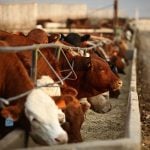
Call made for emergency livestock feed switches

Efforts are underway to get poor crops into the feed stream, but the clock is ticking

It’s time for Manitoba’s farmers to band together. That’s the message spread by livestock producers, as the province’s stubborn dry streak refuses to break and feed prospects become increasingly dire. Why it matters: Livestock producers say less than ideal annual crops could be the answer to avoiding a feed crisis, while also providing cash flow

How to switch your crop to alternate use

The AgriInsurance program provides flexibility for producers to put their crop to alternate use during the growing season. Alternate use means a change to the use of a crop from what was originally intended when planting in the spring. For example, if you indicated on your Seeded Acreage Report that you were growing oats for