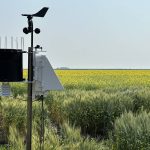
Brazil’s soybean crop this year is expected to more than offset any drought-reduced yields in neighbouring Argentina.

No breakout for rangebound canola for now

New StatCan and USDA data aren’t expected to offer much impetus

There is likely nothing substantial over the next few months that could break canola and other vegetable oils out of their rangebound state. Canola, for instance, continued to vacillate between $800 and $850 per tonne during the week ended Feb. 2. In recent weeks the Canadian oilseed has pushed towards $900/tonne, its upper level of

Corn is harvested on the Roksana-K farm, Vinnytsia, west-central Ukraine.

From Ukraine: The song of winter corn

As a mild winter lets farmers harvest corn, spring is just around the corner

Have you ever seen combines in the middle of January going into a field? And behind them – huge disc harrows.  It’s no wonder that this year Ukrainian farmers use some warm days in the middle of winter to harvest corn. After almost a year of war, thousands of combine harvesters were destroyed or stolen


(Qingwa/iStock/Getty Images)

CBOT weekly outlook: Latest USDA adjustments do little to move market

Selling pressure short-lived after report

MarketsFarm — Updated supply/demand estimates (WASDE) from the U.S. Department of Agriculture were neutral to slightly bearish for soybeans, corn and wheat, with latest numbers largely coming in line with expectations. The February report is traditionally not a major market mover, with the Chicago futures markets waiting for confirmation on South American crops and for

CBOT March 2023 soft red winter wheat with 20-day moving average, MGEX March 2023 hard red spring wheat (yellow line) and K.C. March 2023 hard red winter wheat (orange line). (Barchart)

U.S. grains: Chicago wheat, corn, soy firm on WASDE report

South America's weather drags on competing exports

Chicago | Reuters — Chicago wheat, corn and soybean futures firmed on Wednesday, supported by weather conditions in South America that hamper rival exports, though higher-than-expected U.S. supplies limited gains. The most-active wheat contract on the Chicago Board of Trade (CBOT) added 15 cents to $7.64-3/4 a bushel (all figures US$). CBOT soybeans added 4-1/2


CBOT March 2023 corn with 20-, 50- and 100-day moving averages. (Barchart)

U.S. grains: Corn, soybeans fall ahead of USDA report

U.S. wheat futures end mixed

Chicago | Reuters — Chicago Board of Trade soybean and corn futures fell on Tuesday as investors squared positions ahead of the U.S. government’s key monthly reports on global supply and demand. Traders were focused on the size of the corn and soybean harvests in Argentina as drought stressed the crops in that key global

Destroyed grain storage in the village of Kamianka, Kharkiv, liberated from Russian invaders by Ukrainian forces in October 2022. Three very separate, unique and low probability events caused grain prices to rise this time around: pandemic, drought and war.

When markets burst, it’s never pretty

We’ve seen plenty of price surges followed by collapses. Are commodities next?

Over the past few years, if not decades, there’s been a lot of volatility in markets and economies worldwide. You can start 30 years ago with the Asian currency crisis, Russian debt default and Long-Term Capital Management hedge fund collapse in the late 1990s as examples of explosive events in financial markets. Then, as we


CBOT March 2023 soybeans with 20-, 50- and 100-day moving averages. (Barchart)

U.S. grains: Soy futures fall on technical selling

Corn edges higher; wheat weak

Chicago | Reuters — U.S. soybean futures dropped on Monday on a technical setback after rallying to the high end of recent trading ranges last week, traders said. Corn ended higher after trading in negative territory for much of the day, with the market finding support near Friday’s low. Investors were waiting for news about

CBOT March 2023 soymeal with 20-day moving average (brown line, right scale) and CBOT March 2023 soybeans (dark green line, left scale). (Barchart)

U.S. grains: Soymeal futures set multi-year high while soybeans decline

CBOT wheat down off one-month top; CFTC trading report to be delayed

Chicago | Reuters — U.S. soybean futures declined on Friday on spillover weakness from crude oil prices and expectations of a massive Brazilian soy harvest, but most-active soymeal futures set an 8-1/2-year high on tight supplies of the feed ingredient, analysts said. Wheat futures fell on profit-taking after rising to a one-month top while corn


(Photo courtesy Canada Beef Inc.)

Feed weekly outlook: Prairie markets hold steady

U.S. corn imports keep lid on domestic grains

MarketsFarm — Feed grain markets in Western Canada have seen little change over the past few weeks. Feed barley bids across Western Canada have generally held steady over the past month, with the spot market topping out at $9.58 per bushel in Alberta, according to Prairie Ag Hotwire data. Prices in Manitoba and Saskatchewan are

CBOT March 2023 soybeans with 20-day moving average (yellow line, right column) and CBOT March 2023 soymeal (brown line, left column). (Barchart)

U.S. grains: Soybean futures climb as soymeal soars

Chicago corn retreats, wheat inches higher

Chicago | Reuters — U.S. soybean futures rose on Thursday as uncertainty about crop prospects in Argentina lifted soymeal futures to life-of-contract highs, traders said. Corn futures fell on technical selling and a bounce in the U.S. dollar, which tends to make U.S. grains less competitive globally, although U.S. corn export sales in the latest