
Solid gains by cattle sector

Solid gains by cattle sector

Canadian beef producers are producing more beef on less land with 
fewer animals, all while reducing greenhouse gas emissions

Efforts to reduce the Canadian beef industry’s environmental footprint are paying off, new research shows. “Improved production and feed efficiencies, crop yields and management strategies have led to reduced emissions in Canadian beef production,” said Tim McAlister, research scientist with Agriculture and Agri-Food Canada (AAFC) and principal investigator of the research study. “And, compared to

A polar bear sculpture made of ice stands outside the Global Seed Vault in Longyearbyen at the facility’s opening in February 2008. The vault has been built in a mountainside cavern on Spitsbergen Island around 1,000 km (600 miles) from the North Pole to store the world’s crop seeds in case of disaster.

Doomsday Arctic seed vault to receive two deposits in 2016

The vault built to protect the world's seed supplied is built into the side of a Norwegian mountain

Two new consignments of crop seeds will be deposited this year in the “doomsday vault” built in an Arctic mountainside to safeguard global supplies. The vault — which opened on the Svalbard archipelago between Norway and the North Pole in 2008 — is designed to protect crop seeds such as beans, rice and wheat against


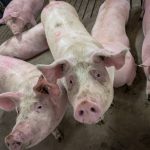
Save the planet: Eat more bacon, less lettuce

Save the planet: Eat more bacon, less lettuce

Vegetables use more resources and produce more 
greenhouse gases per calorie

Contrary to recent headlines — and a talk by actor Arnold Schwarzenegger at the United Nations Paris Climate Change Conference — eating a vegetarian diet could contribute to climate change. In fact, according to new research from Carnegie Mellon University, following the USDA recommendations to consume more fruits, vegetables, dairy and seafood is more harmful

Manitoba Hydro staff have been running hard this week clearing ice from power lines. This Hydro employee was knocking hoarfrost off a line three miles west of Miami, Man., Thursday (Dec. 17) afternoon. Power outages have occurred in many areas of Manitoba, especially in south-central and western regions. In some cases transmission lines have been damaged, while in others Manitoba Hydro has turned the power off so staff could clear the lines. Some people on social media have reported being without electricity for 12 hours.

Need for more disaster planning in rural Manitoba

A seminar Jan. 14 in Portage la Prairie will look at how the risk environment is changing in rural Manitoba

Just as it takes a village to raise a child, it takes a community to prepare for disaster. The Association of Manitoba Municipalities (AMM) and the Manitoba governments Emergency Measures Organization (EMO) want input from municipal leaders, emergency co-ordinators, rural businesses and ordinary citizens on how best to prepare for climate change in the face


Plant for the Planet Foundation members speak together during the World Climate Change Conference 2015 (COP21) in Le Bourget, near Paris, France, December 3, 2015.

Prepare for climate change, conference told

Warmer winters will increase the risk of diseases and pests farmers haven’t had to deal with before

While climate change might extend the growing season in Canada’s northern regions, it will also bring challenges that farmers need to prepare for, says Ron Bonnet, president of the Canadian Federation of Agriculture. Weather patterns will be the most affected, he told the Food Security and Climate Change conference sponsored by the Canadian Climate Forum.

Editorial: GHG-reduction policy not a bad deal

Editorial: GHG-reduction policy not a bad deal

The chart in last week’s Winnipeg Free Press article on the Manitoba government’s new policy to reduce greenhouse gas neatly illustrated some of the interesting but complex implications for agriculture. It listed Manitoba’s top GHG-producing facilities, and No. 1 by a wide margin is the Koch nitrogen fertilizer plant at Brandon. The No. 2 emitter


Manitoba to adopt cap and trade

Manitoba to adopt cap and trade

The province is offering to work with farm organizations to reduce farm emissions

A cap-and-trade system for carbon emissions is a key pillar of a new plan to reduce the province’s greenhouse gas emissions. Premier Greg Selinger made the announcement last week, outlining a plan to cut greenhouse gases by one-third by the year 2030, while also promising to create 6,000 “new green jobs” in the next four

Farmers and climate change policy

The Manitoba government’s climate change plan has laid out some new priorities for agriculture in the province including a promise to partner with Keystone Agricultural Producers and the National Farmers Union. The goals include: Building resiliency by expanding the focus of Environmental Farm Plan-related programming from assessment of agri-environmental risks towards building resiliency against adverse weather


Researcher decries loss of PFRA

Researcher decries loss of PFRA

The rural west needs another PFRA to help farmers adapt to climate change

The elimination of the Prairie Farm Rehabilitation Agency by the Harper government has stripped western farmers of their best tool for coping with droughts and other climate change challenges, says Dave Sauchyn, a researcher at the University of Regina. The folding of the PFRA into Agriculture Canada’s bureaucracy removed the extension workers from the field

Carbon dioxide readings at Hawaii’s Mauna Loa Observatory from 1960 through 2015.

A look back at a record-shattering October

It’s now a foregone conclusion that 2015 will be the warmest year on record

I know I promised to look at big snowfalls that have occurred in the past, then look at the probabilities of receiving different amounts of snow, but there are a couple of global weather stories that I thought should take precedence. Remember when I reported that, for the first time in a while, the University