
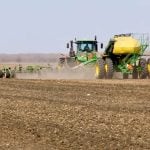
Canola south of Ethelton, Sask. on Aug. 3, 2017. (Dave Bedard photo)

Year-ago Canadian canola crop revised higher

CNS Canada — Canada’s 2016 canola crop has been revised higher in Statistics Canada’s first production estimates for 2017, released Thursday. StatsCan raised the 2016-17 production number from 18.4 million tonnes to 19.6 million, and pegged the 2017 crop at 18.2 million tonnes, which was somewhere in the middle of trade estimates. “I think there’s

Fundamentals help canola get back above $500 mark

Fundamentals help canola get back above $500 mark

U.S. wheat futures slip on improving conditions

It was a choppy time for canola contracts during the week ended Aug. 18, but underlying fundamentals have pushed the front-month contracts above the psychologically important $500-per-tonne mark. Questions are growing about next year’s carry-out, as current trade guesses put the crop somewhere between 17.5 million and 19.5 million tonnes. A lot of the crop


(Alberta Farmer Express photo by Jennifer Blair)

Clubroot climbs up into Peace region

One of Canada’s northernmost farming areas has picked up a case of a disease well known to canola growers further south. Alberta Canola on Wednesday announced the Peace region has reported a case of clubroot in canola, in Big Lakes County, which surrounds much of Lesser Slave Lake in the region’s southeast. The disease has


There are five pesticides grain companies belonging to the Western Grain Elevator Association don’t want to have been applied to crops they buy in the 2017-18 crop year starting Aug. 1, 2017.

‘Keep it Clean’ to protect grain markets

The major western Canadian grain companies have identified five pesticides they don’t want used on the crops they buy

With harvest approaching, western Canadian farmers are being reminded to avoid trade disruptions by “Keeping it (crops) Clean” from pesticide residues. Even though a pesticide is registered for use in Canada it might not have been approved in an importing country, which means there’s no acceptable level of residue. With that in mind members of


A field of wheat near Rocanville, Sask., on July 11, 2017.

Farmers watch markets rally as crops wither

Weather and market analyst Bruce Burnett took a 
first-hand look at crops across the West

If Glacier FarmMedia weather and market analyst Bruce Burnett had to pick one word to sum up the state of the Prairie crop this summer, it would be “variable.” Burnett logged a 4,500-km crop tour across the Prairies in mid-July and reported in at the third annual Ag in Motion farm show about what he

Traders keep canola prices above the $500 support mark

Traders keep canola prices above the $500 support mark

Drought in the U.S. spring wheat area continues 
as the main feature of the wheat market

ICE Futures Canada canola contracts chopped around for the week ended July 21, torn between conflicting weather issues, before finally ending relatively unchanged. Early in the week, ideas took hold that canola fields in some parts of Saskatchewan and Alberta had likely suffered irreversible damage due to the heat stress suffered in late June and


When it comes to a canola stand, how dense is dense enough? That topic has been the subject of some debate lately.

How dense is the perfect canola stand?

Economic-focused studies say lower stand density might mean bigger profit, while other experts warn that it might be short-term financial gain for long-term agronomic pain

Have canola growers been targeting too-dense stands? According to one oilseed specialist that might be the case, but not everyone agrees. Murray Hartman, oilseeds specialist with Alberta Agriculture and Forestry put forward the controversial suggestion during a presentation at Canolapalooza June 22 in Portage la Prairie. He says the current target of seven to 10