
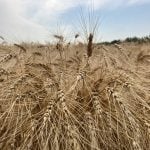
Farmers say they understand research costs money, they just want to know that’s where their dollars will go.

Farmers say no to ‘blank cheque’ on seed royalties

If seed companies don’t reinvest they risk going out of business, said Plant Breeders’ Rights Commissioner Anthony Parker

Some farmers are willing to pay more in royalties to encourage cereal crop breeding — but they don’t want to sign a blank cheque. “We’re not really clear on how much money this is going to generate for plant breeders and the industry as a whole, and there are a lot of concerns that it’s
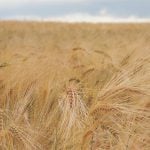
wheat and one-hundred dollar banknote

Seed royalty meeting leaves unanswered questions

Farmers fear handing 
a blank cheque to private breeders

How much more will cereal seed cost Canadian farmers? That’s what those at the first federal government consultation on the proposed new cereal seed royalties were most interested in. The answer? It depends on how much the royalty is — and how it’s applied. Who sets the royalty — government or breeding organizations — hasn’t


Cattle producers in Manitoba are welcoming the addition of more locations that qualify for the livestock tax deferral program.

RMs added to national livestock tax deferral

Producers from 17 new RMs may be in line for some tax relief if they are forced to cull this fall

Another 17 municipalities will be eligible for the federal government’s livestock tax deferral program (see list at bottom). Agriculture and Agri-Food Canada had released an initial list of eligible municipalities in September, citing the dry, challenging growing conditions that cut many forage yields in half. That list was expanded Nov. 1 to include western municipalities

Robert Graf is a research scientist at the Lethbridge Research and Development 
Centre working to develop a premium quality winter wheat.

Researchers working to produce winter wheat with ‘CWRS-like’ qualities

The project is all about improving returns to the producer by reducing the price difference between the two types of wheat, say research scientists

A wheat research program could combine the superior end-use qualities of hard red spring wheat with the higher yield and environmental benefits of winter wheat within the decade. Robert Graf, a research scientist responsible for the winter wheat-breeding program at Agriculture and Agri-Food Canada’s Lethbridge Research and Development Centre, says he and his team are


Deadline Nov. 2 to register for seed royalty meetings

The proposal is for farmers pay more for seed, but the proponents say the payoff is better varieties

The deadline register to attend meetings to discuss ways for farmers to pay more for cereal and pulse seed so plant breeders have more money to develop superior varieties is Friday Nov. 2. The consultations being led by Agriculture and Agri-Food Canada (AAFC) and the Canadian Food Inspection Agency (CFIA) focuses on two options —

Agriculture Canada’s market analysis branch forecast canola ending stocks for 2018/19 is double the September estimate.  Photo: File

Agriculture Canada ups canola carryout forecast sharply

Winnipeg | CNS Canada – Canadian canola carryout stocks at the end of the current marketing year (2018/19) will be considerably larger than an earlier estimate, according to updated supply/demand tables from Agriculture and Agri-Food Canada, released on Oct. 19, 2018. Agriculture Canada’s market analysis branch forecast canola ending stocks for 2018/19 at 2.500 million


wheat head

Grain commission changes recommended by Agri-Food Table report

It claims changes to wheat class standards will make Canada more competitive

Changes to how the Canadian Grain Commission (CGC) regulates Canada’s grain industry are needed to ensure industry competitiveness, an Agri-Food Economic Strategy Table report concludes. To that end the report recommends the CGC accredit private companies to do the CGC’s mandatory outward weighing and inspection. It also says the wheat class system “needs to take

A feed shortage this year has cattle producers mulling tough decisions come cull time. A recent tax deferral could make those decisions simpler for many.

Manitoba livestock producers get tax deferral

After a season-long struggle, most of agro-Manitoba is eligible for the national livestock tax deferral this year

Manitoba livestock producers may be in line for federal aid if they have to cull. Much of agro-Manitoba will be eligible for Agriculture and Agri-Food Canada’s livestock tax deferral program this year. AAFC released its initial eligibility list Sept. 14, stretching from the Municipality of Grahamdale near Lake St. Martin to the Canada-U.S. border and


Without a viable alternative to clothianidin and thiamethoxam, the Canola Council of Canada feels “the ban will significantly impact the canola sector.”

Agri-food sector gearing up for neonic consultations

Government says it will listen to concerns about lack of useful alternatives to neonics

Farm groups are readying for battle over the federal government’s proposal to phase out more neonicotinoid pesticides. They’ve signalled their intention to grill Health Canada and the Pesticide Management Regulatory Agency (PMRA) over their plans to eliminate the use of clothianidin and thiamethoxam over the next three to five years because they pose a threat

The Canadian Grain Commission wants to ensure farmers benefit from its $90-million surplus and there’s no way to ensure that by just cutting user fees further, says assistant chief commissioner Doug Chorney.

Further grain commission fee cuts not ‘transparent’ way to deal with surplus

Some of the $90 million could go to check the accuracy of elevator protein testers and other measures to ensure grain farmers are properly compensated

Distributing a $90-million Canadian Grain Commission surplus through an additional cut in user fees can’t be tracked back to farmers, so the CGC wants to spend the money on measures that can, says assistant chief commissioner Doug Chorney. “Expenditures of the funds that are collected in excess of our fees have to be used in