
Olymel to run Coop federee’s hog farmer services

Quebec’s biggest agrifood company plans to put its services for hog farmers — such as hog herd management, animal welfare and meat quality and its swine genetics arm — under the wing of its meat packing business. La Coop federee, Quebec’s federation of ag co-operatives, announced Friday it will make those operations, including those of
Livestock price insurance pilot to cover West

Livestock producers in the four western provinces can expect details in March on a four-year pilot program to insure against unexpected price declines. Speaking Friday at the Canadian Bull Congress at Camrose, Alta., federal Agriculture Minister Gerry Ritz and three of the four provincial governments announced a rollout this spring for a pilot of the Western


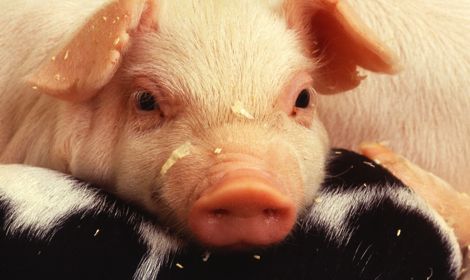
(Photo courtesy ARS/USDA)

Piglet diarrhea virus confirmed on Ont. hog farm

Virus also found on swab at Que. pork plant unloading dock Federal and provincial officials have confirmed the arrival of the porcine epidemic diarrhea virus (PEDv) on a hog farm in southwestern Ontario’s Middlesex County. “We’ve suspected this day may come…and we’re working with stakeholders across Canada to stay on top of this,” Dr. Greg

Recipe Swap: Slow down and fill up

Recipe Swap: Slow down and fill up

Slower eating makes you feel full sooner

Slow down. If you speed while driving, there’s trouble ahead. You’re not doing your body any good rushing through meals either. Obesity experts warn how fast eating shuts off the signal from the gut to the brain that tells us we’ve eaten enough. It takes at least 20 minutes to make the trip. So if


Gerbert Oosterlaken standing in a production facility.

Dutch farmer finds animal health and welfare go hand in hand

Gerbert Oosterlaken wants animal welfare advocates on his side instead of the opposition

Some have described the Netherlands as a living laboratory for sustainable intensive livestock production. With 16.7 million people living with 11 million hogs, 80 million chickens and 400,000 cows in an area that is one-fifteenth the size of Manitoba, it is impossible for the animal industry to operate below the public’s radar. Growing public distaste


Editorial: Everybody is responsible

The livestock industry in the Netherlands has had to make a lot of changes to comply with growing public pressure for more environmentally sustainable and humane practices. But it hasn’t had to do it alone. That fact was inescapable during a recent whirlwind tour of Netherlands livestock operations by a Canadian delegation, courtesy of the


A worker collecting cucumbers inside a greenhouse in La Mojonera, southeastern Spain, June 2, 2011. An outbreak of antibiotic-resistant E. coli contaminated vegetables in Europe that year, killing 17 and sickening more than 1,500 in 10 European countries. Antibiotic-resistant bugs are linked to overuse of antibiotics in human medicine and agriculture.   Photo: Francisco Bonilla, Reuters

Producers slowly becoming aware of antimicrobial resistance

Their misuse has the power to render the most powerful tools in modern medicine impotent, yet in Manitoba there is more regulation around the sale of pesticides than antimicrobials used in livestock production. Mounting evidence points to an increase in antimicrobial-resistant diseases worldwide, and a research paper published recently in The Lancet calls for greater