Saputo to buy Scotsburn fluid milk business

Quebec dairy giant Saputo plans to buy its way further into Atlantic Canada’s milk market with the fluid milk business of regional dairy co-op Scotsburn. Saputo on Friday announced a cash deal to buy Scotsburn Co-operative Services’ fluid milk operations for $61 million, pending a vote by Scotsburn members and approval from the federal Competition



Jean-Phillipe Gervais, chief agricultural economist for Farm Credit Canada speaks at the GrowCanada conference in Calgary.

Opportunities and challenges follow demographic changes

Immigration is feeding the Canadian population, but agribusiness needs to figure out what is feeding immigrants

The face of Canada is changing — or more correctly, the faces of Canada are changing. “Canada is rapidly moving from being a white country to becoming a brown country,” Darrell Bricker, CEO of Ipsos Global Public Affairs, told attendees at the recent GrowCanada conference in Calgary. And that’s something that should get those in

Cattle grazing in a pasture.

Which is better: big cows or little cows? It depends

Heavier-milking, bigger cows are more efficient in some situations, while moderate,
lighter-milking cows are more efficient in others

Marketing cows because they are open, calved late or their conformation is breaking down are easy decisions. Marketing cows or retaining heifers based on productive efficiency definitely requires more thought. Biological efficiency is not always the same as economic efficiency. In a cattle production system, efficiency is often a combination of those two. How we


Trade deal to hit dairy farmers hard

The Dairy Farmers of Canada estimates milk quota will have to be cut by more than two per cent, 
and producers will collectively see an annual $150-million drop in income

The proposed trade deal with Europe could cost Canadian dairy producers $150 million a year in lost income, according to the Dairy Farmers of Canada. Details of the Comprehensive Economic and Trade Agreement (CETA) are still being hammered out and it’s expected to be two years before the deal is ratified by the European Union’s

Herds well enough, but doesn’t fit next to you in the front seat of the truck.

Border collies headed for the unemployment line?

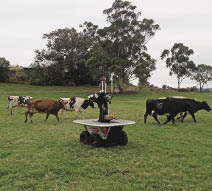
Researchers at the University of Sydney in Australia have developed a robotic herder which they say does a better job than humans or dogs. A four-wheeled device nicknamed Robotic Rover has successfully herded dairy cows in tests on the university’s dairy herd. “Removing human judgment from trafficking speed will allow us to ensure that cows


ProAction aimed at quantifying quality

Piles of paperwork won’t be the result of a new program that tracks dairy practices and biosecurity, as efficiencies are sought

Manitoba dairy producers are pushing ahead on a national initiative to distinguish Canadian milk products as being among the best in the world. The new initiative, called proAction, will encompass the Canadian Quality Milk program, as well as issues related to animal care, biosecurity, traceability, and environmental sustainability. It will also allow for concrete measurement

Dairy farmer Lisa Dyck launched a line of hand-crafted ice creams made from milk from the dairy farm she and her husband own between Beausejour and Anola.  photo: lorraine stevenson

Made-in-Manitoba ice cream flying off store shelves

Customers are happily forking over between $11 and $12 
for a litre of this premium, made-in-Manitoba ice cream

Lisa Dyck is going lickity split as summer arrives, ramping up production of a cool treat Manitobans haven’t tasted in a long time — made-in-Manitoba ice cream. This spring the Anola-area dairy producer launched Cornell Creme, a premium ice cream made from the milk of the 120 cows that she and husband William Dyck milk.


Fencing that once marked pasture land now butts up against the shore of East Shoal Lake.  Photos: Shannon VanRaes

Milking the benefits of canola meal

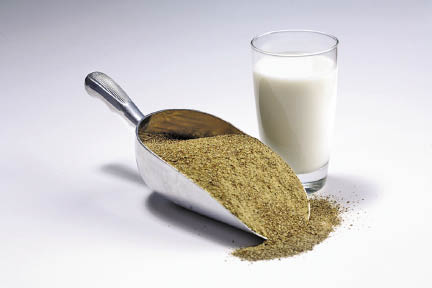
The Chinese have 7.2 million reasons to switch their dairy cows to canola meal from other protein rations. That’s how many more litres of milk their 12 million cows would produce every day based on a year-long joint Sino-Canadian study conducted by Chinese academics, in co-operation with China’s five largest dairy companies. “Canola meal has