
Accountability or wonky accounting?

By Laura Rance

The Canadian Forage and Grassland Association recently wrote to Agriculture Minister Gerry Ritz expressing concerns about the state of forage breeding within the federal department. (See the letter elsewhere on this page.) If the word on the street is correct, those concerns are well founded. It appears that the Brandon Research Station, the home of

Cattle producer Jim Lintott has been feeding straw since February.

Hay short after long winter, dry summer

Demand for Canadian hay south of the border has Manitoba farmers 
searching farther afield in order to feed their cattle this spring

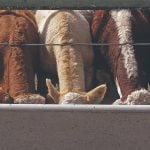
A late spring and growing demand for cattle feed has depleted hay stocks across the province, leaving many beef producers paying more and travelling farther to find what they need. “We normally buy our hay locally, just 10 or 15 miles from home. But this year we’ve had to bring it in 250 miles from


The axe is falling again at Agriculture and Agri-Food Canada. Union officials predict 400 job losses following Workforce Adjustment notices issued to almost 700 staff May 9. Beef research at the Brandon Research Centre is one of the casualties.  

Hundreds of jobs cut at Agriculture Canada

Farmers question the 
federal government’s 
commitment to publicly funded agricultural research

by Allan Dawson Almost 700 Agriculture and Agri-Food (AAFC) employees across Canada, including 55 in Manitoba, have been notified their jobs are on the line. Their unions say the notifications are part of a plan to eliminate an estimated 400 jobs as the federal government tries to cut spending. The Brandon Research Station’s beef research


Nerves on edge as spring thaw remains elusive

It’s too early to start grumbling about another “year without summer” like 2004, but the forecast for the next month is for more colder-than-normal weather. That’s the far-from-reassuring word from Peter Cherneski, manager of Agriculture and Agri-Food Canada’s climate monitoring and forecasting service. “It is unique,” said Cherneski. “The low temperatures that we’ve seen through