

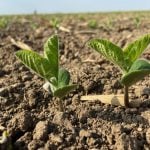
(Photo courtesy Canola Council of Canada)

Neonic-treated canola not an ‘unacceptable risk’ for pollinators

Already facing federally mandated phase-outs from many major on-farm uses in Canada over risks to aquatic insects, neonicotinoids aren’t expected to pose “unacceptable risks” to pollinators when used on canola seed or hothouse vegetables in the meantime. Health Canada said as much Thursday as it released its final re-evaluation decisions for three neonic pesticides —
North American grain and oilseed markets are also keeping an eye on seeding weather as attention turns to the 2019-20 crop.


Canola may be vulnerable if CBOT soybeans decline

China’s block on canola is already baked into the market

ICE Futures canola contracts held reasonably steady during the week ended April 5, hovering above major long-term lows as traders contemplated the lack of Chinese demand and what the trade dispute means going forward. The bearish influence of China shuttering its doors to Canadian canola has been generally factored into the market, with lows possibly


Farmers sticking with canola-seeding plans

Farmers sticking with canola-seeding plans

If you’re thinking of changing, contact your seed retailer ASAP

So far it looks like western farmers are sticking to their rotations and not jumping out of canola this spring, despite losing their top market, China. “Farmers are locked and loaded and sticking to it,” Canadian Canola Growers Association CEO Rick White said in an interview April 4. “Yes, some have been pushing their rotations.

Rick White, CEO of the Canadian Canola Growers Association says doubling the maximum cash advance to $800,000 or even $1 million, plus allowing farmers to repay 2018 canola cash advances with cash will help canola growers with cash flow following the loss of the Chinese canola market.

Changes to cash advances can help canola farmers’ cash flow: White

The Saskatchewan government says the entire loan should be interest free

One way to help canola farmers suffering lower prices following the loss of the Chinese market is enhancing the cash advance program, says Canadian Canola Growers Association (CCGA) CEO Rick White. “We have a tool,” White, whose organization administers 98 per cent of Western Canada’s cash advances, said in an interview April 4. “That’s what


A tale of two proteins

A tale of two proteins

Are plant and animal proteins competitors or complementary under the province’s new ‘protein strategy’?

The provincial government wants Manitoba to be a protein province, but the jury is still out on where that investment will fall between livestock and plant-based protein. The province has said both plant and animal protein sectors will benefit from the government’s Manitoba Protein Advantage Strategy. “We’re positioned so well, probably better than any other

(Kat72/iStock/Getty Images)

USDA lowers Canadian canola export forecast

MarketsFarm — The slowing pace of Canadian canola exports, linked to the country’s trade dispute with China, saw the U.S. Department of Agriculture lower its forecast for Canadian canola exports in the current 2018-19 marketing year. In its latest Oilseeds: World Markets and Trade report, USDA’s Foreign Agricultural Service said actual Canadian exports could end


Since GM canola was first grown in 1996, numerous ‘escapes’ of all kinds of GM products have been observed.

Canadian GMO escapes common: report

That’s prompted a call for more regulatory oversight and deregistering GM alfalfa

Better regulations are needed to prevent contamination from genetically modified organisms (GMOs). That’s what the Canadian Biotechnology Action Network (CBAN) and the SaskOrganics’ Organic Agriculture Protection Fund committee (OAPF) concludes in a report called GM Contamination in Canada: The failure to contain living modified organisms – incidents and impacts. Why it matters: GMOs found where


Clubroot affects all cruciferous plants – not just canola (seen here) – which includes brassica oilseeds such as mustard.

Organic farmers don’t get a pass on clubroot

Clubroot can also infect mustard, radish and other brassicas

Organic farmers are mistaken if they think they will be spared from the clubroot infestation making its way across the Prairies because they don’t grow canola, a crops extension specialist with Saskatchewan Agriculture says. Brent Flaten warned growers attending the SaskOrganics annual conference March 29 the disease affects all cruciferous plants, and that includes brassica

VIDEO: Stemming the spread of blackleg

VIDEO: Stemming the spread of blackleg

Justine Cornelsen with the Canola Council of Canada shares three things canola growers can do to help limit disease

A recent canola disease survey for Manitoba shows that blackleg is present in nearly 75 per cent of fields. Thanks to improved to genetics, the number of blackleg incidences in plants is much lower, but anything that can impact yield loss is always cause for concern. In this video, Justine Cornelsen with the Canola Council