Before we continue our ‘Meteorology 101’ series of articles, I’d like to take a quick look at a few weather stories that have hit the news in recent days.
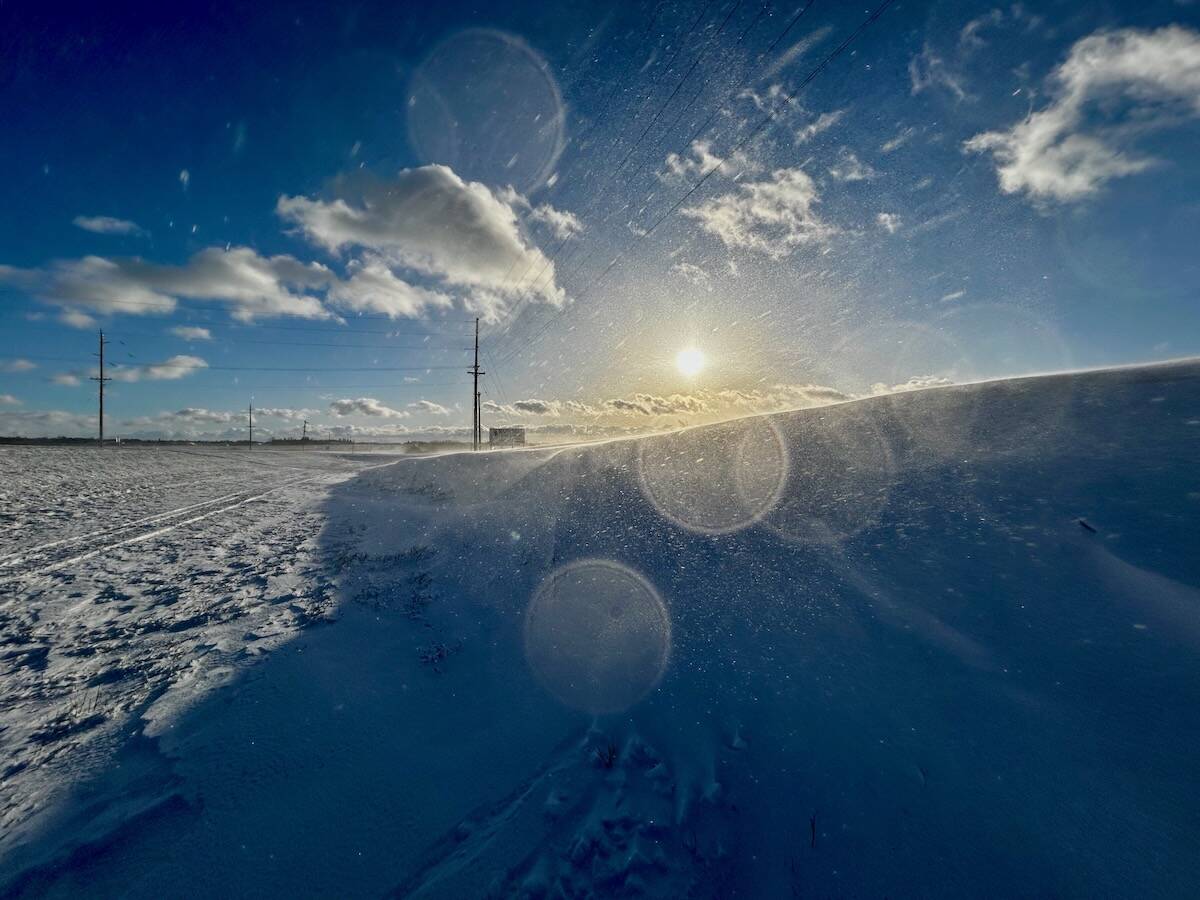
First, was the tornado outbreak over the United States a couple of weeks ago, and in particular, a F3 tornado that went through Michigan and actually crossed an ice-covered lake where it appears to pull up ice. If you haven’t seen the video, I would highly recommend taking a look.
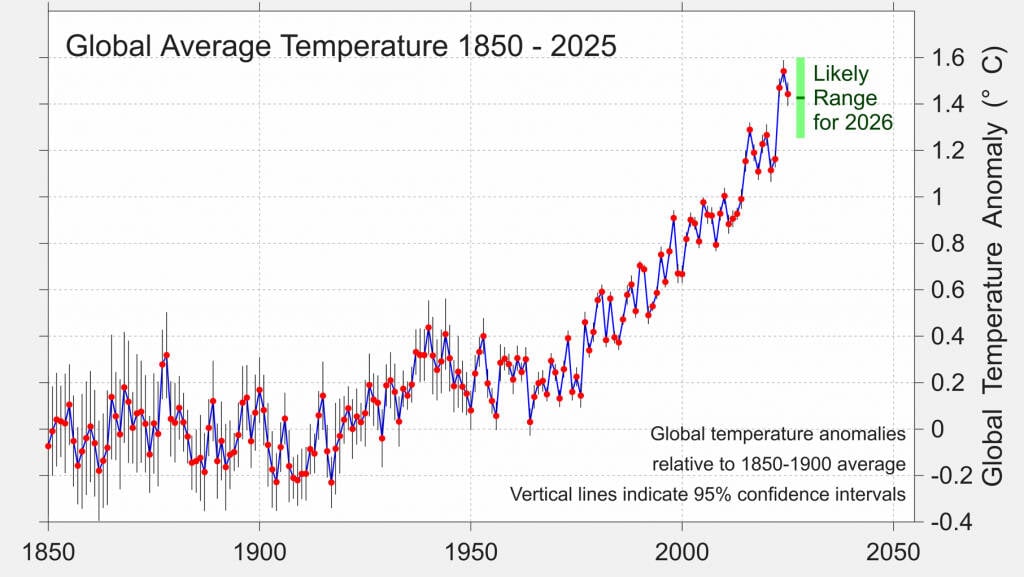
The second item has been the record-shattering heat over a good chunk of the western and central U.S. I don’t have room to go into all the details, but a heat dome brought record temperatures for March to many locations with some of them seeing temperatures that would have broken April all-time records. With persistent arctic high pressure to our north, these extreme temperatures have been kept south of the border, but southern Minnesota did see a record high of 31 C.
Read Also
Forecasting spring 2026 weather on the Prairies
What weather can farmers expect across Manitoba, Alberta and Saskatchewan as they head into seeding? Plus: a lesson on what makes the seasons turn
Last on our list is an article that came out indicating that there is a good chance we will see the development of El Niño conditions across the Pacific later this year and it could be a very strong El Niño. We will look at that topic in April.
OK, now on to our main topic.
In our last article we looked at the composition of the atmosphere, breaking it down into a heterosphere and homosphere. Then we looked at the atmosphere from a temperature point of view and proceeded to break it down into four regions or layers — the thermosphere, mesosphere, stratosphere, and troposphere. We finished off by saying that one of these layers is responsible for most, if not all, of our weather. So, in this issue we will get back on track and extend our understanding of weather and the atmosphere by beginning our look at the atmosphere and surface energy balances.
To begin to understand how solar energy is spent as it reaches the Earth’s surface, and thus understand our surface energy budget, we need to look at the pathways in which solar energy can travel once it reaches the Earth’s surface.
Where the rays go
Earth receives energy from the Sun in the form of shortwave radiation. When this energy is turned into heat, it takes on the form of long-wave radiation. A good portion of both of these types of radiation passes through our atmosphere in the process known as transmission. When we are looking at shortwave radiation reaching the Earth’s surface, we call it insolation, and it is this insolation that is the driving force behind all of our weather.
Insolation is comprised of shortwave radiation that is transmitted directly to the ground, along with diffused or scattered radiation (indirect radiation). As shortwave radiation travels through our atmosphere some of it interacts with gas, dust, pollutants, water droplets and water vapour, changing the direction of the shortwave radiation — or scattering it. This scattering is what causes the sky to be blue during the day and why sunsets and sunrises take on a reddish hue.
The principle behind why we see these colours is known as Rayleigh scattering; named after the English physicist Lord Rayleigh, who came up this principle back in 1881. The principle relates wavelength to the size of the particles that are causing the scattering.
The general rule is: the shorter the wavelength, the greater the scattering; the longer the wavelength, the less the scattering.
Small gas molecules will scatter shorter wavelengths (remember with visible light, blues and violets have the shortest wavelengths, while oranges and reds have the longest wavelengths). So, since short waves are scattered the most and the molecules in our atmosphere scatter short waves, we end up having the lower atmosphere dominated by scattered blue waves.
At sunrise and sunset, the angle of the Sun is such that the insolation has to travel through much more atmosphere than during the day. The short blue wave lengths are still scattered, but now they encounter so much scattering only the longer orange and red wave lengths are left to reach our eyes — so we tend to see these colours.
Action and refraction
Another thing that happens to shortwave radiation as it enters the atmosphere is that it refracts. Refraction is the bending of light as it passes from one medium to the next. In this case, it is passing from the virtual vacuum of space to our dense atmosphere.
We have all seen examples of refraction. Rainbows are created when light passes through dense water drops causing the different wavelengths of light to refract at different rates. Mirages are another example of refraction. Most of us have experienced mirages on warm days along a highway when you stare down the highway and see what appears to be something floating above the road. In this case, it is the hot air above the highway that causes the light to be refracted.
One interesting note about refraction is that without it, the amount of daylight we receive would be about eight minutes less each day. When the sun sets or rises, the light refracts as it passes from space into our atmosphere. This refraction allows us to “see” the Sun when it is actually below the horizon. In the morning we see the sun rise four minutes before it actually moves above the horizon and at sunset we continue to see the Sun for four minutes after it has actually dropped below the horizon.
Next we will take a break from learning about the weather and take a look back at our extended winter to see how the numbers stacked up.