
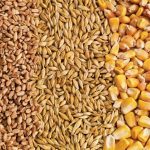
Stand up for our grain grading system

Stand up for our grain grading system

It would be a mistake to alter the Canadian Grain Act to allow U.S. grain to enter our system

In 2014, a longtime advocate for grain trade deregulation and a former researcher for the Western Canadian Wheat Growers Association was quoted in the ag press as saying, “I don’t remember one serious conversation about market power and the dangers it imposed.” Apparently that conversation still hasn’t happened for the farmers who are lobbying to

More collaboration and better communication is credited with improving Western Canada’s grain-handling and transportation system. One example of better communications occurred last fall when Doug MacDonald, CN Rail’s vice-president of bulk (standing top centre), and other CN officials, met with western Canadian farm leaders at the Port of Vancouver.

A new day for grain transportation?

With record port throughput occurring twice in the crop years following the 2013-14 shipping backlog it ‘feels’ that way

The great grain backlog of 2013-14 was a disaster, costing western Can­adian farmers billions, but there’s a silver lining: since then, grain movement has never been better. “I think it really was a wake-up call for a lot of parties, especially governments, and people who aren’t necessarily as close to the (grain transportation) issue,” Wade


Data collection and infrastructure are the next big priorities for the 
grain-handling and transportation system, says Western Grain Elevator Association executive director Wade Sobkowich.

New grain system priorities: data collection, infrastructure

The next two big priorities concerning grain movement are data collection and infrastructure, says Wade Sobkowich, executive director of the Western Grain Elevator Association (WGEA). “Any time you have a supply chain you have a bottleneck somewhere,” he said in an interview Aug. 23. WGEA members welcome the longer trains CN and CP Rail are

There are five pesticides grain companies belonging to the Western Grain Elevator Association don’t want to have been applied to crops they buy in the 2017-18 crop year starting Aug. 1, 2017.

‘Keep it Clean’ to protect grain markets

The major western Canadian grain companies have identified five pesticides they don’t want used on the crops they buy

With harvest approaching, western Canadian farmers are being reminded to avoid trade disruptions by “Keeping it (crops) Clean” from pesticide residues. Even though a pesticide is registered for use in Canada it might not have been approved in an importing country, which means there’s no acceptable level of residue. With that in mind members of


CN Rail says it’s fully meeting grain shipper demand

Most weeks this crop year CN Rail has delivered more than 90 per cent of the cars grain companies ordered, according to Ag Transport Coalition’s (ATC) weekly reports. That’s pretty good service, says Wade Sobkowich, executive director of the Western Grain Elevator Association and one of the ATC’s members. David Przednowek, CN Rail’s director of

Competition appears to be spurring efficiencies in the grain pipeline, which are finding their way to farmers.

Western farmers benefit from grain-handling efficiency gains

Basis levels are closer to normal, indicating more competition and fewer system constraints, says U of M ag economist Derek Brewin

Western Canadian grain farmers saw the gap between the export price and their price narrow in 2015-16, reaping the benefits of an efficient and competitive grain-handling and transportation system (GHTS). Despite 2015’s near-record 64.7-million-tonne crop, there was no repeat of a grain shipping backlog that followed record production in 2013, Derek Brewin, a University of


"I understand from talking to Manitoba producers that in some areas grain shipping is as bad as 2013-14." – Dan Mazier

KAP alleges poor rail service in southwest Manitoba

However, the grain monitor says on the whole grain movement this crop year has been decent

Rail service for grain in southwestern Manitoba has been bad in recent months, Keystone Agricultural Producers (KAP) president Dan Mazier said during the farm group’s advisory council here April 20. “I understand from talking to Manitoba producers that in some areas grain shipping is as bad as 2013-14,” Mazier said in his opening address. “Some

Concept of making money agriculture

Support grows to keep deferred cash purchase tickets

KAP and the Western Grain Elevator Association say a proposal to end the option is bad for the grain sector

Support to retain deferred cash purchase tickets for western grain farmers is building. Keystone Agricultural Producers (KAP) passed a resolution to that end at its advisory council meeting here April 20 to keep the option. The Western Grain Elevators Association (WGEA), which represents Canada’s six major grain elevator companies, also wants to keep deferred cash


Editorial: Playing with trains

With spring just around the corner, it’s becoming clear a big wreck in grain shipping is unlikely this winter. Despite a 76-million-tonne crop to move, big blizzards and those infamous periods of frigid winter temperatures, the system has held together. Mark Hemmes of grain monitor firm Quorum said in a recent article in the Co-operator

The Canadian Transportation Agency has been told to reconsider level-of-service complaints against CN after the original findings were struck down in court.

Appeal Court reverses CTA rulings against CN

The Federal Court of Appeal says the regulatory agency made errors in assessing car shortfalls in 2014

The Federal Court of Appeal has struck down rulings by the Canadian Transportation Agency that CN breached a level-of-service obligation in early 2014. The CTA said the failure was related to supplying two Prairie grain companies with sufficient hopper cars during the frigid early months of 2014. Justice Marc Nadon ruled the CTA “made unreasonable