
Forecast: Colder-than-average temperatures expected

Covering the period from March 18 to March 25

For those of you who regularly read my forecasts, you will know I hate to write forecasts in the spring and fall — but especially in the spring. The yearly fight between cold and warm air in the spring often makes it difficult to accurately predict the weather beyond about five days. Since I write
Weather school: Breaking down the atmosphere

Weather school: Breaking down the atmosphere

If you fly up to about 5,000 m, nearly half the atmosphere’s mass is below you

After taking a week off from Weather School to take our monthly look back at the previous month’s weather, and to peer ahead to see what type of weather we may see over the next couple of months, it’s time to finish up our discussion about the seasons. We need to take a look at


Forecast: One final shot of arctic air ahead?

Covering the period from March 11 to March 18

As expected, we did see an active storm track during the last forecast period, and as often happens, the weather models struggled. The biggest issue the weather models seem to have is with the intensity of the cold air. The models keep trying to drop in some fairly cold air, but so far, we have


Temperatures for February 2020 were right around average for the Dauphin, Brandon and Winnipeg reporting regions.

This February was much warmer than the last

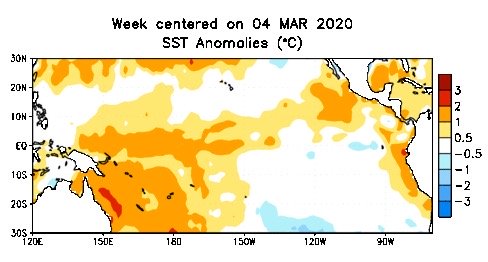
The CanSIPS model predicts a colder-than-average March for the Prairies

You guessed it, it’s that time again, to look back at the previous month’s weather, then look ahead to see what the next couple of months might have in store. At this time of year, with spring just around the corner, the long-range forecast takes on a little more importance. Let’s begin by looking back

Forecast: Storm track setting up to our north

Covering the period from March 4 to March 11

Last issue’s forecast did an OK job. It captured the overall pattern, but was a little off regarding temperatures and overpredicted the amount of snow with a weak area of low pressure. This forecast period looks like it will be an interesting one. Weather models show the main storm track setting up across the central


Weather school: Five reasons for the seasons

Weather school: Five reasons for the seasons

Earth is a spinning top tilted to one side – and is always tilted in the same direction

In our previous Weather School class we looked at incoming solar radiation and the solar constant. With no new or exciting happenings in our local weather, we’re going to continue our look at how the incoming energy from the sun drives the seasons and weather we experience here on Earth. Net global radiation is the

Forecast: Winter and spring battling it out

Covering the period from February 26 to March 4

For the first time in a while, last issue’s forecast played out pretty much as the weather models predicted. Mild air moved in last weekend and was followed by a shot of colder air during the middle part of this week. For this forecast period, it looks like we will start off with an area


Weather school:  Insolation and the solar constant

Weather school: Insolation and the solar constant

Equatorial regions get about 2.5 times more incoming solar energy than polar regions

In my last article, we gently stuck our toes into the idea of going back to school with our first weather school class. In that class we discussed how the sun creates energy and then how that energy travels from the sun to Earth. Today we will start to look at how that energy is

Forecast: Is spring fighting its way in early?

Covering the period from February 19 to February 26

As I pointed out at the beginning of last week’s forecast, when there is a switch in the weather pattern, the devil is in the details and we definitely noticed that last week. The weather models correctly forecasted a couple of outbreaks of cold arctic air. What they failed to get right was just how