
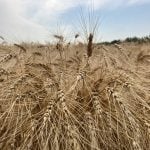
Changes Proposed For Canada Western Red Winter Wheat Class

Proposed changes to wheat classifications would increase Canada’s ability to compete with American winter wheat in the international market, a discussion paper presented to the recent varietal registration meetings says. Four “generic” winter wheat varieties might be moved to the new general purpose class and a fifth be graded Canada Feed, according to a discussion
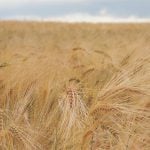
Fewer Wheats At This Year’s Recommending Meeting

The committee that determines whether new wheats should be supported for registration had fewer candidates to consider this year than last. Members of the Prairie Recommending Committee for Wheat, Rye and Triticale (PRCWRT) reviewed the data and cast their secret ballots here Feb. 25 before their morning coffee break. A year ago it took until


“Alternative” Systems Get Mainstream Funding

“We’re thinking about more diverse ways of building relationships across the Prairie provinces. We’re not talking about 100-mile diets here.” – STPHANE MCLACHLAN The federal government is providing $1 million for a five-year project in Manitoba to develop more community-based alternative food systems for rural, urban and northern Manitoba. The Community University Research Alliance (CURA)

New Pig Disease Poses A Puzzle

“These pigs look very similar to pigs that simply starve to death.” – JOHN HARDING, U OF S Scientists at the University of Saskatchewan have discovered a new and baffling swine ailment in which newly weaned pigs fail to eat and starve to death. Postweaning Wasting/ Catabolic Syndrome (PWCS), can cause death losses of up


Top 10 Pulse Food Resolutions For 2010

1. Lose weight: Recent research from the University of Toronto has shown that eating pulses can increase feelings of fullness or satiety and reduce waist circumference. 2. Increase your fibre intake: One cup of cooked pulses contains approximately 15 grams of fibre or around half the recommended daily intake for adults. 3. Decrease your fat

In Brief… – for Jan. 21, 2010

Genetic boost: The federal government is investing $1.22 million to increase sales of Canadian dairy genetics in international markets through the AgriMarketing program. “Our government is steadfast in our support for supply management and is creating opportunities for our producers at home by increasing exports and promoting our top-quality dairy genetics around the world,” said


Certified Seed Part Of Triffid Solution

“What we’re trying to do is find a path forward so we can eradicate or eliminate Triffid from our flax production. That’s the goal.” – RICHARD WANSBUTTER The ongoing CDC Triffid saga could end farmers’ practice of saving flaxseed from year to year, industry sources say. Not all the details have been worked out, but

Terry Boehm New NFU President

“The first thing I want to say is we are non-partisan and we have members from every political stripe and farms of every style and size.” – TERRY BOEHM The National Farmers Union’s (NFU) new president , Saskatchewan farmer Terry Boehm, says addressing the downturn in the hog and cattle sectors and preventing market disruption


Flax Genome Work Gets $1.2M

Saskatchewan’s Ag Ministry has pledged $1.2 million to a project to map the flax genome with an eye toward developing flax as a “dual-purpose” crop. The Total Utilization of Flax Genomics (TUFGEN) project, led by Gordon Rowland of the University of Saskatchewan’s College of Agriculture and Bioresources, and by Sylvie Cloutier of Agriculture and Agri-Food

Uncashed Producer Cheques Finance Research

Research to develop a natural food preservative, derived from cereal grains, is one of five projects supported by wes tern Canadian farmers through the 2009 CWB postgraduate awards program. If successful, the research could create an important new value-added market for Prairie wheat and barley, which would be used to produce a mould-fighting preservative. Scientists