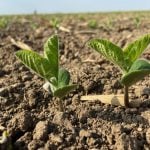
Trade impacts from the CFIA’s gene editing 
decision are vastly different
on either side of the organic conventional
line.

The trade take on CFIA’s gene-editing decision

Canada joins many countries friendly to GE crops, but some regions and organic markets will continue to opt out

When it comes to grain trade, systems that provide transparency and choice for customers will likely continue to be important as more gene-edited crops hit the market. “We’re working proactively on some of these approaches,” said Krista Zuzak, director of crop protection and production with Cereals Canada. WHY IT MATTERS: Trade impacts from the CFIA’s gene-editing decision are vastly different on either


Critics of the existing regulatory framework say cereals productivity has lagged, while others say the numbers don’t support this assertion.

Analysis: Seed Summit long on rhetoric, short on specifics

Seed firms may not like the rules, but they don’t seem to have much sense of what they’d like to see replace them

Three meetings, over three weeks, and a total of nine hours later, Brett Halstead says he still doesn’t know what regulatory changes the seed industry wants. “I still haven’t really heard what the problems are,” the Saskatchewan farmer and chair of the Saskatchewan Wheat Development Commission said during the final online Seed Summit meeting Feb.

Comment: Farmers beware the variety use agreement

Comment: Farmers beware the variety use agreement

Are the voluntary agreements meant to normalize farmers paying for saved seed?

The eagerly awaited annual seed guides have arrived bringing farmers reliable information on which to base this year’s variety choices. These publications have a long history of providing objective, unbiased, science-based information. Data in the seed guides predict the agronomic performance, crop quality, and disease reactions expected from the crops in farmers’ fields. The seed


The Canadian Seeds Growers Association sees variety registration as key to quality control.

Seed summit surprise

Seeds Canada says its meetings on changing seed regulations are intended to let more stakeholders provide input

[UPDATED: Jan. 31, 2022] Seeds Canada is hosting an online Seed Summit next month, even as the federal government’s own regulatory review forges ahead. “It’s just including more of the stakeholders that haven’t been included before,” Seeds Canada’s executive director Barry Senft said in an interview Jan. 19 (register at seedsummit.ca). The summit’s announcement in

Canola and corn will see steep increases in the inspection fees for seed crops, but the CSGA says that reflects higher relative costs for inspecting those crops.

Higher seed crop certification fees coming

Seed growers have endorsed the increase, but others in the industry say it’s going to undermine the competitiveness of certified seed

The cost to certify seed in Canada is going up. And despite a vote overwhelmingly in favour of it, some stakeholders are unhappy at the news. Canadian Seed Grower’s Association (CSGA) members voted 111 to 16 to increase fees to certify Canadian seed crops starting in 2022 during a special general meeting online Nov. 24.


Barry Senft. (Supplied photo)

Ex-GFO CEO to manage Seeds Canada

Barry Senft to help build up merged seed-industry group

The four Canadian seed industry organizations now operating as Seeds Canada have named their first organizer-in-chief. Barry Senft, whose resume in Canadian agriculture includes stints as CEO for Grain Farmers of Ontario, executive director for the Canadian International Grains Institute, chief commissioner of the Canadian Grain Commission and second vice-president for Saskatchewan Wheat Pool, becomes

(Jack Dykinga photo courtesy ARS/USDA)

Prairie farm slapped with plant breeders’ rights infringement penalties

Farmers need to know who they are buying seed from to avoid potentially significant costs

Infringing on Plant Breeders’ Rights (PBR) has cost a large southern Alberta farm a record $737,597. “The settlement relates to unauthorized advertisements and sales of PBR-protected barley and wheat varieties,” Alliance Seed, SeCan and an unnamed seed company said in a news release Wednesday. The settlement “includes the royalties, plus legal fees and penalties,” Todd


Seeds Canada will include seed grower voices

Seeds Canada will include seed grower voices

That’s despite the Canadian Seed Growers Association’s decision not to participate in new organization

The Canadian Seed Growers Association (CSGA) isn’t part of the merger creating Seeds Canada, but some seed growers will be part of Seeds Canada. “While there may be one less amalgamating partner (CSGA), the vision for Seeds Canada to become the voice of the seed sector, including seed growers, analysts, and the seed trade, remains

(iStock/Getty Images Plus)

Second Seeds Canada merger vote to proceed sans CSGA

Seed Growers membership had voted against amalgamation deal

A proposal to combine Canada’s seed industry groups into a single organization, to be dubbed Seeds Canada, will be subject to a new vote, this time with one less group on board. The Canadian Seed Trade Association (CSTA), Canadian Plant Technology Agency (CPTA); Commercial Seed Analysts Association of Canada (CSAAC) and Canadian Seed Institute announced