
First Organically Bred Wheat And Oat Lines Enter Co-Op Trials

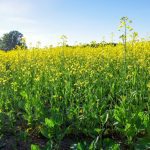
Oat and wheat varieties bred specifically to perform well in the low-input conditions of an organic production system are one step closer to becoming a commercial reality. Two lines of wheat and two lines of oats developed by the Organic Wheat Breeding Program, based at Carman are now entering first-year co-op testing trials towards evaluation

Let’s Keep Risks In Perspective

The nuclear crisis in Japan is likely to have a big impact on the future development of the nuclear industry around the world. In a less direct way, it could also lead to more starving people. The link between the two issues is trust. Nuclear power generation is safe, we’ve been told. Unfortunately, no one


Calling All Wannabe Wheat Breeders

If you’ve ever had a hankering to develop your own wheat variety, the University of Manitoba and Agriculture and Agri-Food Canada have a deal for you. Researchers have created a participatory wheat-breeding program that allows farmers to take early crosses and then make the genetic selections on their farms, based on their management practices and

Committee Approves 14 New Varieties

The federal decision in 2009 to axe kernel visual distinguishability as a requirement for registering wheat varieties in Canada prompted lots of frowns among grain handlers and farmers. But at least one plant breeder is smiling. Anita Brlé-Babel, a winter wheat breeder from the University of Manitoba, received approval from the Prairie Wheat, Rye and


Little Gain For Farmers From Off-Patent Soybean

Monsanto should stop pretending it’s doing farmers any favours in the upcoming expiry of a patent on a genetically engineered soybean, says Bob Friesen, president of Farmers of North America Strategic Agriculture Institute. “Farmers are sick and tired of these empty promises,” Friesen, the former longtime president of the Canadian Federation of Agriculture, said in

WGRF Approves $3.8-Million Breeding Tools Initiative

Western Grains Research Foundation (WGRF) has approved an Endowment Fund Directed Research Program fund of $3.8 million over the next five years for an initiative to develop genomic tools, increase genomic capacity, and enhance the use of doubled haploid in cereal crop-breeding programs. Most Canadian breeding programs already utilize some doubled haploid and genomic technology.


WGRF Funds Doubled-Haploid Technology

Western Grains Research Foundation (WGRF) has announced $3.8 million in funding over the next five years to develop genomic tools, increase genomic capacity, and enhance the use of doubled haploid in cereal-crop- breeding programs. The WGRF says most Canadian breeding programs already utilize some of this technology, but the full potential is not being exploited

Phytotron Garners WGRF Support

The University of Saskatchewan has received a $1-million investment from Western Grains Research Foundation (WGRF) for the College of Agriculture and Bioresources’ Phytotron Renewal Project. The Phytotron is an indispensable tool in plant and soil science research and teaching in the College of Agriculture and Bioresources. The controlled environment plant growth facility enables three full


Weed Science Meet Looks At Risk Of Runaway Crops

Creating super varieties through genetic modification and introducing new crops could open a Pandora’s box of problems, according to some leading weed scientists. Farmers have long battled introduced crops such as kochia – a drought-tolerant, prolific forage that is now one of the most abundant weeds in North America. “The invasion by crops is not

2010 Winter Wheat Variety Performance Data Now Available – for Sep. 2, 2010

To assist Manitoba farmers with variety selections this fall, Manitoba Agriculture, Food and Rural Initiatives (MAFRI) and MCVET (Manitoba Crop Variety Evaluation Team) is publishing the most recent variety descriptions and performance data for winter wheat. Farmers should consider a number of factors when selecting a winter wheat variety, including yield potential, agronomic and disease