
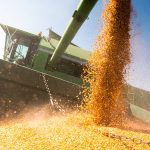

(Bruce Fritz photo courtesy ARS/USDA)

Manitoba sunflowers take beating from storms

CNS Canada –– Manitoba crops have suffered an array of problems due to unfavourable weather this year, and sunflowers are no exception. “(Sunflower) crops would be looking really good if it wasn’t for the storms that have been rolling through Manitoba over the last few weeks,” said Troy Turner, agronomist with the National Sunflower Association

Jeffery Fitzpatrick-Stilwell, senior manager 
of sustainability for McDonald’s Canada.

McDonald’s backs Manitoba research project

Newly established beef and forage research farm recently 
opened its doors to showcase value to sector


McDonald’s Canada sees itself as a longtime partner of the Manitoba beef industry. It contributed $25,000 in February to the Manitoba Beef and Forage Industry for a collaborative project of science-based research to enhance ecosystems, producer profitability and build awareness of the beef and forage industry. One McDonald’s executive says the now-completed pilot is just


port of churchill

Analysis: Canada needs Churchill, but do grain farmers?

The port and bay line are vital to the northern economy, but so little grain moves the impact 
on the grain sector would be minimal

Canada’s grain industry doesn’t need the Port of Churchill, or its railway — but Canada does. Both are important to Canadian sovereignty in the North and are vital to the economies of Churchill and other northern communities. From a farmer’s perspective the more shipping options available the better. But if Churchill — Canada’s only northern

(File photo)

Shallow roots potential concern for Manitoba sunflowers

Commodity News Service Canada – Sunflower crops in Manitoba are generally in good shape for this time of year, but excess moisture in the key growing areas have kept root systems shallow, which could create problems later in the season, according to an industry participant. It’s still relatively early for sunflowers, with diseases usually not setting in until


Photo: File/Sharlene Bennie (2014)

Combining begins in drier sections of Western Prairies

Commodity News Service Canada – Producers in southern Alberta have begun to combine some grain and pulses, according to a farm leader. “Down around Lethbridge and south of it, they had pretty decent moisture so they’ve got good crops. Guys are starting to combine winter wheat now and peas,” said Lynn Jacobsen, president of the Alberta

Federated Co-operatives builds new fertilizer terminals

Saskatoon, Sask. – Federated Co-operatives Limited (FCL) has announced it will spend $75 million to build two new state-of-the-art, high-throughput fertilizer terminals in Western Canada. “These are not only investments in agriculture, they are investments in western Canadian communities,” said Scott Banda, CEO of FCL. “The fact that we are building these facilities in a challenging


These giant hailstones were found after a storm near Manitou, Man. July 19. Michelle Sanders/Twitter

Hail damage claims skyrocket in Manitoba

Claims already exceed the average for an entire year

Commodity News Service Canada — The massive storms that have steamrolled through parts of Manitoba are causing significantly higher than average hail damage claims, according to the Canadian Crop Hail Association. The association’s most recent hail report said the ratio of claims to policies have soared due to storms on July 4, July 10 and

Rainfall for July 13, 2016 as of 6:40 p.m. CT. (CoCoRaHS.org)

Storms trim potential for big Prairie crops

Reuters — Heavy rain and strong winds are likely to curb the potential for Western Canada’s crops, government officials said, but the harvest may still be bigger than average. Pockets across Saskatchewan, Canada’s biggest wheat- and canola-growing province, received as much as five inches of rain, strong winds and hail since Sunday. The storms flattened


Aboriginal Manitoba farmer with oxen, circa 1900.

First Nations were first farmers in Manitoba

U of M students search site for historical artifacts

It’s certain the first farmers in Manitoba were First Nations people, likely near the site of modern-day Lockport. That’s why a group of anthropology students from the University of Manitoba spent five weeks at the site this spring, searching for artifacts that could help us learn more about these early agriculturalists. The earliest recorded observation