
Green lacewings are an effective biocontrol for soybean aphid in Manitoba fields.

Preserve natural habitat and enjoy free pest control

Predatory and parasitic insects can contribute to pest suppression for your crops

Pest control services provided by naturally occurring, beneficial insects save growers in the United States around US$4.5 billion per year. Add that to the just over US$3-million benefit they provide through pollination of crops, and these are pretty valuable critters to have on the farm. New research at the University of Manitoba is trying to

Rachel Parkinson (r) and Professor Jack Gray use a “video game” to study pesticide effects on insects.

Flight simulator shows pesticide effects

High-tech approach at the University of Saskatchewan uses virtual reality more common to video games


A research project at the University of Sask­atchewan is using a virtual reality flight simulator to measure how locusts are affected by pesticides. Rachel Parkinson, a biology master’s student, is trying to see how insects react to neonicotinoids. “There is a lot of controversy over these pesticides,” said biology professor, Jack Gray, Parkinson’s supervisor. “They


Corn rootworm is in Manitoba, but there’s an easy solution — rotate.

More corn rootworm found in Manitoba

It’s already a major pest in the U.S. Corn Belt, but it can still be easily controlled here

There’s another reason not to grow corn on corn in Manitoba: corn rootworm. The insect, which as its name implies, feeds on corn roots and is a major pest in the American Corn Belt, is showing up in greater numbers in Manitoba. But Manitoba Agriculture entomologist John Gavloski says there’s an easy fix: crop rotation.

Fusarium head blight in canary grass.

Lygus bugs, moths present in sunflowers, keep your eye on stored grain

Manitoba Insect and Disease summary for August 10

Summary Insects: Insects of highest importance to scout for currently are Lygus bugs in canola and sunflowers, and banded sunflower moths in sunflowers. Only trace levels of soybean aphids have been found so far. There have still been no reports of high levels of larvae of bertha armyworms in Manitoba. Plant Pathogens: Various diseases continue


Lygus bug on canola pod.

Time to scout for lygus bugs in canola and sunflower crops

Manitoba Insect and Disease summary for August 3

Summary Insects: Insects of highest importance to scout for currently are Lygus bugs in canola and sunflowers, and banded sunflower moths in sunflowers. Only trace levels of soybean aphids have been found so far. Although a couple of traps monitoring adults of bertha armyworm had moderate counts in the Northwest, and a few traps had counts in the uncertain risk

Manitoba Crop Report and Crop Weather report: No. 12

Conditions as of July 18, 2016

Generally good growing conditions continue to advance crops across Manitoba. Localized thunderstorms did result in significant precipitation amounts and crop lodging in some areas of the province. Majority of acres and crop types are in the flowering and grain fill stages of development. Disease pressure and insect activity continues to be monitored as the growing


Aphids on wheat (l) and an aphid mummy.

Alfalfa weevil levels rapidly decline, high levels of pea aphids still seen

Manitoba Insect & Disease summary for July 13

Summary Insects: Levels of alfalfa weevil larvae are rapidly declining in some alfalfa fields as the larvae mature to pupae. Pea aphid levels are still a concern in some pea fields. Aphid levels are being monitored carefully in some cereal fields; high levels of natural enemies have also been noted in some of these fields and may be

Anthony Mintenko, Manitoba Agriculture’s fruit crops industry development specialist, began putting out detection traps to keep a lookout for spotted wing drosophila last week.

Fruit Crops Branch begins monitoring for SWD

The Manitoba Agriculture Crop Industry Branch’s Fruit Crops Program began monitoring for spotted wing drosophila last week

Commercial fruit growers in Manitoba welcome all visitors, but the one no one wants to see this summer is spotted wing drosophila (SWD). The tiny vinegar fruit fly was first detected in 2013 in Manitoba but that year — and in 2014 — showed up in early August after most fruit crops were already harvested.


Black Legged Tick

Beekeepers on front line of tick invasion

Both rural and urban Manitobans should keep a wary eye out for the blacklegged tick as its territory expands


If Kateryn Rochon is a little bit weary by mid-afternoon, it’s no wonder. It’s field season for the University of Manitoba entomologist, who has embarked on a joint mission with the Manitoba Beekeepers Association to better understand tick-borne diseases. That means getting up at the crack of dawn to check traps set the night before,

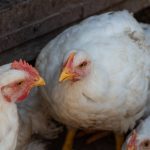
chickens

Zimbabwe drought opens can of worms for poultry farmers

With feed in short supply, feeding maggots produced from waste 
looks to be a winner for drought-stricken nation

Lovemore Kuwana cheerily lifts the lid of a container full of fresh maggots in his backyard, which he will feed to the poultry he keeps once the worms are dried. Amid Zimbabwe’s worst drought in 25 years, which has killed more than 19,000 cattle in the last few months and left 2.8 million people facing