
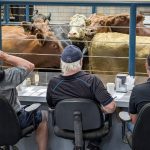
(Photo courtesy Canada Beef Inc.)

U.S. livestock: CME cattle gain for second straight day after selloff

Chicago lean hog futures also firm

Chicago | Reuters — Chicago Mercantile Exchange cattle futures rose for a second consecutive session on Wednesday on short covering and follow-through technical and bargain buying after the market plunged to multi-month lows to start the week. Improving packer margins and futures’ steep discount to cash cattle prices also supported the market following the fund-selling

CME February 2024 live cattle with 20-, 50- and 100-day moving averages. (Barchart)

U.S. livestock: CME cattle up on short covering, discount to cash

Short covering also lifts CME hogs

Chicago | Reuters — Chicago Mercantile Exchange cattle futures surged on Tuesday in a short-covering rebound from multi-month lows in the prior session, supported by the market’s steep discount to cash market prices. Feeder cattle futures rose by as much as the daily trading limit, triggering expanded limits for both feeders and live cattle for


(Scott Bauer photo courtesy ARS/USDA)

Manitoba hog yard cleared for U.S. export

Separate export certificate had been required for yard's cull sows

U.S. authorities have lifted an order that required sows from one Manitoba assembly yard to be certified free of Seneca Valley virus before crossing the border.  The U.S. Department of Agriculture confirmed Canada in the second-last week of November had now met protocol conditions for Seneca Valley virus and has lifted the health certificate requirement,

CME February 2024 live cattle with 20-, 50- and 100-day moving averages. (Barchart)

U.S. livestock: Fund selling sends CME cattle to multi-month lows

February hogs touch contract low

Chicago | Reuters — Chicago Mercantile Exchange cattle futures tumbled sharply for a second straight session on Monday on fund long liquidation, technical selling and concerns about slowing beef demand and rising supplies. Actively traded February live cattle dropped to an eight-month low while several deferred-month contracts posted life-of-contract lows. January feeder cattle plunged more


The measure, impacting sow shipments from one Manitoba assembly yard, has now been dropped.

U.S. lifts Seneca Valley requirement

Measure required some Manitoba sows to be certified free of the virus before shipping

American authorities have lifted an order that required sows from one Manitoba assembly yard to be certified free of Seneca Valley virus before crossing the border. The measure had been in place since September. The U.S. started requiring a veterinary export certificate for cull sows from the Manitoba site following a rise in Seneca Valley

CME February 2024 live cattle with 20-, 50- and 100-day moving averages. (Barchart)

U.S. livestock: CME cattle collapse to March lows

Chicago February hogs set contract low

Chicago | Reuters — Cattle futures sank to their lowest levels in nearly eight months at the Chicago Mercantile Exchange on Friday on increased concerns about easing demand for U.S. beef. Technical selling accelerated the slide after funds recently liquidated long positions, traders said. “We don’t know what demand is going to be a year


Manitoba Pork’s director of swine health advises producers to maintain a high level of biosecurity while shipping.

Seneca Valley virus causes headaches for pork sector

Wider application of new export requirement would have halted shipping: Manitoba Pork

A mild virus masquerading as a more serious disease caused frustration in the hog sector this summer, but it could have been much worse, Manitoba producers heard during an early November meeting of the Manitoba Pork Council. Earlier this year, American authorities started requiring a veterinary export certificate for certain cull sows coming out of


CME January 2024 feeder cattle with 20-, 50- and 100-day moving averages. (Barchart)

U.S. livestock: Feeder cattle top one-week high

Traders digest U.S. cattle placements data; December hogs lower

Chicago | Reuters — U.S. feeder cattle futures and deferred live cattle futures finished higher on Monday after the government reported placements in feedlots were lower than analysts expected last month. The U.S. Department of Agriculture, in monthly data issued after the close of trading on Friday, said producers placed 3.8 per cent more cattle