Federal candidates need to understand the challenges facing today’s hog industry

Federal candidates need to understand the challenges facing today’s hog industry

Market access, labour and financing issues threaten to undermine its future

Over 7,000 pig farms in Canada produce 25.52 million animals a year and generate over $13 billion in economic activity, making the country’s swine industry the fourth-largest source of farm cash receipts of any agricultural commodity. In 2014, over 1.14 million tonnes of pork and pork products valued at over $3.7 billion were exported to
Agriculture research needs to focus on future challenges

Agriculture research needs to focus on future challenges

The institute said rising population, climate change and the need to find 
alternatives to fossil fuels are priorities

Canada needs a forward-looking agriculture research policy to help feed a burgeoning global population, cope with climate change and develop alternatives to fossil fuels, says the Agriculture Institute of Canada. It has released a proposal to create a strong scientific base that “will be the primary source of innovation and productivity enhancements needed to meet


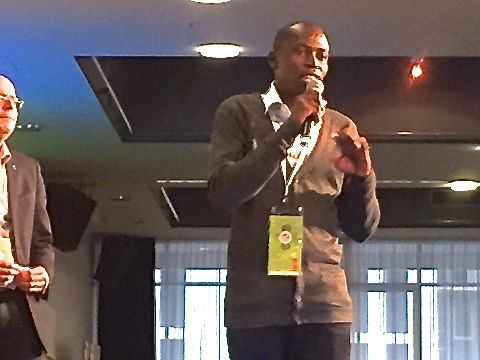
Youth Ag-Summit delegate Samba Ouma of Kenya, giving his acceptance speech Thursday night. (Lisa Guenther photo)

Youth Ag-Summit: Two to represent at UN meeting

Two delegates from the 2015 Youth Ag-Summit will be jetting to Rome in October to take part in a meeting of the United Nations’ Committee on World Food Security. Australia’s Laura Grubb and Kenya’s Samba Ouma were selected from 80 nominees. Ouma and Grubb are now charged with presenting the Canberra Youth Ag Declaration —


Cindy Klassen, speed skater

Gold medal speed skater signs up to be farmer for fundraising campaign

A new initiative invites groups and individuals to sponsor an acre

Olympic gold medal-winning speed skater Cindy Klassen has signed up to be a farmer this summer as part of a Mennonite Central Committee (MCC) and Canadian Foodgrains Bank (CFGB) fundraising campaign. “This year, I’m helping provide food for hungry people around the world by trading in my skates and becoming a farmer,” she says in


overhead view of the city of Brandon

Study reveals downtown Brandon is a ‘food desert’

Brandon food study reveals some have 
a long trip to grocery stores

Forty minutes in a car can take you from one town to the next in Westman, but that’s as long as some Brandonites spend riding the bus one way to go for groceries in the city. Lack of access to grocery stores is highlighted in a new report, called the Brandon Community Food Assessment, released

people in Africa on a hillside

Moving from famine relief to relief from famine

Ethiopia has made solid gains thanks to a co-ordinated attack on the root causes of hunger

Famine relief was a hit in the 1980s — literally — as pop music stars donated the proceeds of their collaboration on the song “Feed the World” to help feed starving people in Ethiopia. It was a sincere effort that raised millions and was part of a global response by governments and aid and development


Members of the Sirba Abay irrigation users’ group gather in the shade of their new farmers’ training centre to discuss how irrigation has improved their incomes and nutrition.

Irrigation project means year-round food, and more

A Canadian government-supported project has led to 
impressive gains in yields, and in health of the local population

Vegetables were once a rarity in this community located three hours northeast of Asosa in the remote Benishangul-Gumuz region of Western Ethiopia. If onions, potatoes and tomatoes were available at all, they had travelled a long distance and been on at least three trucks. They were expensive, often prohibitively so, and poor quality. Two of

Karin Wittenberg standing at a podium

Prairie agriculture in for even more change: U of M agriculture dean

Adapt to climate change rather than trying to mitigate its effects, says Karin Wittenberg

In 1980 there was no Internet. No one carried a cellphone or used GPS. Canola was a new crop for Prairie farmers. Expect even more dramatic change in the next 35 years, says Karin Wittenberg, dean of agricultural and food sciences at the University of Manitoba. Wittenberg, the keynote speaker at last month’s annual meeting