Nitrogen use is going to get a lot more sophisticated in the coming years.

High-tech fertilizers offer great promise

More expensive fertilizer likely cheap compared to future N20 pricing

The fertilizers farmers use will one day be manufactured from algae or hydrogen fuel, not natural gas, and they’ll be ‘SMARTer’ too, said a speaker at St. Jean Farm Days last week. These will be long-lasting sensor-based nano fertilizers, not likely to be nearly as easy to handle as current products, and which may reside



Manitoba government extends nutrient application deadline

Mild fall weather means the window is a bit longer this year

Manitoba’s nutrient application deadline has been extended to Nov. 18. The province’s sustainable development department said Monday the move, which allows fall fertilizer applications through to the end of Nov. 17, is possible because soil temperatures, due to an extremely mild first half of November, have yet to reach the freezing point. The restrictions are designed to ensure nutrients aren’t

Province extends nutrient application deadline

Producers now have until midnight Nov. 14

Manitoba Sustainable Development advises the winter nutrient application ban has been extended until Nov. 15 as soil temperatures have not yet reached the freezing point. This means nutrients can be applied until midnight Nov. 14. Restrictions are designed to ensure nutrients are not applied when the ground is frozen and to protect the water quality


Agriculture Minister Lyle Stewart and Garth Whyte, President & CEO of Fertilizer Canada sign Memorandum of Cooperation.  Photo: CNW Group/Fertilizer Canada

Saskatchewan government signs onto 4R fertilizer stewardship

The Saskatchewan government has agreed to work with Fertilizer Canada to promote adoption of fertilizer application practices using the 4R stewardship model. “Saskatchewan has long promoted 4R Nutrient Stewardship and many farmers have adopted it as best practice. This agreement will further that work, contributing to greater on-farm sustainability and environmental stewardship in Saskatchewan,” Agriculture

(Photo courtesy Nutrien)

Agrium posts quarterly loss

Reuters – Agrium, the Calgary-based fertilizer maker that’s in the midst of a merger with PotashCorp, reported a quarterly loss Nov. 3. The company reported a net loss from its operations of $52.2 million, or 39 cents a share in the third quarter, which ended Sept. 30. That’s compared to a net profit of $132.5


(Dave Bedard photo)

Mosaic looks to restart Saskatchewan potash mine

Reuters — U.S. fertilizer producer Mosaic Co. may need to restart its idled potash mine at Colonsay, Sask. next year, as international buyers work through inventories, the company said on Tuesday. Mosaic halted production in July at the mine, about 70 km southeast of Saskatoon, for the rest of 2016 due to low global potash

(Dave Bedard photo)

Agrium/PotashCorp merger set for shareholder approval

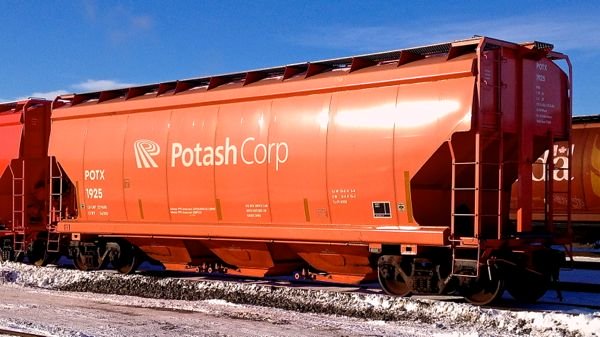
Toronto/Winnipeg | Reuters — The shareholders of Agrium and PotashCorp are set to overwhelmingly approve a merger of the two Canadian fertilizer producers, according to a source familiar with the situation, despite initial skepticism from Agrium investors. About 99 per cent of the votes from both groups of shareholders are in favour of the transaction,


Stubble on a harvested oat field near Winnipeg. (Shannon VanRaes photo)

Carbon price worries farmers, fertilizer makers

Winnipeg/Toronto | Reuters — Canada’s plan to price carbon emissions may weaken the farm sector in one of the biggest grain-shipping countries, raising farmers’ costs and discouraging investment in fertilizer production, industry groups say. Ottawa this month promised a price on carbon emissions by 2018, and will let provinces choose a tax or cap-and-trade system.

Mario Tenuta, professor of applied soil ecology at the University of Manitoba predicts, among other things, that anhydrous ammonia and urea — popular nitrogen fertilizers — will be banned because they produce too much nitrous oxide — a powerful greenhouse gas.

In the battle to mitigate global warming farmers’ nitrogen use will be scrutinized

But soil scientist Mario Tenuta says there are things farmers can do to help themselves

The fight to control global warning will bring about big changes in how Manitoba farmers farm, says Mario Tenuta, professor of applied soil ecology and chair and adviser of the B.Sc. Agroecology Program at the University of Manitoba. “I predict eventually they will outlaw anhydrous ammonia and urea and replace it with high-efficiency (nitrogen) fertilizer,”