(Dave Bedard photo)

Farmers’ debt seen hitting fresh record high

Reuters — Canadian farmers’ debt will likely reach another record high this year, while land appreciation slows and incomes flatten, but the industry is still in strong financial shape, the country’s biggest agriculture lender, Farm Credit Canada, forecast on Tuesday. FCC, the federal Crown ag lending agency, sounded a note of caution for farmers, who

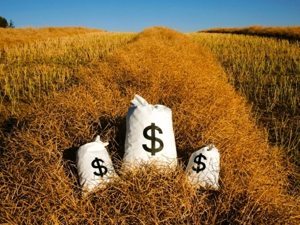
Bags Of Money On A Farm Field

Farm cash receipts should be stable for 2016-17

Here’s some encouraging news. Farm cash receipts should be relatively stable across all provinces in 2016-17. Each province combines a different mix of crops and livestock products that result in varied provincial receipts, but the overall trends appear steady. There are a number of reasons this is likely to be the case. Commodity prices show


Total farm cash receipts projected to remain strong.

Canadian farm equipment sales forecast higher in 2017

Equipment sales and farm cash receipts are directly connected says Farm Credit Canada in a report released this week

When farmers make money they spend it — most often on land and equipment — to improve productivity. With total Canadian farm cash receipts projected to increase just 0.1 per cent this year, Farm Credit Canada (FCC) is forecasting a seven per cent drop in farm equipment sales for 2016 and a seven per cent

Photo: Thinkstock

Six numbers in agriculture to make you stop and think

It isn’t as quiet as you might think on the home front. Yes, today’s farms seem stable, but the next evolutionary wave is gaining energy

In 2009, total Canadian net farm income was $2.8 billion. Four years later, it was $10 billion more, with Statistics Canada’s saying a $5.6-billion rise in the total value of farm-owned inventories from the year before accounted for almost all of the increase in total net income in 2013 That inventory increase came from a


farmers talking in a field

Income decline makes farm management skills key

But farm balance sheets are generally strong, the president of FCC says

The analogy may be outdated, but the old advice to farmers to sharpen their pencils applies to the financial conditions they will likely face during the next few years, says Mike Hoffort, president of Farm Credit Canada. “We’ve gone through a rising cycle of farm incomes and now we’re entering a period when good management

Income support programs not working for farmers

But they are being helped by the low Canadian dollar

AgriStability and AgriInvest, two key government programs to support farmers during periods of low prices, don’t do the job and many producers have dropped out of them, say Ontario and Quebec farm leaders. “Canadian farmers are asking governments to revisit our risk management programs,” Markus Haerle, vice‑chair, Grain Farmers of Ontario, told the Senate agriculture


Input costs to chip away at farmers’ shrinking income

CNS Canada — An anticipated downturn in farm income and higher input costs mean Canadian producers will be in a tough financial position this year, the head of the National Farmers Union (NFU) predicts. Farmers’ net cash income is expected to move lower in 2016, declining nine per cent to $13.6 billion in 2016, according

(Dave Bedard photo)

Farm incomes set to fall from record high

Reuters — Canadian farm incomes look set to fall in 2016 after a year of record profits, but will still reach above-average levels, according to a report from the federal government. Rising receipts for crops and livestock have boosted incomes in recent years, due to greater demand in developing countries and a weak Canadian dollar,


farmer by grain silos

What do you really think about AgriInvest? — CFA wants to know

The Canadian Federation of Agriculture says the quick, web-based survey is intended to help encourage governments to improve the program under the next Growing Forward framework

How do farmers use AgriInvest and how can the business risk management program be improved? That’s what the Canadian Federation of Agriculture (CFA) wants to learn from a survey of farmers as it prepares for the next federal-provincial-territorial farm program starting April 1, 2018, replacing Growing Forward 2. “We want to make sure we are

(Keith Weller photo courtesy ARS/USDA)

Farm kids: Don’t worry about wages

A new study by Cornell University agricultural economists says family members who work on the family dairy farm make $22,000 less annually than comparable hired managers, but are handsomely compensated with “socioemotional” wealth. “While $22,000 seems like a large penalty, there are non-financial rewards they experience working for the family business,” Loren Tauer, professor at