As the 2025 crop harvest crept past the halfway mark this fall, my conversations seemed to suggest two prevailing results:
Read Also
Manitoba Beef Producers take aim at elk surge, feed losses from wildlife
Resolutions at last month’s Manitoba Beef Producers meeting seek help to rein in elk and deer populations, expand fencing supports and improve compensation for wildlife damage.
- On the better soil, the crops are good or at least better than expected.
- On the lighter or poorer crop ground, we see half of the crop on better soil.
This all goes to water retention or the ability of the soil to capture and hold moisture in the soil. Certain regions received rain earlier than others, and some types of soil have a limited capacity for retaining moisture. But, we can fix this by adding organic matter. The simplest way to do this is by grazing bales in the lighter soil.
On our farm this year, we have a patchwork of green oasis amid a sea of dried-up forages. It goes to prove the adage that water is the first and most important of the nutrients required for growing plants. You can have all the other nutrients balanced for the plants to grow and be healthy, but we need the right amount of water first.
As producers, it’s easy for us to become focused on the little things that influence our environment. Sometimes, we need to stop and look over the horizon.
Tariffs and farm profit
I follow producers from all around the world online. I enjoy seeing how producers in other areas of the world deal with the same problems we deal with. There is always more than one way to solve a problem.
So far, the new tariffs introduced in the United States haven’t had much impact on us at our farm and others in my network. Hopefully, that remains the case. But, from my take, it has been six months of confusion for nothing.
I recently met and talked with a group of regenerative producers from Australia (they were touring regen ag practicing operations in Western Canada) and they too could not understand the tariff goal on their country. It was one more thing we had in common.
Now, with abundant supply of crops, the price has dropped off the charts and below the cost of production. It is hard for any producer to forward market their next crop for a loss; they are dreaming of locking in a break-even price.
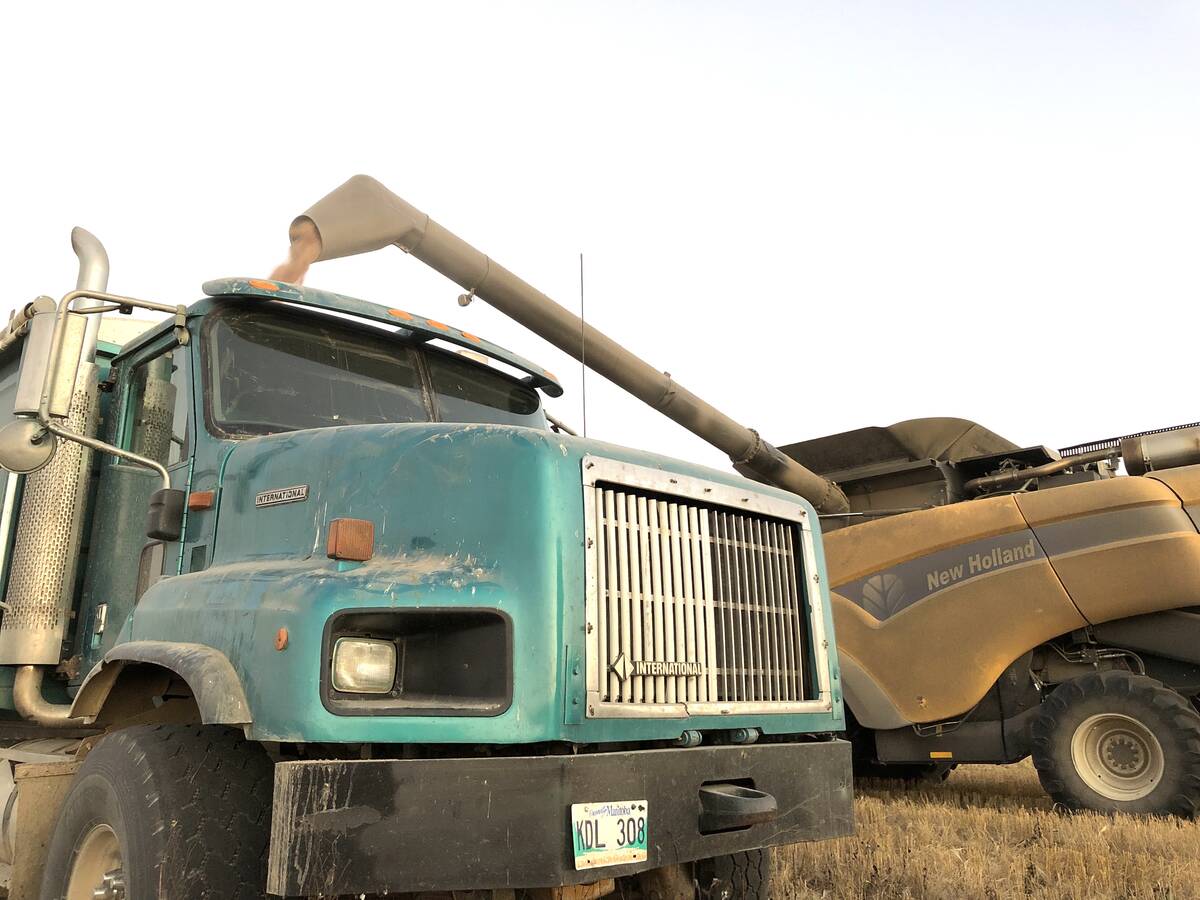
The U.S. can make payments to their crop producers this year to keep them in business, but the crop inventory surplus is still there and still needs marketing, thereby kicking the can down the road.
In Canada, the main cash crop for annual production has been canola; now dealing with tariffs from China. In the last few years, canola has been paying the bills and paying to grow a rotation crop (wheat, oats, barley) to reduce disease pressure. When I sit back and think about the market price on canola, I am pleasantly surprised that it has not dropped further than it has.
There has been talk about using canola and soybeans for biofuel. We already use corn and wheat for ethanol to mix into gasoline. Biofuel is planned to be incorporated into or used as a substitute for diesel fuel. I do have to question the ethics of “Food for Fuel” … do we no longer have hungry people to feed? Do we change the mantra from “farmers feed the world” to “farmers power the world?”
Another question I have about these practices is about the best use of energy: calories of energy going into a product versus calories of energy out of a product. How many calories of energy go into producing canola, to produce biofuel and, in turn, how many calories of energy will that biofuel produce? In my view, diesel fuel will produce cheaper calories of energy. We as Canadians need to have this discussion before we start putting our own and government money into these projects.
The science is out there, but no one is talking about this. I am not against value adding, I believe we as a producers should be encouraging value adding and making use of the byproducts in every way we can. Up-valuing all we can keeps money here in Canada.
Long-term beef planning
The livestock market is hot and getting hotter every day. Now is the time to plan how to stay in the beef business when it cycles back to falling markets, like the annual crop production is now.
All ag products run on cycles of supply and demand, high production and low production, profit and loss. Producers will often say when the returns are high, “this time it will be different” and when it crashes back down will say “Please give me one more chance at a high price and I will not spend it all on new equipment.”
When we look at the beef cycle, we see that we have finished the consolidation phase and have now entered the expansion stage of the cycle.
The demand for beef has been holding out well and should remain strong as long as the economy holds on. If consumers restrict their beef purchases because of personal finances, we will see a new reality.
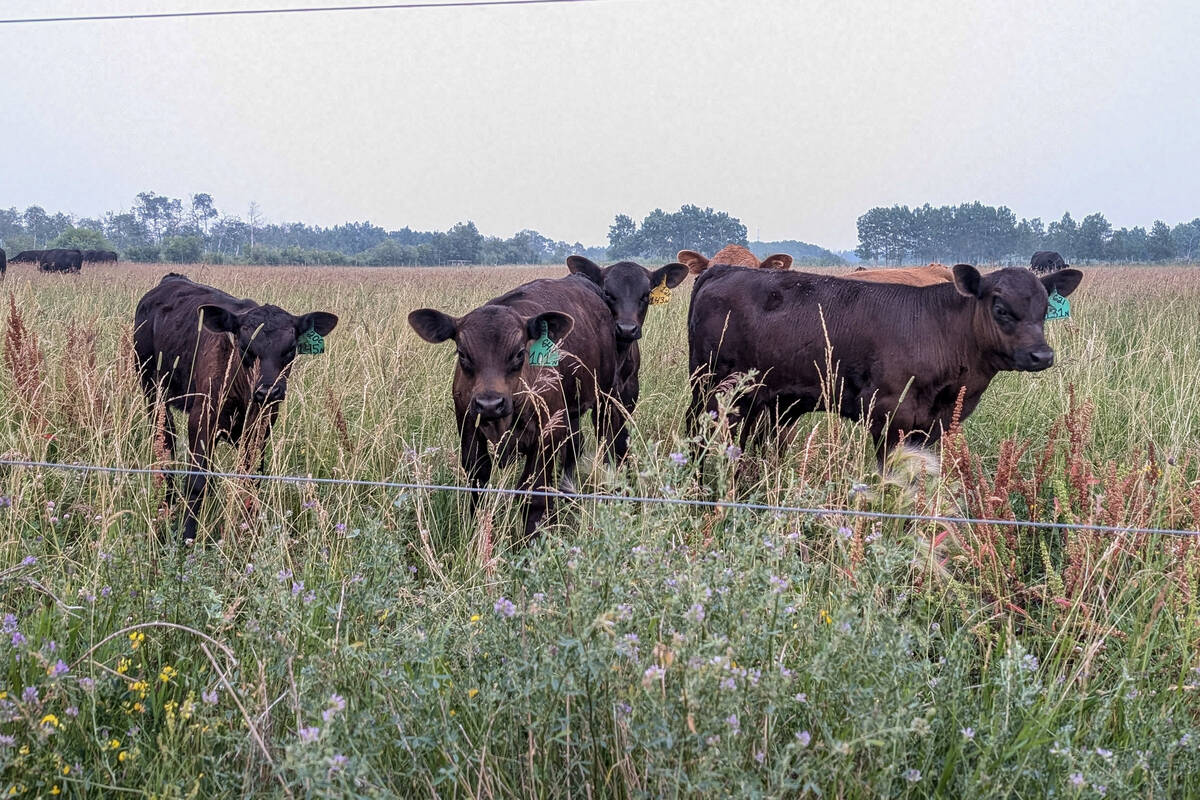
From my conversations with ag lenders in the area, they are lending to a few young producers for cattle purchases. All these new producers are coming in with cattle experience from home and are adding to the family operation. Overall, we are still seeing many older producers leaving the industry and few producers stepping up to replace them.
Despite the beef market boom, over last five years we have seen many pastures and hay fields broken up for annual crop production. I strongly believe that 20 to 30 per cent of these acres should be put back into forages, primarily to maintain the cow herds and improve soil health, reduce disease and weed pressure. Of course, that raises the other side of the equation: if that put back were to occur, would there be enough forage seeds to plant 20 per cent of annual crop land to forage?
Now is the time to sit down with paper and pencils and work out how you are going to make your operation more profitable and survive the current crop market downturn. Remember that no one has the right answer for your operation, but by reaching out to leading producers in your area, government agencies like Manitoba Agriculture, Agriculture and Agri-Food Canada or Manitoba Agricultural Services Corporation, and research groups like universities or the Beef Cattle Research Council, you can improve your own knowledge. If you are facing challenges, you cannot expect better results by doing the same thing repeatedly, as many producers tend to do. We must be proactive in our surroundings, not reactive. We need to take charge of our world.
At our local grazing club out of Lenore, the farm tour is always the highlight each year. We travel around our area to see what local producers are doing and trying out. We also visit with neighbours and, of course, consume a few barley pops to avoid dehydration.
A few years ago, I met a no-till producer who, after 25 years, was not happy with his soil health journey. He wanted to see bigger soil health gains and he thought that he needed to add a legume forage to his rotation.
He has since been happy with the soil’s response to an approach where he seeds once and harvests for the next three crops. In his mix he has 30 pounds an acre of fall rye, five pounds of hairy vetch, 20 pounds of oats, three to five pounds of millet, two to three pounds each of meadow bromegrass and orchard grass and three to five pounds of alfalfa.
On the first year, he does a chemical burnoff of spring growth and direct-seeds the blend in with a starter fertilizer. Late July or early August, a neighbour cuts and bales the crop, or cuts it for silage (silage seems to work better). In the second year, rye and hairy vetch are harvested for feed or seed in early July. After three to four years, hay is cut in July, then a chemical burn down is used before planting the following spring when the land returns to rotation. This has been a win-win deal for the annual no-till cropper and the cow-calf producer next door.
Please remember to reach out to others in this busy season and ask how they are doing. If you need to talk to someone, please reach out to the groups in the province that have farmer hot lines. You are not alone dealing with it all.
I hope to see you all at the 2025 Manitoba Forage and Grassland Association Regen Ag Conference Nov. 12-13 at the Victoria Inn in Brandon. It looks like another awesome agenda and the MFGA conference is always a great venue and opportunity for discussions and catch up with farmers interested in learning more about things you want to learn more about.
Larry Wegner is a former board member of the Manitoba Forage and Grassland Association and MFGA Wall of Fame inductee. This article first appeared as a blog post published by the Manitoba Forage and Grassland Association.