
EU still on track for bigger rapeseed crop

Growing conditions have caused some concern but the impact seems limited so far

Rapeseed in the EU’s major growing countries was mostly in reasonable shape, despite localized damage caused by dry sowing conditions and winter frosts. This keeps the EU on course for a rebound from last year’s disappointing harvest. Analysts Strategie Grains recently cut their forecast for EU 2017 rapeseed production by 500,000 tonnes to 21.56 million,

A crop-eating army worm is seen on a sorghum plant at a farm in Settlers, northern province of Limpopo, February 8, 2017.

Pests, disease seen hitting southern African food output

A fall army worm outbreak is causing serious concern over food security in the region

Crop pests and diseases sweeping through southern Africa pose a threat to food security in a region where production has yet to recover from drought, a senior UN food agency official said Feb. 14, calling for a swift and co-ordinated response. At the start of an emergency conference called by the Food and Agriculture Organization


Italian pensioner Dino Impagliazzo, 86, serves food cooked with items saved from waste to a migrant at Rome’s Ostiense railway station, 
Italy, on Jan. 23, 2017.

Octogenarian Italian feeds the poor with food waste

For 10 years this Italian pensioner has aimed to feed those less fortunate 
than himself as an expression of his faith

It all started with a coffee. When a homeless man asked Dino Impagliazzo for an espresso, the Italian pensioner thought: “Why not help?” Soon he and his wife were making sandwiches for homeless people who hung around one of Rome’s train stations. As word spread, the lines for food grew longer. Eventually Impagliazzo switched to

A woman at work pounding millet in Ndiael, Senegal, December 9, 2016.

Women lead battle to save Senegal’s shrinking farmland

Female-led work is vital to rural communities in Senegal — now women are organizing 
to lead the fight against multinational agribusiness

The women of Thiamene, a tiny straw hut village in northern Senegal, used to scrape together a living by collecting wild baobab fruit and selling milk from their cows. But their earnings have plummeted since an Italian-Senegalese agribusiness, Senhuile, took over the surrounding land five years ago, blocking their paths to the local market and


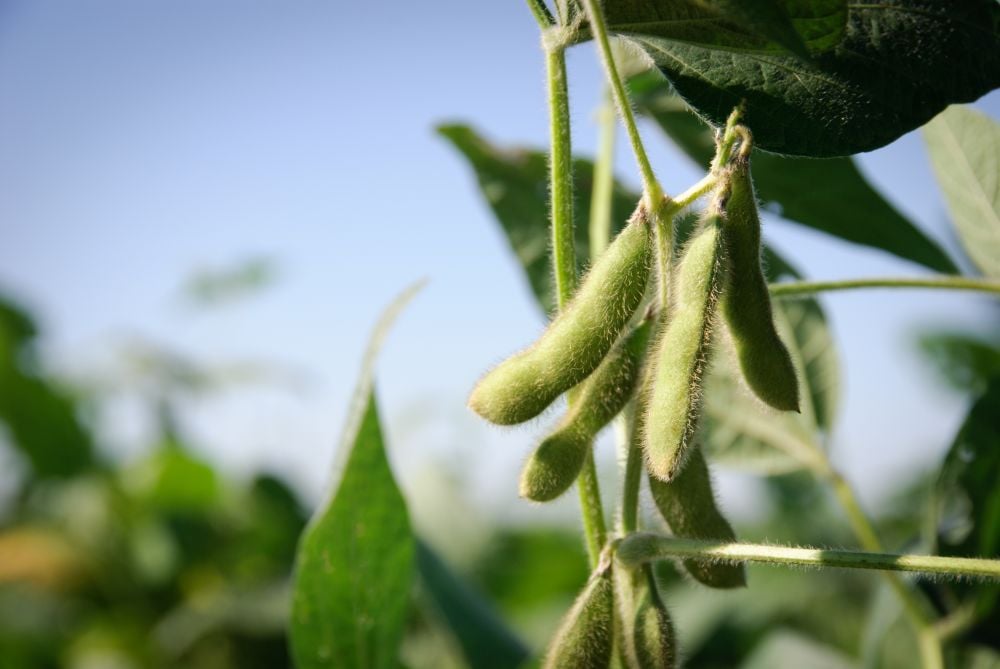
Brazil’s massive annual soybean harvests are making it the market mover in this crop.

Brazil cuts into U.S. soybean market share with China sales

Near-perfect weather in Latin America seen to supply soybean glut and fuel competition for sales

Brazil is muscling in on the peak season for U.S. soybean sales to China, the world’s biggest buyer, as major producers vie to slim down bulging stockpiles after four years of record global output. In deals signed recently, exporters from the Latin American country have sold four shipments to China for delivery in November and

It might look like a wild sunflower, but it’s actually a plant used in Cuba as a cover crop in between the rows on avocado and banana plantations, according to agronomist Scott Day.

Cuba looks to adopt conservation agriculture

A recent UN-sponsored summit invited farmers and agriculture professionals to share their adoption experience

I recently had the opportunity to spend some time in Cuba, along with 20 other visiting farmers, scientists and agronomists, meeting with 80 Cuban agriculture experts and officials. The meetings were made possible by the United Nations Food and Agriculture Organization (FAO), that was hosting the first-ever Conservation Agriculture Summit for Cuba, on Oct. 16-22


A farmer works in his sugar cane field on the outskirts of Ahmedabad, India February 28, 2015.

Sweet paradox: India’s drought-stricken farmers plant thirstiest crop

Erratic prices for vegetables, oilseeds and pulses limit the incentive for farmers to plant them

Despite pleas from the government not to, Indian farmers like Santosh Wagh went right back to planting sugar cane as soon as the first nourishing monsoon rains brought water to his drought-stricken region of central India. For growers like Wagh, a 35-year-old from the Marathwada region in the west of India’s Maharashtra state, sugar cane

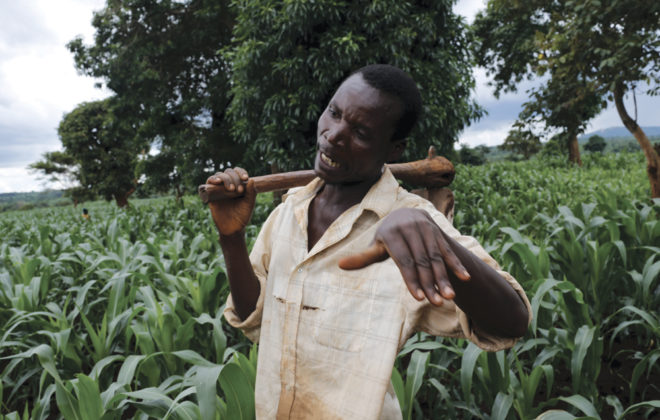
Malawian subsistence farmer Simon Sikazwe stands beside communal maize fields in Dowa near the capital Lilongwe, February 3, 2016. Late rains in Malawi threaten the staple maize crop and have pushed prices to record highs. About 14 million people face hunger in Southern Africa because of a drought exacerbated by an El Niño weather pattern, according to the United Nations World Food Program (WFP).

Smarter farming could cut hunger in drought-hit Southern Africa — researchers

Too few resources are available to educate the continent’s farmers 
about potential solutions to their problems

Southern African farmers facing hunger as a result of worsening drought know a lot about climate change but lack the resources to put solutions that work into place, agriculture and development researchers say. That is in part because government agricultural extension services, which offer training and advice to farmers, have too few agents, according to


Villagers collect their monthly food ration provided by the United Nations World Food Program (WFP) near Masvingo, in drought-hit Zimbabwe January 25, 2016. Malnutrition and hunger could be quickly curtailed if more countries signed on to a plan to boost yields, says the Alliance for a Green Revolution in Africa.

Agriculture investment yields growth and nutrition gains for Africa

Agricultural productivity gains of 5.9 to 6.7 per cent a year offer a bright ray of hope for the continent

African countries that took early action in the past decade to invest in agriculture have reaped the rewards, enjoying higher economic growth and a bigger drop in malnutrition, a major farming development organization said Sept. 6. In a report, the Alliance for a Green Revolution in Africa (AGRA) said: “After decades of stagnation, much of

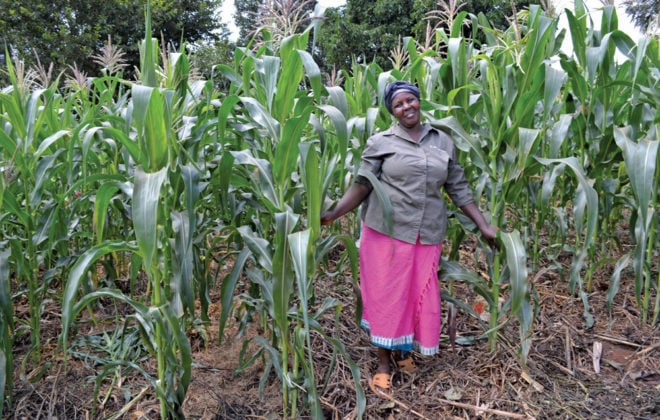
Jane Wanjiko standing in her maize field.

African smallholders are adopting conservation agriculture techniques

When you’re subsisting on three-quarters of an acre, increasing 
maize production from 32 kg a year to 990 kg is a life-changing event

This summer Stefan Epp-Koop travelled to Kenya as part of a Canadian Foodgrains Bank learning tour, focused on the importance of agriculture in achieving numerous development goals: reducing hunger, increasing incomes, empowering women, adapting to a changing climate, and improving nutrition. Throughout the trip he visited farmers, government officials and researchers, exploring solutions that were