
A ‘casino,’ a ‘craps table’ or just plain ‘crazy’ were some of the words traders and analysts used to try to explain activity in the ICE Futures canola market during the first full week of April.
Futures saw some wild price swings on an hour-by-hour basis during the week ended April 9, but the general trend was up, with fresh contract highs hit in the old-crop months.
Wide daily price swings of $30 per tonne or more were the norm during the week, as speculators adjusted positions in the volatile market.
Read Also
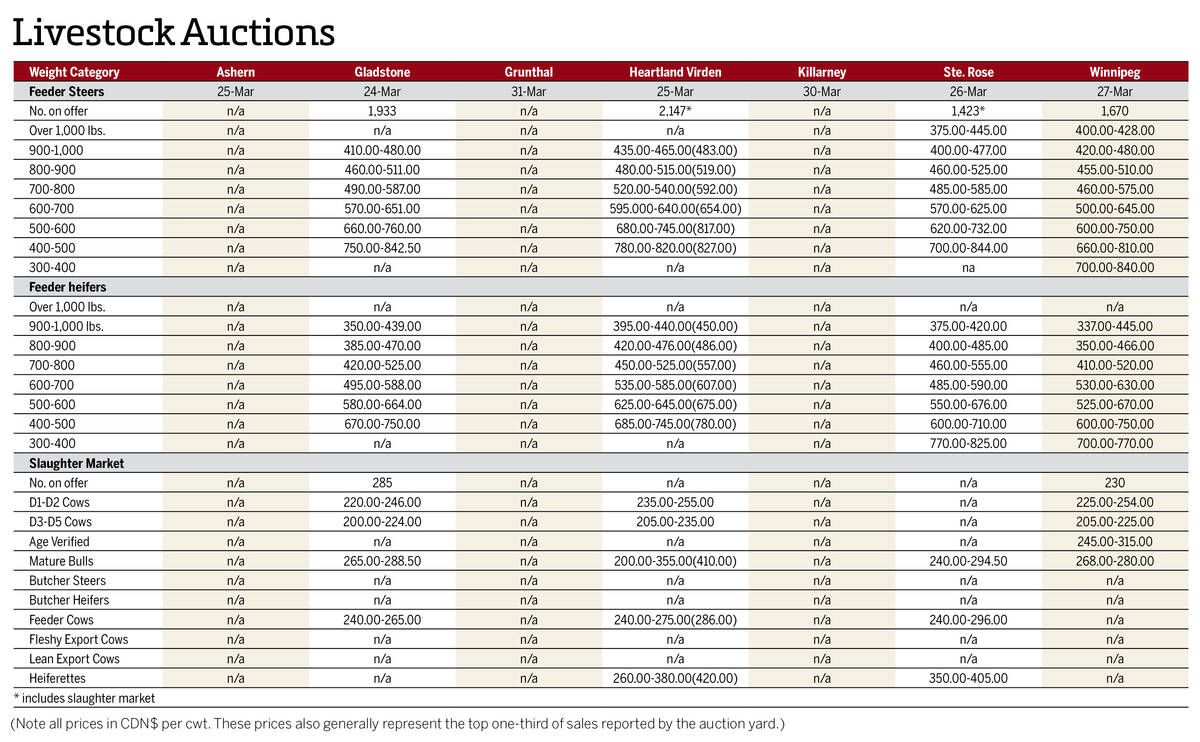
Manitoba cattle prices April 1
Here’s what cattle were selling for in Manitoba from March 24-31, 2026. Four of the seven main livestock auction marts held sales.
Concerns over tight old-crop canola supplies remained a key driver propping up old-crop contracts, as the market works to ration demand for whatever unspoken-for supplies are still out there.
The latest Canadian Grain Commission data showed another solid week of about 300,000 tonnes of exports and an additional 211,000 tonnes of domestic crush. Canada has exported 8.2 million tonnes of canola through 35 weeks of the 2020-21 marketing year, up by 1.6 million tonnes from the previous year.
Strength in outside markets, including Malaysian palm oil and Chicago Board of Trade soyoil, also underpinned canola, but canola surpassed those competing vegetable oil markets to the upside.
The tight old-crop supply situation has been old news for some time now, and attention is turning to the new crop.
If canola operated in a vacuum, the Prairies would be all yellow in 2021. However, agronomic issues and competition from other crops will likely keep actual area relatively steady on the year. That means weather conditions through the growing season and their impact on yields will be the key in determining price direction over the next few months.
Drought maps show severe drought conditions across all of southern Manitoba, with much of Saskatchewan and Alberta also dealing with varying levels of drought. While much of the region should be seeing some moisture in mid-April, more will be required to relieve the dryness.
In the United States, seeding was already underway in the south and the annual battle for acres was heating up. Acreage estimates from the U.S. Department of Agriculture failed to live up to expectations for both soybeans and corn, with the futures working to draw in more acres to both crops.
Corn was winning out in that fight so far, hitting fresh contract highs in some months during the week. Soybeans held more rangebound during the week, with rising production estimates out of South America keeping a lid on that market to some extent.
Wheat posted solid gains all week, with some of the biggest advances in Minneapolis spring wheat in particular as the spreads between the three U.S. contracts saw some readjustment. Key spring wheat-growing regions of North Dakota are very dry, with the lack of moisture in Canada also supportive for the U.S. futures.