It finally happened: canola broke below its support level of $800 per tonne.
For quite some time, the Canadian oilseed has been rangebound at $800-$900 per tonne. As with a stuck vehicle, that rocking back and forth gave way to old- and new-crop prices being pulled out of that rut.
One element that provided the impetus of this fresh downturn has been the sell-off in canola and other vegetable oils. It’s been surmised that speculative funds have used their weight to shift the course of the oilseed markets.
Read Also

VIDEO: Seed less canola, harvest more? Bourgault field trials say it’s possible
Bourgault field trials tested canola seeding rates as low as 1.25 pounds per acre and found individual plants grew larger with stronger roots.
And since canola is far more a follower than a leader, the drop in Chicago soyoil past 60 U.S. cents/lb. signalled a noticeable lack of support. By March 9 the nearby May soyoil contract was barely more than 58 cents/lb. Unlike the heydays of that oil in the high 60s or more, any reason for great canola prices has simply evaporated.
Mind you, with Chicago soymeal pushing above US$480 per short ton, there’s still some support to lend to canola.
There are those in the trade who point to canola being oversold and said something had to give, which is exactly what’s been happening.
Another factor in canola breaking lower has been an increase in farmer selling. It’s believed there are still ample amounts of the oilseed in farmers’ bins that sat through most of winter. Now those producers are looking to move some or all of it before spring seeding rolls around.
The question also remains of how much canola there is in Canada. Among the documents the U.S. Department of Agriculture issued along with its supply and demand estimates on March 8 was its report on world markets and trade for oilseeds. USDA is adamant that Canadian farmers harvested 19 million tonnes in 2022-23, while Agriculture and Agri-Food Canada says production was 18.17 million tonnes.
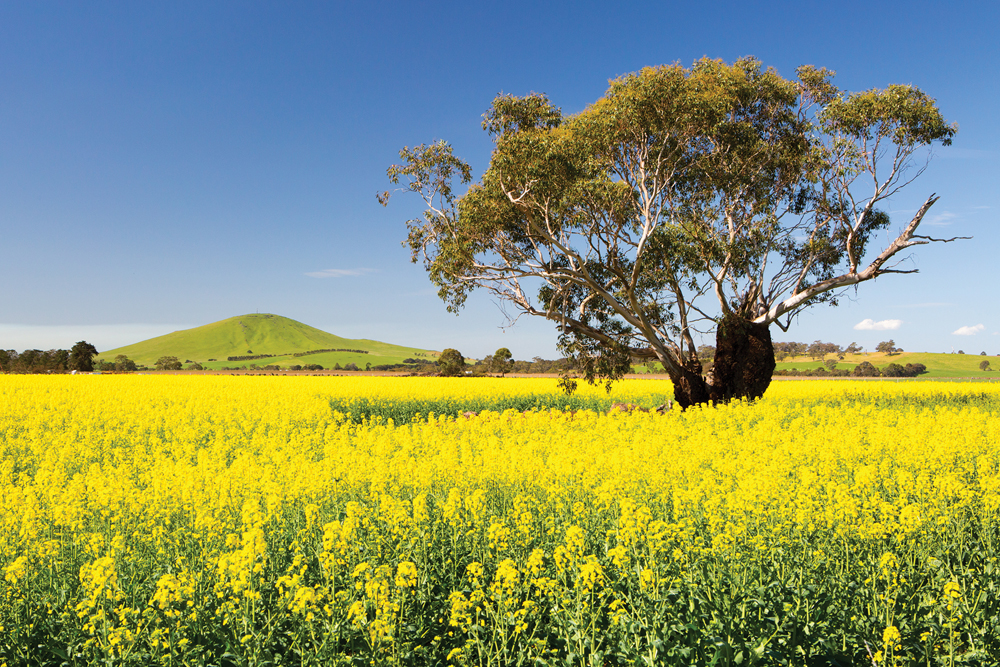
USDA projected canola exports from Canada at 8.4 million tonnes, versus the 8.6 million expected by AAFC. However, some in the trade believe those exports won’t crack more than 7.5 million tonnes. One reason is Australia, which has a record canola harvest of 8.6 million tonnes, as projected by the Australian Bureau of Agriculture and Economic Research Sciences. There are concerns that Australian canola exports will balloon, perhaps by threefold, taking a good chunk of the market away from Canada.
Current estimates have put the carryout for 2022-23 canola at 800,000 tonnes, but if those Australian exports come to fruition, ending stocks in Canada are likely to exceed 1.5 million tonnes and maybe push as high as two million.
All this should dash any hopes of canola prices climbing markedly higher.